Everyone is calling the Gucci-Alpine partnership a watershed moment. The first luxury fashion house to serve as title partner in Formula 1. A revolution in how brands engage with motorsport. Historic.
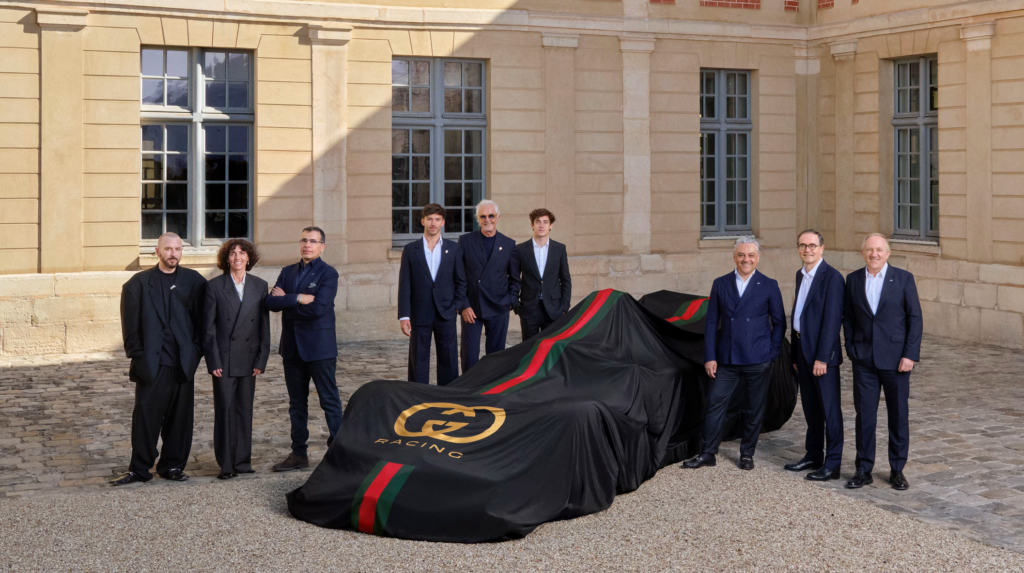
It’s none of those things.
The Gucci deal is the latest chapter in a 50-year story of luxury brands understanding F1’s audience before it was fashionable to say so. Calling it historic reveals more about the observer’s ignorance than about the significance of the deal.
Let me walk you through what actually happened.
The Blueprint Was Written in 1974
Marlboro and McLaren created the longest sponsorship deal between a team and its title sponsor in Formula One history. 23 consecutive seasons, from 1974 to 1996. This wasn’t just a logo on a car, it was the original lifestyle-sport fusion.
The MP4/4 won 15 of 16 races in 1988. Ayrton Senna and Alain Prost drove that car. Marlboro-sponsored McLaren won the Drivers’ Championship all but one year from 1984 to 1991. The day-glo colors became inseparable from F1’s identity.
This was luxury brand building at scale, decades before anyone called it that.
Philip Morris Played an Even Longer Game
Philip Morris International’s partnership with Ferrari has spanned more than 50 years. The current agreement was signed in December 2025, taking effect January 1, 2026. Between 2005 and 2011 alone, Ferrari received an estimated $1 billion from the Marlboro agreement.
Fifty years. Half a century of continuous partnership. This is the longest brand partnership in F1 history.
Gucci’s three-year, $150 million deal is impressive. But it’s not rewriting the playbook. It’s reading from it.
TAG Heuer Got There First
TAG Heuer was the first luxury brand to have its logo appear on an F1 car in 1969. The first to sponsor a team in 1971. Through its associations with teams, TAG Heuer has accumulated 230 wins, 595 podiums, 11 World Constructors’ Championships, and 14 World Drivers’ Championships.
The brand predates Gucci’s entry by 56 years.
Calling Gucci “first” erases this entire history. It ignores that luxury watchmakers have been F1’s institutional backbone for generations.
Fashion Houses Already Won Championships
The Gucci deal was spearheaded by Alpine’s executive advisor Flavio Briatore. He shot to fame in F1 when he took the fashion house Benetton to title success in the early 1990s. Benetton won constructors’ and drivers’ championships.
Briatore himself stated: “The Enstone Team has a history of doing things differently to others and has previously shown that fashion can finish first in Formula 1.”
Fashion houses winning titles isn’t new. It’s a 30-year-old playbook being run again.
The Numbers Tell the Real Story
Formula 1 is expected to generate $2.9 billion in 2025. According to Ampere Analysis, 18.6% of the sport’s revenue comes from sponsorships. LVMH signed a $1.5 billion deal with F1, paying $150 million per season over 10 years.
Luxury isn’t entering F1. It’s structurally embedded in the sport’s economic foundation.
Rolex held the position of official timekeeper from 2013 until 2024. Their Formula 1 sponsorship ran from 2011 with payments initially at $10 million annually, rising to $50 million. Even immediately before Gucci, luxury watchmakers were F1’s institutional backbone.
What Gucci Actually Gets
The Gucci deal provides exposure during 20-24 race weekends each year plus all the mentions in social media, television, streaming, and other channels. Instead of being just a driver sponsor or associate sponsor, Gucci gets naming rights to the team.
Their name will be constantly communicated to hundreds of millions of fans regularly.
Formula One reaches over 1.5 billion people each season. The partnership announcement noted that F1 “has evolved far beyond sport to become one of the world’s most powerful premium content platforms.”
But here’s what people miss: Marlboro’s marketing ace John Hogan recognized this in the 1970s. He stated: “F1 was a way of doing that on the international stage.”
The audience hasn’t changed. Luxury brands recognized it half a century ago.
What Alpine Actually Gets
Alpine gets stability while the owners and investors look to exit. Ryan Reynolds’ group that owns 24% of the team has been looking to sell. Renault is likely to reduce their stake over time too.
Briatore was brought in to stabilize the team and get them to perform better. That means getting the right people in place and securing commercial deals that enable the team to compete.
With all the chaos that has surrounded the team for years, this deal gives them both a higher profile and much needed funding. For the various owners of the team, it makes the team more valuable when it comes time to sell a stake in it.
Gucci is essentially helping Alpine look more attractive to future investors. It’s not just a sponsorship. It’s a valuation play.
The Pattern Briatore Knows
Briatore worked with Benetton back in the eighties to establish their brand in the United States. Then he came over to the F1 team the family owned to make it into a championship-winning team.
Being from Italy and knowing many of the people involved in Italian business well enables Briatore to secure these types of deals. His history of success makes his offers more attractive.
Benetton used F1 to crack the American market. Now decades later he’s running the same playbook but in reverse, using an Italian fashion house to elevate a struggling French team.
The man clearly has a pattern.
Why Most Brands Get It Wrong
During the Marlboro-McLaren era, Ron Dennis built an F1 team which redefined the scale. Marlboro’s colors became a defining part of F1 and its evolution, spanning the bright chaos of the BRM Marlboro World Championship Team in 1972, through the James Hunt McLaren years, to the more polished and sustained glory of Ron Dennis-era McLaren in the 1980s.
The brands that stayed decades, not seasons, became culturally inseparable from the sport itself.
This is where most luxury brands fail. They want immediate results. They want viral moments. They want to see ROI in quarters, not decades.
But F1 rewards patience over spectacle. The compounding exposure effect only works if you stay long enough to let it work.
The Real Test for Gucci
If Alpine reverts back towards the slower end of the grid, Gucci may opt to walk over to another team. Sponsors do this regularly as they seek better arrangements or a higher profile.
Gucci doesn’t need Alpine to win. But they need Alpine to not embarrass them. There’s a floor, not just a ceiling.
As long as F1 has increasing popularity and appeal, Gucci is likely to remain in the sport for at least the short to medium-term. They want to continue to build brand awareness for emerging customers.
They seek growth and being involved in F1 is likely to provide that to them.
What This Actually Means
The Gucci deal shows that the Alpine F1 team is attractive to sponsors. The team is still a few years away from being able to compete with the top teams, but if they can continue to deliver solid results in the mid-field, this will be worth it.
Think TAG-Heuer, Rolex, Hublot, Zepter, Tommy Hilfiger, Hugo Boss, Benetton, Puma, and other brands from the past. The Gucci deal is an amplification of something that was already there.
Title sponsorship just shows how appealing F1 has now become. It’s not that Gucci is pioneering anything. It’s that F1 has become visible enough that fashion houses can no longer ignore what tobacco and watch companies figured out generations ago.
The Advice Nobody Gives
If you’re advising the next luxury brand sitting on the fence about entering F1, here’s what you tell them:
Results don’t matter as much as exposure does. Regardless of how a team does, being in F1 will build awareness in your brand. The results may not be immediate either but over time, the effect compounds and you will have many new customers to sell to in the coming years.
F1 provides the action and excitement that other more sedate sports can’t offer. There is more noise, movement, and rabid passion in motorsports in general. F1 offers the pinnacle of global motorsports competition that appeals to luxury brands.
It’s the association with speed, performance, and passion that can appeal to fans in all demographics.
But you have to stay long enough for it to matter.
Gucci is making a long-game bet on a sport that has always rewarded patience over spectacle. The question isn’t whether the deal is historic. The question is whether Gucci has the patience to let the compounding effect work.
Most brands don’t. That’s why the ones that do become inseparable from the sport itself.
The Gucci-Alpine partnership isn’t the beginning of luxury in F1. It’s just the latest brand finally catching up to a reality that’s been building for 50 years.