Formula 1 announced that the 2026 Bahrain Grand Prix will run at Sepang International Circuit in Malaysia. The event keeps the Bahrain name. It even keeps the Bahrain money. It just happens somewhere else entirely.
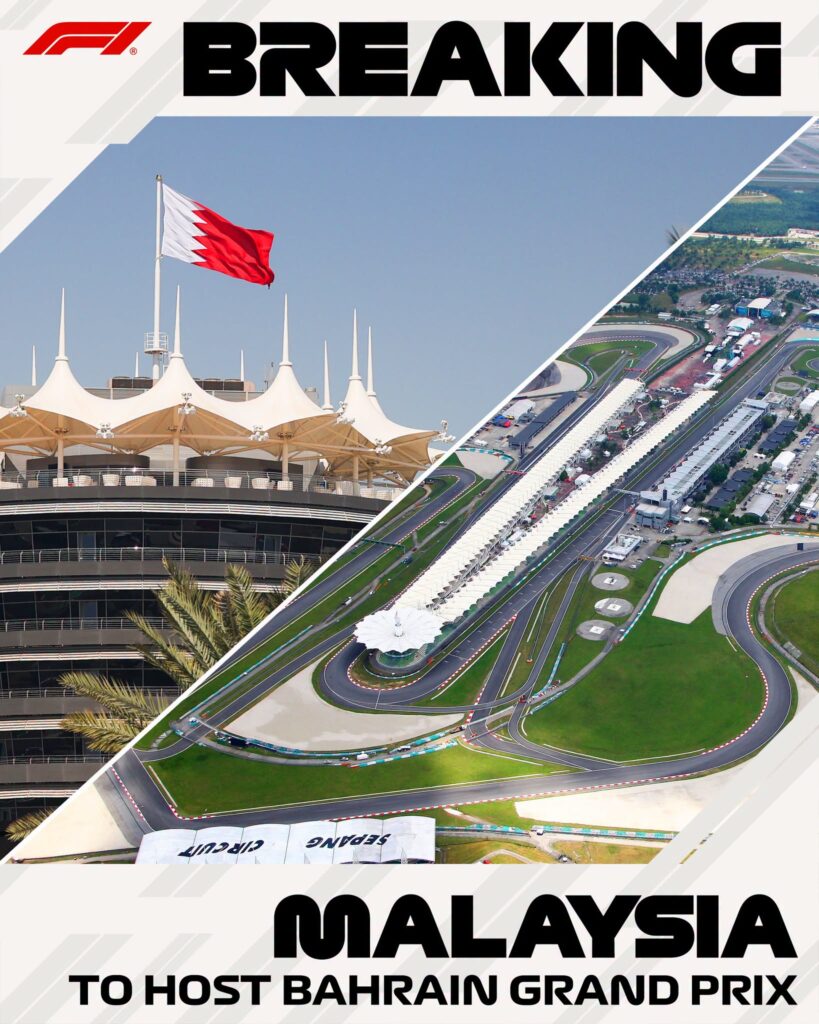
On paper this reads like a simple address change. A race needed a new home, and a capable venue was available. Clean swap, no fuss.
I don’t think it’s that simple.
Why the Race Had to Move at All
The relocation follows the postponement of both the Bahrain and Saudi Arabian rounds after the outbreak of the 2026 Iran war. Safety came first, as it should. Formula 1 chose to preserve a Grand Prix that would otherwise have vanished from the calendar.
I respect the intent. Fans get their race, teams keep their weekend, and the championship stays (nearly) whole at 23 rounds.
But when I trace this back, one thing stands out. A marquee event picked up and relocated to another country this cleanly. That kind of portability says something about how the race was rooted in the first place.
The Paid Version and the Earned Version
I’ve watched places win Grands Prix by outspending everyone else. They build the facility, write the check, and the calendar makes room. What you often don’t get with that arrangement is the feeling that makes a race worth showing up for.
The 2026 event will officially be called the Formula 1 Gulf Air Bahrain Grand Prix in Malaysia. One nation finances a race held in another country. That’s an unprecedented arrangement in the sport.
Think about what that reveals. The race exists as a financial commitment first and a place second. When the place became unavailable, the commitment simply carried the name to a new venue. The soul of the event, if it had one tied to Bahrain, didn’t travel with it. Only the branding did.
Sepang Earned Its Character the Hard Way
Here is where the story turns for me. Sepang isn’t a filler venue. It hosted the Malaysian Grand Prix for 19 straight seasons between 1999 and 2017.
Long straights. Fast corners. Brutal heat. Sudden rain that rewrote races in a lap. Sepang built a reputation as one of the most distinctive tracks Formula 1 ever visited. Financial concerns ended its original deal, not a lack of racing quality.
Now the sport returns there for the first time in nine years. Sepang is already an FIA Grade 1 circuit sitting right next to Kuala Lumpur International Airport, which is why it needed almost no lead time. The bones were ready because the history was real.
A race relocating this smoothly exposes how thin its roots were at the old address. The new host earns its place by whatever atmosphere it actually brings.
What Makes a Venue Worth the Trip
I judge a race by whether people show up with feeling, not by the spec sheet or the balance sheet. Heritage is a real asset. So is the memory of great racing on the same tarmac.
Bahrain, for all its polish, always carried the quiet of a showcase bought into being. Sepang carries something the money couldn’t manufacture. Nineteen years of drivers wrestling that circuit in the heat gave it a texture that no financing deal creates on its own.
So the irony sits right there in the title. A Bahrain-funded race, held on a track Bahrain never built, may end up feeling more alive than the original arrangement ever did.
Who Actually Benefits Here
I try to ask this about every calendar decision. Do the incentives line up with the health of the sport, or only with someone’s profile and revenue?
In this case the answers point in the same direction for once. Formula 1 keeps its full schedule. Malaysia gets a home race back, with Sepang serving as a home event for PETRONAS, Mercedes’ title partner. The event slots into a triple-header with Azerbaijan and Singapore across three straight weekends from late September into early October.
Bahrain keeps its commercial standing without a track to run it on. Everyone gets what they wanted, which is exactly why the move happened so fast.
What I’ll Be Watching
I won’t pretend to know how the crowd shows up in 2026. That’s my personal read, not inside knowledge. But I know what I’ll be looking for.
Do fans fill those grandstands because they love the racing at Sepang, or because a race with a foreign name landed there by accident of scheduling? The answer separates the paid version of a Grand Prix from the earned one.
My honest hope is this. A great circuit gets its moment back, and the sport quietly relearns that a race is anchored by the people who care about it, not by the check that funds the name on the poster.
If Sepang delivers the racing it always did, this relocation becomes more than a scheduling fix. It becomes a reminder of what a home race is supposed to feel like. And that would be worth the trip.