When TWG Global announced it was cooperating with DOJ and SEC inquiries, the statement was designed to sound reassuring, calm, in control.
I read it differently.
Cooperation is the legal floor. It carries the minimum required behavior for any company that wants to keep operating in a regulated industry. TWG had no choice. Compliance is a smarter path than defiance, because defiance gets you shut down. The only real decision TWG made here was how to spin it.
As an American fan who has watched the saga of another American team joining the F1 grid, I want to decode what this phrase actually tells us. The answer matters more than the press releases suggest.
The Phrase Is Doing a Lot of Work
Legal practitioners define cooperation plainly. A company provides authorities with all relevant, non-privileged information and actively assists the investigation: internal reviews, document production, employee interviews. Saying you cooperate is the baseline expectation. Regulators treat it as the cost of doing business.
Here is the uncomfortable part. If the DOJ and SEC are investigating, they likely found something worth spending time and resources on. Federal prosecutors in Manhattan issued grand jury subpoenas to two TWG insurance subsidiaries, and the matter involves over $20 billion in loans with undisclosed affiliated status. That is a serious scope.
The public framing looks identical whether this is a minor irregularity or a five-alarm fire. That is exactly why the phrase reveals so little.
Two Scenarios, One Statement
There is a spectrum here, and TWG’s statement sits comfortably on every point of it.
At one end; a technical disclosure failure that gets cleaned up with paperwork and a fine. TWG’s hope, clearly, is that this blows over quickly and inexpensively.
At the other end; leadership knows they have been caught and is already in the room negotiating the terms of what comes next. The behind-the-scenes activity suggests the situation is closer to that end than TWG’s public posture implies. The company agreed to buy up to $6.5 billion in affiliated assets back from Delaware Life and filed a plan with Delaware regulators to eliminate all affiliated exposures. Companies confident of a quick dismissal rarely restructure billions in holdings.
The most likely resolution path is a consent decree; a negotiated agreement supervised by a court, often with an independent monitor attached. Both sides trade certainty for control. TWG avoids trial risk and the government gains oversight power. Until that agreement is reached or the matter goes to court, expect maneuvering by both sides. Many conversations are happening right now that none of us will ever read about.
Cadillac F1 Is Sitting in Regulatory Amber
What does this mean for the team itself?
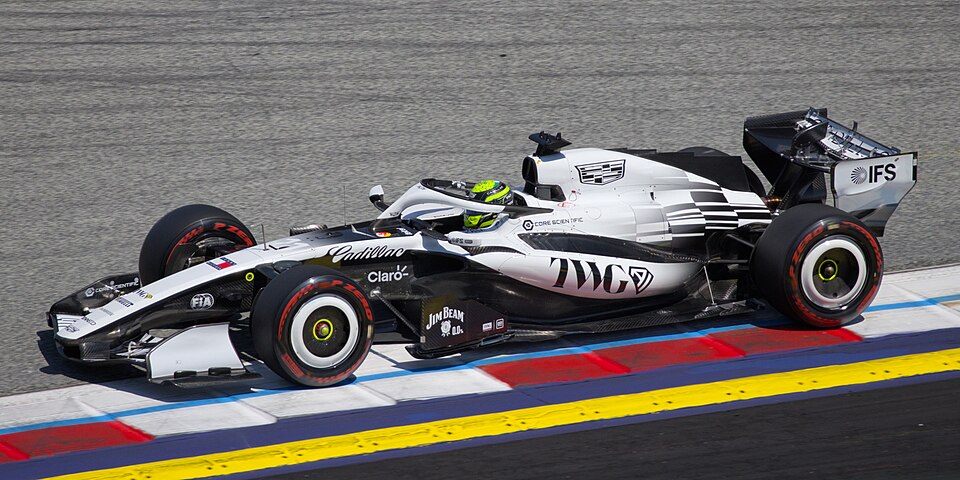
TWG issued a firm statement that it is not considering a sale of the Cadillac team and refuses to unload sports assets at fire sale prices. I believe them, mostly because they lack the freedom to do much else. Major asset moves generally wait until the regulatory process resolves. The team is effectively frozen while the lawyers work.
That is an uncomfortable position for a racing team, because F1 refuses to wait. The calendar moves, the cost cap cycles, technical regulations evolve. You can pause an insurance restructuring but you cannot pause a Formula 1 development program.
Day to day, the team keeps running. TWG’s corporate structure works like a warship’s watertight compartments, built to contain damage in one entity before it floods the others. Many lawyers ensured the Cadillac F1 entity was protected, accounting for US, UK, and EU law across its operations in Indianapolis, Charlotte, Warren, and Silverstone. The corporate structure is sound. The bigger issue is reputational.
The Sponsorship Conversation That Never Happens
Here is where the real operational risk lives.
Legal walls protect legal entities. They cannot protect a commercial conversation that quietly stops happening.
Put yourself in the seat of a CMO at a public company considering a major Cadillac F1 partnership. You believe in the team and love the American story. Then you have to walk into a boardroom and defend an association with an organization whose owner faces grand jury subpoenas. A long, drawn-out investigation coupled with a trial makes that pitch very difficult. Boards think in terms of reputational risk management, and “the team entity is legally insulated” is a weak slide in that deck.
For a team in its first season, still building its commercial foundation, delayed commitments hurt more than they would at Ferrari or Mercedes. The relationships being paused today were supposed to fund the competitive climb of 2027 and 2028.
One ironic silver lining: TWG is a mostly faceless investment entity. If racing royalty like the Andrettis owned this team, the emotional damage to fans would be far greater. Anonymity, in this case, absorbs some of the blow.
What You Should Actually Watch
The legal filings will generate headlines for months. Most of them are noise. If you care about this team’s future, watch these signals instead.
Commercial announcements. New sponsor deals mean boards are getting comfortable. Silence through 2027 means the amber is hardening.
Engineering hires. The team built a 300-person operation across four sites. Continued senior hiring signals real long-term funding commitment.
GM board signals. General Motors paid a $450 million expansion fee to get on this grid. That commitment came with expectations of becoming a respectable competitor at minimum. GM’s resources in money, marketing, and engineering give it real tools to shape the outcome. Watch what the manufacturer does, not what the parent company says.
Ownership drama and team commitment are separate storylines. The drama sits at the TWG level. The commitment sits with GM and the people building the cars.
My Honest Read
The investigation is real and expensive. The “we are cooperating” statement tells you almost nothing about its severity, because a company facing a routine inquiry and a company negotiating a consent decree issue the exact same press release.
My prediction: the team emerges intact, possibly with TWG’s branding and involvement faded out over time while the legal matters resolve. GM made this bet with its eyes open, and the Andrettis likely told both GM and TWG leadership from the start that F1 is a long-term commitment requiring serious work.
All the while the car keeps developing, engineers keep working, and the entire project keeps moving.
Watch the signal. Let the noise pass.