Turkey returns to Formula 1 in 2027 under a five-year deal that runs through 2031. It’s the 24th and final confirmed race on the calendar, the number F1 has declared as “the maximum comfortable number of events per season.”
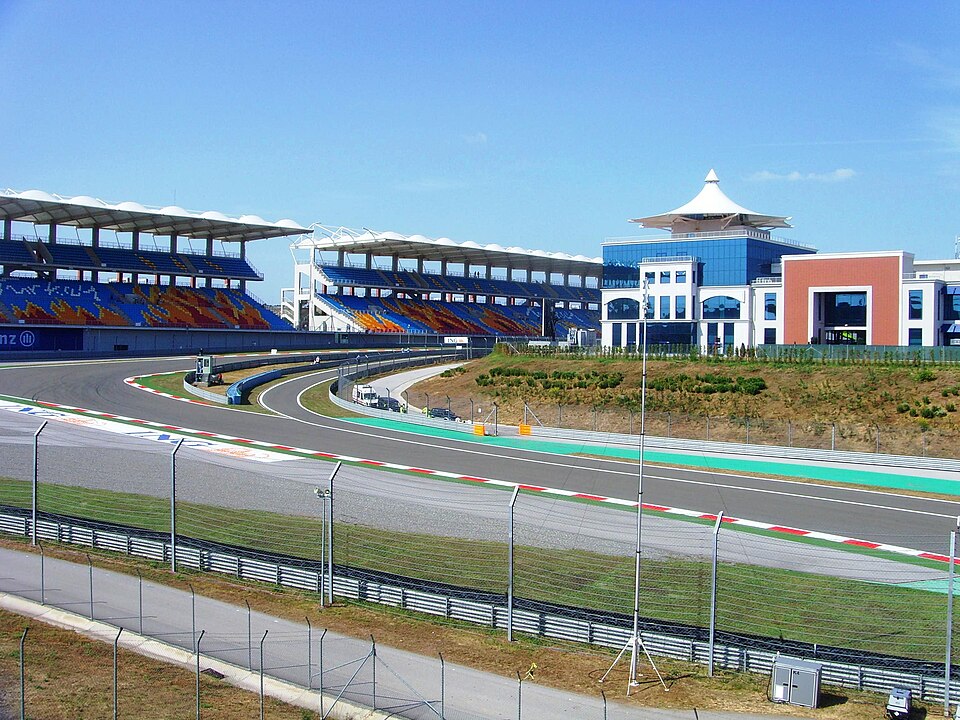
The announcement came directly from Turkish president Recep Tayyip Erdoğan. The deal was signed between Formula 1, Turkey’s Ministry of Youth and Sports, and the Turkish Automobile Sports Federation.
But Turkey isn’t returning alone. Portugal is back for 2027 and 2028. Barcelona enters a rotation with Spa-Francorchamps starting in 2028. The Dutch Grand Prix is gone after 2026.
This isn’t just calendar reshuffling. This is a preview of what the next five years will look like as F1 manages the highest demand it’s ever seen for race hosting rights while operating under a hard cap of 24 events.
The Geography Shift: F1’s Gravitational Pull East
Stefano Domenicali described Istanbul as “a cultural gateway” between Europe and Asia. That’s not marketing fluff. It’s a statement of intent.
Turkey sits at the intersection of two continents. It has 19 million F1 fans and over 7.5 million social media followers. Instagram followers grew 25% year-over-year. YouTube views jumped 107%.
The numbers matter because they show where F1’s audience growth is happening. It’s not in Western Europe. It’s in emerging markets, the Middle East, and Asia.
Look at the long-term contract map. Bahrain runs through 2036, Monaco through 2035. Austria through 2041, Miami through 2041. Twenty tracks already have deals beyond the end of this decade.
Turkey fits into this pattern as a bridge market. It’s not fully European in the traditional F1 sense. It’s not Middle Eastern in the way Bahrain or Saudi Arabia are. It’s both, which makes it strategically valuable for a sport trying to expand its footprint without abandoning its European base entirely. Turkey is the signal, the broader shift is the story.
Istanbul Park: The Circuit Drivers Actually Want
Istanbul Park is famous for Turn 8. It’s a four-apex left-hander taken flat-out in qualifying. The circuit has dramatic elevation changes across 5.33 kilometers. It challenges both driver skill and car performance in ways most modern tracks don’t.
Felipe Massa won there three consecutive times between 2006 and 2008. Drivers consistently rank it among their favorites.
Turkey dropped off the calendar after 2011 because no deal could be reached. While the track provided good racing, attendance was poor. The circuit was removed for purely financial reasons.
That tells you everything about F1’s priorities during the 2010s. A technically exceptional layout that drivers loved wasn’t enough. The business case didn’t work, so it disappeared.
Now it’s back. Not because the business case suddenly improved on its own, but because F1’s global expansion created new leverage for markets like Turkey. The sport needs geographic diversity, Turkey needs international prestige. The deal works because both sides have different motivations than they did in 2011.
What “Return” Races Actually Signal
Turkey and Portugal both return in 2027. These aren’t new markets, they’re comebacks.
Portugal last hosted F1 in 2020 and 2021 during COVID-19. It was a substitute venue that worked well enough to earn a two-year deal starting in 2027.
Turkey’s situation is different. It was gone for over a decade. It came back briefly in 2020 and 2021 as a pandemic replacement. Now it has a five-year contract.
You could read this as fan service. Both circuits are popular with drivers and viewers. Bringing them back looks like F1 listening to its audience.
Or you could read it as opportunistic deal-making. F1 needed to fill slots created by Zandvoort’s exit and Barcelona’s rotation. Turkey and Portugal were available, willing, and strategically useful.
I think it’s both. But the timing matters. These deals happen in 2027, the same year updated technical regulations take effect. F1 is resetting multiple parts of its business simultaneously.
The Casualties: Who Loses When Turkey Wins
The Dutch Grand Prix is gone after 2026. Zandvoort ran for six years (2021-2026) and chose not to renew. Track owners called it “a clear choice” that didn’t come without a fight.
Barcelona enters a rotation with Spa-Francorchamps. Barcelona generated over 300 million euros for the region and attracted more than 300,000 fans in 2025. It’s not failing. It’s being asked to share its slot.
Spa hosts races in 2027, 2029, and 2031. Barcelona returns in 2028, 2030, and 2032. Both circuits alternate to fit within the 24-race cap.
These aren’t struggling venues. Zandvoort sold out. Barcelona drew massive crowds. They’re casualties of a calendar that can’t accommodate everyone who wants to host a race.
Domenicali said the demand to host a Grand Prix is the highest it’s ever been. That’s the problem. When you cap the calendar at 24 and twenty tracks already have long-term deals, there’s almost no room for anyone else.
Only Las Vegas has a contract expiring in 2027. But F1’s first in-house event isn’t getting dropped after five years. The commercial incentive is too strong.
The 2027 Timing: Why This Year Matters
Turkey’s deal starts in 2027. So does Portugal’s. Barcelona’s rotation begins in 2028. The Dutch GP ends in 2026. It’s a commercial reset point. Multiple contracts expire or renew around the same window.
This isn’t coincidence. F1 is restructuring its calendar at the same time it’s updating its regulations. The two processes are linked. That uncertainty creates negotiating leverage for F1. Circuits that want long-term deals have to commit before they know what the racing will look like under the new rules.
Turkey’s five-year deal runs through 2031. Portugal’s two-year deal runs through 2028. Barcelona’s rotation extends through 2032. These aren’t short-term experiments. They’re structural commitments that will define the calendar through the next regulatory cycle.
What the Next Five Years Look Like
Turkey’s return tells you how F1 will manage its calendar through 2031. The sport will continue to prioritize a wider geographic footprint over traditional European dominance. It will rotate historic circuits rather than drop them entirely. It will use regulatory resets as leverage points for long-term deals.
The 24-race cap is real. F1 agreed to it with teams and stakeholders. That means every new addition requires a subtraction or rotation somewhere else.
Argentina and Thailand have expressed interest in hosting races. They’ll have to wait until at least 2028 because the 2027 calendar is full. Even then, they’ll need someone else to step aside or enter a rotation.
This is the new normal. High demand, fixed supply, and strategic deal-making that favors circuits with government backing and long-term commercial commitments.
Turkey fits that profile. So does Portugal, though on a shorter timeline. Barcelona and Spa accepted rotation to stay on the calendar at all.
The next five years will show you whether F1 can balance its European heritage with its global ambitions. Turkey is the test case. If it works, expect more markets like it. If it doesn’t, expect F1 to recalibrate again in 2031 when this deal expires.
I’ll be watching the same things you are. Attendance figures. TV ratings. Social media engagement. Whether Istanbul Park delivers the racing it’s famous for under the new regulations.
But the bigger question isn’t whether Turkey succeeds. It’s whether F1’s calendar strategy creates a sustainable model for managing demand that far exceeds available slots. Turkey’s return is the opening move. The rest of the game plays out over the next decade.