When I covered the Palou contract saga previously, the chaos of dueling announcements left everyone confused. McLaren claimed they’d signed the reigning IndyCar champion. Palou immediately denied it. Chip Ganassi Racing insisted their contract was valid.
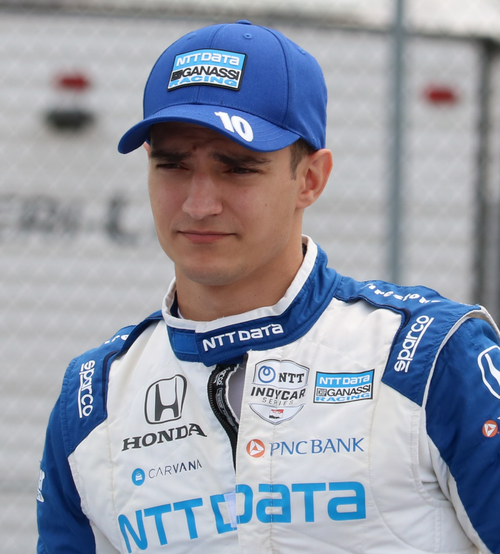
Now we have the answer: $12 million.
That number tells you everything about what was really happening behind those social media posts. This wasn’t about miscommunication or legal gray areas. The contract was clear. An English court spent five weeks examining it and found McLaren had a legitimate, enforceable agreement.
The Game McLaren Was Actually Playing
Here’s what most people missed: McLaren never seriously planned to put Palou in an F1 car.
While Palou dreamed of F1, Zac Brown was building an IndyCar powerhouse. The timing proves it. McLaren had already signed Oscar Piastri for their F1 team on July 4, 2022; right after the British Grand Prix. When they courted Palou, they wanted him for IndyCar. The F1 talk was the carrot.
Brown knew exactly what he was doing. He understood Palou’s value; a proven IndyCar champion who could immediately elevate McLaren’s status to compete with Penske, Ganassi, and Andretti. He also knew Palou desperately wanted F1. That information became leverage in both negotiations and court.
The damages breakdown shows where McLaren’s real focus was. The court awarded $1.3 million in driver salary, $6.3 million tied to NTT Data sponsorship losses, $500,000 from GM deal impacts, and additional sponsorship and performance revenue losses. Every dollar was tied to IndyCar. McLaren’s F1-related claims of almost $15 million? Dismissed entirely.
Where Palou Got It Wrong
Palou made a classic mistake; he heard what he wanted to hear.
The contract spelled out an IndyCar program with some limited F1 running. Brown may have made verbal hints about F1 possibilities, but those hints weren’t in the contract. When you sign a document that withstands legal scrutiny in a five-week trial, the verbal promises don’t matter.
Palou misread his own market value. He saw himself as an F1 prospect. McLaren saw him as an IndyCar asset. The best he could realistically expect was testing, FP1 sessions, and reserve driver duties; the same opportunities McLaren has given to multiple drivers.
The salary gap explains why this mistake happens. Top IndyCar drivers make about 10% of what their F1 counterparts earn. When you’re looking at that kind of differential, even a long-shot F1 opportunity feels worth the risk.
The Power Imbalance Nobody Talks About
Teams hold structural advantages that even experienced driver managers can’t match.
Teams are larger, longer-serving entities with personnel who negotiate contracts professionally. They understand legal language and how to get terms worded exactly right. Drivers and their managers, even savvy ones, don’t have this level of contract law experience.
You can’t make assumptions based on verbal promises. If it’s not written in black and white in a contract that passes legal muster, you have no ground to stand on. That’s the lesson here.
Unlike F1, IndyCar doesn’t have a Contract Recognition Board to oversee disputes. When problems arise, you’re in civil court where teams’ legal resources dwarf what most drivers can afford.
What This Changes Going Forward
McLaren comes out of this with their reputation enhanced. They proved they’ll enforce their contracts. Other competitive drivers will still consider McLaren because their IndyCar team remains strong.
Palou? He carries a $12 million debt and questions about his loyalty. He’s won four IndyCar championships, including his most dominant season in 2024 with eight wins in 17 races. But that success couldn’t secure him an F1 seat. It only made the penalty larger when he tried to force the issue.
The historical odds were always against him. Juan Pablo Montoya and Jacques Villeneuve made the IndyCar-to-F1 jump successfully. Sebastian Bourdais and Michael Andretti struggled. Palou bet on being the exception.
Colton Herta watched this play out and chose a different path. He’s going back through F2 to prove himself on European road courses in front of the F1 paddock. He acknowledged that being a winning IndyCar driver isn’t enough anymore.
The dream of F1 is powerful. Powerful enough that the next ambitious IndyCar champion will probably face the same temptation Palou did. The difference is they’ll know the price tag now.
$12 million buys a lot of clarity about where verbal promises end and legal obligations begin.