I’ve watched Formula 1 long enough to recognize when something doesn’t add up. Jack Doohan’s departure from Alpine after just six races tells a story that goes far beyond one driver’s struggles.
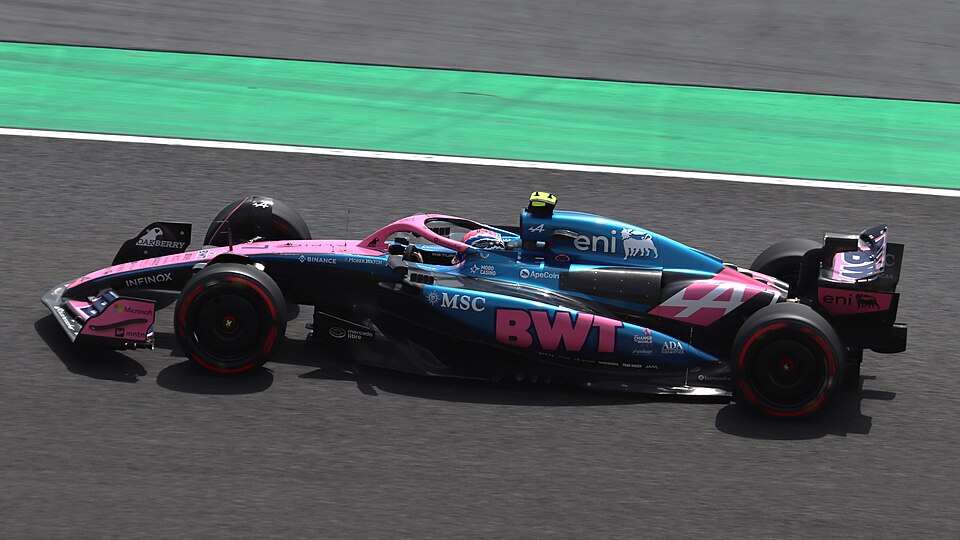
Alpine announced it as a “mutual agreement.” The paddock saw it differently.
Here’s what actually happened: Doohan was reportedly given a five-round contract in November 2024, before he’d even turned a wheel in anger. Flavio Briatore was already eyeing Franco Colapinto. The evaluation window wasn’t an opportunity, it was a formality.
The Australian became the first Alpine Academy graduate to actually race for the team since the Renault works program returned in 2016. That should have been a celebration. Instead, it exposed something broken in how F1 develops young talent.
The Zero-Point Paradox
Doohan finished his six-race stint without scoring a single championship point. His best result was 13th. Alpine replaced him with Colapinto, expecting immediate improvement.
Colapinto also scored zero points in his 18 races with Alpine.
Think about that for a moment. The driver swap achieved absolutely nothing in terms of championship results. Doohan and Colapinto were the only two drivers out of 21 to fail to score a single point during the 2025 season.
When your replacement performs identically to the driver you demoted, the problem isn’t the driver. It’s the car. It’s the team. It’s the entire organizational structure that finished dead last in the constructors’ championship.
Alpine wanted someone who could immediately push Pierre Gasly. They lost Esteban Ocon, a race winner and genuinely competitive driver. Gasly scored all 22 of Alpine’s points in 2025. The second seat became a revolving door of disappointment.
The Academy That Couldn’t Keep Its Best
Alpine’s junior program has a spectacular failure rate when you look at the names that got away.
Oscar Piastri won Formula Renault, Formula Three, and Formula Two in successive seasons; the only driver in history to achieve that feat. Alpine lost him to McLaren in an embarrassing public contract dispute. Zhou Guanyu left before ever racing for the team, explaining that he “didn’t see anywhere I could have a seat” and would have been “stuck” if he’d stayed another year.
Doohan wasn’t a superstar in the lower formulae. He was solid, hardworking, and didn’t complain. He was also the last man standing from an academy that couldn’t retain its promising talent or make a race seat attractive enough to keep them.
When your best graduates leave before they ever drive for you, something is fundamentally wrong with your development program.
The costs and risks of running in-house academies are proving too high. Drivers are breaking contracts and taking risks elsewhere because they see better opportunities outside the programs that developed them. I think we’re heading toward a more traditional model where sponsors and mentors facilitate F1 placement rather than team-controlled pipelines.
The Commercial Reality Behind the Meritocracy Myth
Here’s where American fans might find F1’s reality check particularly jarring.
Colapinto brings something Doohan couldn’t: roughly $30 million annually from Argentinian e-commerce giant Mercado Libre, plus a massive South American fanbase. Williams boss James Vowles described navigating through 50,000 passionate Argentinian fans at the Sao Paulo Grand Prix.
That commercial value buys time. It buys patience. It buys second chances.
Doohan had neither standout talent nor marketability to survive Alpine’s dysfunction. He was what I’d call “the proverbial warm body” as someone already integrated with the team and available when Alpine made the petty decision to release Ocon with one race remaining in 2024.
F1 operates as a meritocracy, but that merit gets measured through multiple lenses: talent, political savvy, timing, marketing appeal, and commercial value. The sport has thrived for seven decades using this model. It’s not perfect, but it’s honest about what it takes to succeed.
The Finished Article Standard
Charles Leclerc set the benchmark for what exceptional rookie talent looks like in a struggling car. At Sauber in 2018, he qualified and raced better than expected, demonstrating enough to earn a Ferrari seat the following year.
That’s the standard now. Drivers need to arrive as the finished article, ready to perform immediately. Development should happen before F1, not during it.
Alpine promoted Doohan knowing he wasn’t that caliber of talent. They set him up to fail in an environment where even experienced drivers would struggle. A decade of management turnover and organizational chaos created an impossible situation for rookie development.
Oliver Oakes became the latest team principal to leave midway through the season. Flavio Briatore now leads the team alongside managing director Steve Nielsen. That kind of instability kills any chance of building the support structures young drivers need.
Alternative Pathways and What Comes Next
Doohan’s story doesn’t end with Alpine. He’s joined Haas as their 2026 reserve and simulator driver, potentially opening a path back to racing through their Toyota partnership. The Japanese manufacturer sponsors Haas and maintains tight connections with Kondo Racing in Super Formula.
That Super Formula opportunity got complicated when Doohan crashed at the same corner three days in a row during post-season testing at Suzuka. The notoriously difficult Degner 1 section exposed his struggles and damaged his reputation further.
More racing miles in series like Super Formula or WEC before coming to F1 would have helped his development. American racing series handle driver transitions differently than F1’s sink-or-swim approach. IndyCar gives drivers time to learn, adapt, and grow without the intense pressure of immediate results or demotion.
The 2026 Question
Alpine is making the same bet again with their 2026 lineup of Gasly and Colapinto. They’re pairing an experienced driver with someone who showed early promise but hasn’t proven he can deliver consistent results in difficult circumstances.
The difference this time? Colapinto brings excitement, fans, and sponsorship that should give him leeway to develop. If he shows the determination and dedication that Gasly has demonstrated during Alpine’s struggles, he’ll be seen as a driver who warrants the hype.
But Alpine needs to provide what they couldn’t give Doohan: time, patience, and organizational stability. Colapinto deserves evaluation at the end of 2026, not after six races. He needs space to show improvement throughout the season without the constant threat of replacement.
If Alpine can remain stable as an organization and improve from their last-place finish, they’ll be positioned to benefit from Colapinto’s potential.
The real test isn’t whether Colapinto succeeds. It’s whether Alpine has learned anything from the Doohan situation, or if they’re just repeating the same cycle with different names and better marketing.
From my American perspective, watching F1’s approach to young talent feels increasingly disconnected from sustainable development. The sport talks about nurturing the next generation while creating environments where only the exceptional or commercially valuable survive.
Doohan’s exit reveals that truth more clearly than any press release ever could.