Cadillac has announced Zhou Guanyu as their reserve driver for the 2026 season, and if you’re just reading that as “backup driver hired,” you’re missing the real story. This move is a masterclass in strategic team building that reveals how Cadillac plans to approach their inaugural F1 season.
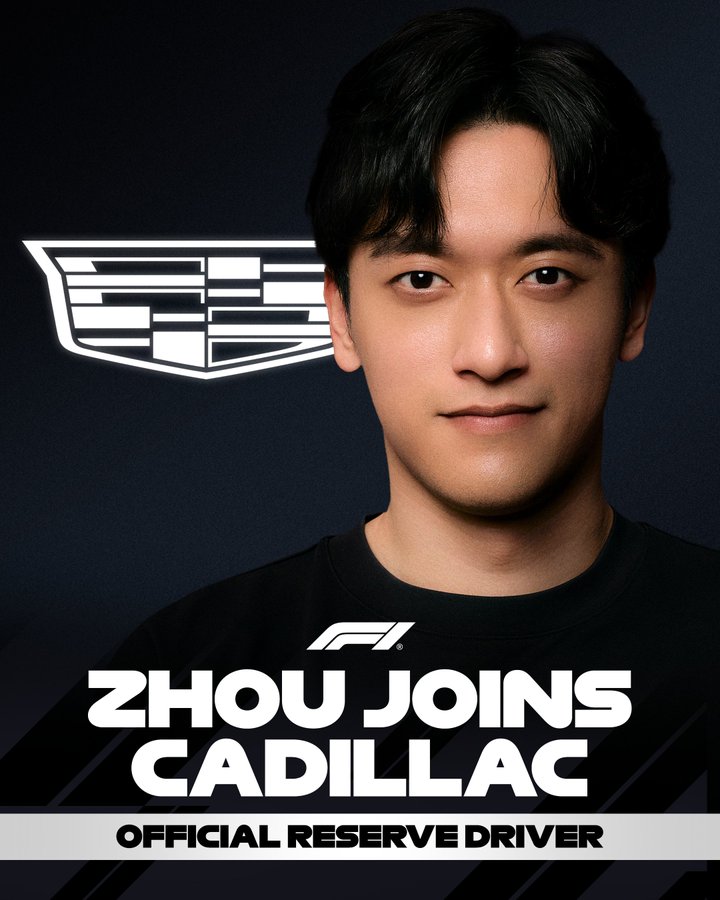
The decision makes complete sense when you look at the bigger picture. Colton Herta still needs to obtain superlicense points before he can race in F1, and Cadillac needs an experienced driver who can step in if either Valtteri Bottas or Sergio Perez can’t race during the 2026 season. But there’s more to this than just having someone ready on standby.
More Than Just Insurance
Here’s what most people get wrong about reserve drivers: they think it’s just about having someone sit around waiting for crashes. The reality? Zhou will spend significant time in the simulator preparing for race weekends and be at the tracks during grand prix. He brings a degree of familiarity with Ferrari engines and how they perform, which matters more than you might think.
Cadillac is using Ferrari power units, and Ferrari has been building engines for a long time. Zhou’s insider knowledge of those power units gives the team a baseline of performance they can use to extrapolate where the weaknesses of their car might be. Many performance shortcomings are likely to be chassis related, which means the team can focus their development efforts where it actually matters.
Think of Zhou as another set of eyes, hands, and a brain helping this new team get going. He can bring additional perspective on setup and other technical aspects of vehicle performance. That’s not an insurance policy, that’s a technical consultant who happens to have a race license.
The Ferrari Connection
There’s a commercial angle here that’s easy to overlook. Zhou is attractive for commercial reasons in China, which is an important market for Ferrari. Keeping him in F1, even as a reserve driver, helps maintain interest in him and whatever team he drives for. Ferrari values him as a “safe set of hands” who contributes to the success of the team.
Ferrari is supplying Cadillac with engines until 2029, so keeping their engine partner happy isn’t just good manners, it’s good business. If Ferrari can keep Zhou busy for a year or two at Cadillac, other openings within their organization could open up and keep him within their ecosystem. Everyone wins.
Why Experience Matters
When teams need to replace a driver with a reserve, points and prize money are on the line. An inexperienced driver needs time to learn how to become competitive in F1. They have to learn all the aspects of preparing for and participating in a grand prix, along with the pressure that comes with racing at this level.
Zhou has done three years in the sport and completed significant testing. He’s solid, if not spectacular. But here’s the thing; for a reserve driver role, “solid” is exactly what Cadillac wants. They need somebody who can limit the damage if either Bottas or Perez can’t race. He may not be able to perform at their level, but he can at least acquit himself well. If he can qualify well and bring the car home in the race, that demonstrates good judgment in the hire.
Taking Pressure Off Herta
Zhou’s presence changes the timeline for Herta’s development in important ways. It puts less pressure on the American driver because he can focus on F2, obtaining superlicense points, and getting some time in the F1 car from time to time. Zhou is a short-term solution that ticks many of Cadillac’s boxes: he’s experienced, solid, hard-working, and team-oriented.
Herta will spend 2026 getting ready for F1 and could potentially replace or sit alongside Zhou for 2027. Cadillac wants Herta to be ready so he can be successful. They don’t have to rush him, and having Zhou in the reserve role gives them time. It also keeps their engine partner happy, making it a winning move all the way around.
The Global Brand Play
For most of its history, Cadillac was primarily a North American brand. They didn’t really sell many vehicles outside of that market. But with their involvement in WEC and now in F1, Cadillac is changing that narrative. They want to be seen as a global luxury performance brand.
Having Zhou brings attention to Cadillac from China, where he has a massive following. Commercially, even if this is just a short-term engagement, it could lead to an increase in awareness and support in new markets. That’s smart brand building that goes way beyond just filling a roster spot.
What Success Looks Like
Here’s what American fans should watch for in Cadillac’s first season: if they can finish P9 or P10 in the constructors’ championship, that would show demonstrable competence. If they can execute good pit stops, have good race strategies, and show good decision-making, all of that demonstrates they belong on the grid.
Few expect them to be anything other than a backmarker initially, but if they can show they can perform well, that positions them well for the future. Performance is relative to other teams on the grid, and not being embarrassingly slow matters.
Zhou is a placeholder and a short-term solution to an important need. The chances of Cadillac needing him to step in on short notice are low. He’s an insurance policy, one who is with the team because he can perform when called upon. Plus, he’s a driver who brings an audience and fanbase with him. For the next year or two, he’ll be an important but not particularly prominent member of the team—and that’s exactly what makes this such a smart hire.