When American fans romanticize Ferrari’s history, they’re missing something critical. The Prancing Horse has rarely assembled a leadership group that enables consistent success. Their heritage isn’t one of winning; it’s one of dysfunction, political intrigue, and personality clashes.
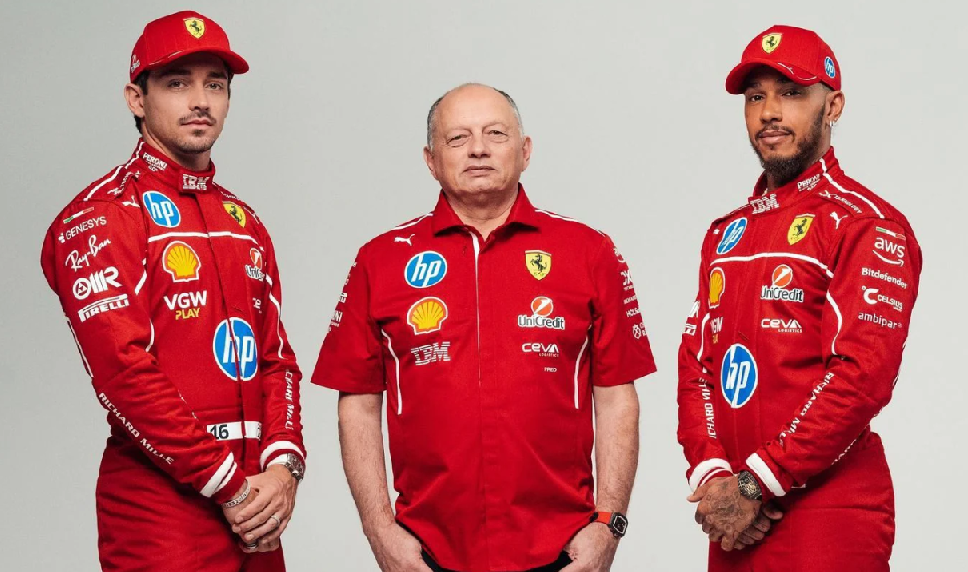
Yes, they produce powerful engines and beautiful cars. But most of the time, the main result is frustration followed by blame.
I’m watching Ferrari approach 2026 with a familiar sense of dread. The regulation changes represent the biggest shift in Formula 1 history, a 50-50 power split between combustion and electric that triples electric output from 120kW to 350kW. This isn’t just a technical challenge. It’s an existential test of whether Ferrari’s leadership can finally break their self-destructive cycle.
The Pattern That Won’t Break
From 2014 to 2015, Ferrari cycled through three team principals. That alone tells you everything about organizational chaos.
Maurizio Arrivabene came in and asserted himself. The team improved, became race-winning, and competitive. But there was a sense of fear during his reign. For three years they showed signs of discernable improvement but couldn’t challenge for championships. After 2018, he was gone.
Mattia Binotto replaced him, a great engineer, but not suited to run the race team. The pattern continued.
Since 2023, Fred Vasseur has led the team. He’s perhaps the best overall leader Ferrari has had since Stefano Domenicali left in 2014. Ferrari extended his contract through multiple years in July 2025, with language about “trust rooted in shared ambition, mutual expectations and clear responsibility.”
But here’s the problem: the underlying culture of Ferrari is frustrating his efforts to build a consistent, race-winning organization.
The Culture That Competent Leadership Can’t Fix
Ferrari has technical brilliance. They have vast resources. But the various groups and departments don’t work well together. Getting everyone to collaborate and pull in the same direction remains a constant struggle.
This isn’t a leadership problem that a new team principal can solve. It’s cultural, dating back to Enzo Ferrari’s autocratic style that created a pervasive undercurrent of suspicion and lack of trust.
Red Bull operates differently.
Christian Horner built a structure with high autonomy between divisions but also a culture of trust. This enabled the team to take risks and learn along the way. They accept that failure will happen, but they created a structure where they can collaborate and fix problems. Their in-season development is legendary because their leaders know how to talk to each other and come to consensus on how to fix shortcomings.
Red Bull runs billions of simulations on Oracle Cloud Infrastructure before and during each race, increasing simulation speeds by 25% since 2021. They process millions of race scenarios weekly, creating what their technical director calls “a level of confidence in our tools, in our methodologies, in our approaches.”
Ferrari has autonomy with suspicion. Red Bull has autonomy with trust.
That’s the difference between a team that wins championships and one that cycles through personnel hoping for saviors.
Why 2026 Becomes the Breaking Point
The weight of expectation is crushing. Ferrari has Lewis Hamilton, a seven-time champion, and Charles Leclerc, widely considered the second-best driver on the grid behind Max Verstappen.
In 2024, the team won five races and came within 14 points of the Constructors’ Championship. In 2025, they didn’t win a single Grand Prix. They were the only top-four team to go winless all season. Hamilton finished 86 points behind Leclerc without a single podium, and Chairman John Elkann is reportedly dissatisfied.
The new rules cycle could help them if they get the regulations right. But history suggests they’ll struggle to adapt. This means Ferrari corporate leadership will seek changes, and their current two drivers will likely leave the team.
Hamilton’s contract runs through 2027 with an option to extend to 2028 at approximately €55 million annually. If Ferrari fails in 2026, they face two more expensive years with an aging champion who couldn’t deliver. That’s a corporate accountability crisis.
The Sears Problem
From my American perspective, Ferrari’s reluctance to adapt reminds me of Sears versus Amazon, or Xerox compared to Apple.
The legacy companies were juggernauts, they were dominant for decades. They appeared unassailable. Then complacency crept in, leadership didn’t innovate, and neither company adapted to changes in the marketplace.
Amazon and Apple started with nothing but were nimble, agile, adaptable. They were upstarts who could perceive where things were heading. Their founders and leaders didn’t have the cognitive rigidity that plagued their competitors. When market conditions were right, they prospered while the legacy players struggled.
Ferrari is proudly Italian and points to their history. This ignores how successful teams have competed and won in F1 since the eighties. Ferrari only begrudgingly adapts to reality, whereas the British teams are more dynamic. The less formal and more collaborative approach of British teams yields information faster, which can be applied to making the car more competitive. Less time and effort is wasted on turf wars and petty conflicts.
Red Bull would be Ferrari’s Amazon. Mercedes could be in that role too; they evolved from Brawn, which was Honda, which was BAR, which began as Tyrrell. Regardless, it’s the British teams that have the culture needed to succeed in contemporary F1.
Ferrari can stay close to the top by virtue of their size and deep knowledge of racing. But to become a consistent threat for championships? They’re ill-suited.
F1’s Lovable Losers
Ferrari won’t become irrelevant. But they could become like the Chicago Cubs were for decades, lovable losers.
The Cubs had and have a massive fan base. But until recently, they couldn’t get into the World Series, much less win it. The team had good seasons, but more often than not, they struggled. The fans still loved them but frustration was the norm.
So it might be with Ferrari. They’ll be good every now and then, win races, even compete for a championship. But over a long period of time, they won’t have the results that Red Bull, Mercedes, and McLaren will. The common thread? All three of those teams are based in the UK.
The Tifosi will be there. The legions of Ferrari fans worldwide will be too. That’s baked in after decades of passion. Drivers will come and go. When Leclerc and Hamilton eventually leave, fans will be sad. But new drivers will come in that the fans will flock to.
Team leadership will change. Most fans won’t care. The culture and leadership of Ferrari corporate will stay the same.
The cycle will continue.
The fans enable the dysfunction by showing up regardless of results. That’s depressing but honest.
What I’ll Be Watching in 2026
When Ferrari hits the track in 2026, I’ll be looking for one specific thing: whether the team is improving going into and coming out of the summer break.
That will show some degree of dynamism and a desire to work things out. An absence of blame and support of Fred Vasseur’s efforts would signal that Chairman Elkann is interested in improving things rather than repeating the personnel carousel.
Vasseur himself said the 2026 season “won’t be about the first picture of the season…it will be a lot about development and capacity of quick development.” Yet Ferrari halted SF-25 development in April 2025 to focus on 2026, underestimating the “psychological effect on every single team member, including the drivers.”
That’s the pattern I’m talking about. Ferrari can’t balance present performance with future preparation. Their British rivals do it naturally.
2026 isn’t just another season. It’s a referendum on whether the sport’s most iconic brand can survive in an era where engineering excellence and organizational agility matter more than heritage and passion.
I’m not optimistic, but I’ll be watching nevertheless.