Alpine just locked down Franco Colapinto with a multi-year deal, buying him out from Williams and promoting him to a race seat for 2025. The move tells you everything about where F1 team strategies are heading right now.
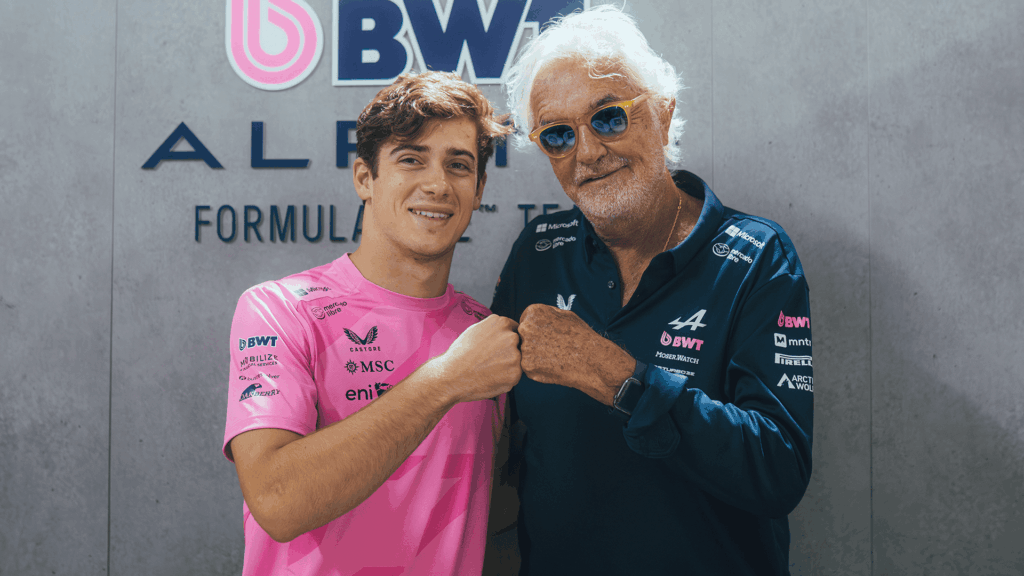
Teams are accepting the risk of signing young talent despite the inherent dangers. They’re looking at the upsides of young drivers rather than opting for more experience.
This represents a major shift from just a few years ago when experience was prized over potential.
The Piastri Lesson Alpine Learned the Hard Way
Alpine thought they had Fernando Alonso signed to race alongside Esteban Ocon with Oscar Piastri as their test driver. Just a few years later, they have none of these drivers.
The Piastri contract saga with McLaren in 2022 cost Alpine approximately $530,467 in legal costs. More importantly, it cost them a generational talent who went on to prove that young drivers can handle F1 cars and be competitive immediately.
Alpine’s takeaway: if you see a driver with potential, lock them down as soon as possible.
The Colapinto signing shows they learned this lesson. Both Alpine and Williams had to negotiate a buyout agreement before the move was announced. Alpine invested heavily in Franco and expects a lot from him.
The Financial Reality Behind the Signing
Alpine needs to pay for Mercedes engines starting in 2026. That bill will be significant.
Colapinto brings Mercado Libre sponsorship money that offsets these Mercedes engine costs. Plus, having Franco on the grid draws in more fans from Argentina, both viewing races and attending them.
But here’s the reality: money buys you the seat, not job security.
Think about all the Marlboro-backed Italian drivers from the eighties or Mild Seven-backed Japanese drivers in the nineties. If a driver doesn’t perform on the track, the money only provides a short-term reprieve.
What Success Looks Like for Colapinto
Franco needs to show improvement and dedication coupled with a racer’s mindset. The team may continue to struggle in 2026 because nobody knows the competitive order until Q1 at Albert Park next year.
Regardless, Franco and Pierre Gasly need to keep their heads down and race as hard as they can so the team can improve.
The only real metric: how close is he to his teammate?
If Franco is improving, even modest results will be acceptable because he’s a young driver. As long as the trajectory is right, he should have a seat with the team.
If Franco isn’t making Q2 and consistently being outqualified by Pierre, that shows he may not be strong enough. However, if both drivers are close and regularly get into Q2 and sometimes Q3, Franco should be fine.
Also, if Franco’s race craft is poor or he makes a lot of mistakes, that could put his seat at risk.
The Bigger Picture: Alpine’s Real Strategy
My belief is that Alpine is being prepared for sale. The Renault Group is likely to reduce its investment in the coming years. There are also reports that the minority investor group (24%) is looking to sell their shares in the team.
Flavio Briatore was likely given instructions to stabilize the team, make it more competitive, and put the pieces in place that would add to its valuation. At that point, both parties could sell part or all of their holdings and make a good profit.
That would enable another ownership group to take over a team that is stable and more competitive.
Having Colapinto drive for Alpine is a short-term solution but a significant one. He’s employed by Alpine and is expected to do his best regardless of what happens with the ownership of the team.
Regardless of what happens with Alpine, if Franco wants to stay in F1, he needs to continue to display improvement and competitiveness. He may well return to Williams someday or join some other team if he can deliver at Alpine.
The Youth Movement Sweeping F1
The 2025 season is witnessing one of the largest influxes of talent in recent history with six new drivers. This compares to zero rookies in 2024.
Modern simulator fidelity has reached a level where rookies like Colapinto arrive in F1 with the knowledge already embedded. The technology has fundamentally changed the risk calculation for teams betting on youth.
The budget cap also makes rookies financially more attractive than experienced drivers. Teams need the financial flexibility, and young drivers with sponsor backing provide exactly that.
Alpine’s Colapinto signing fits perfectly into this new F1 reality. Teams are betting on trajectory over track record, potential over proven performance, and financial flexibility over expensive veterans.
The question now: will this gamble pay off for Alpine, or will they repeat the mistakes that cost them Piastri?
Franco has one year to prove he belongs. The clock is ticking.