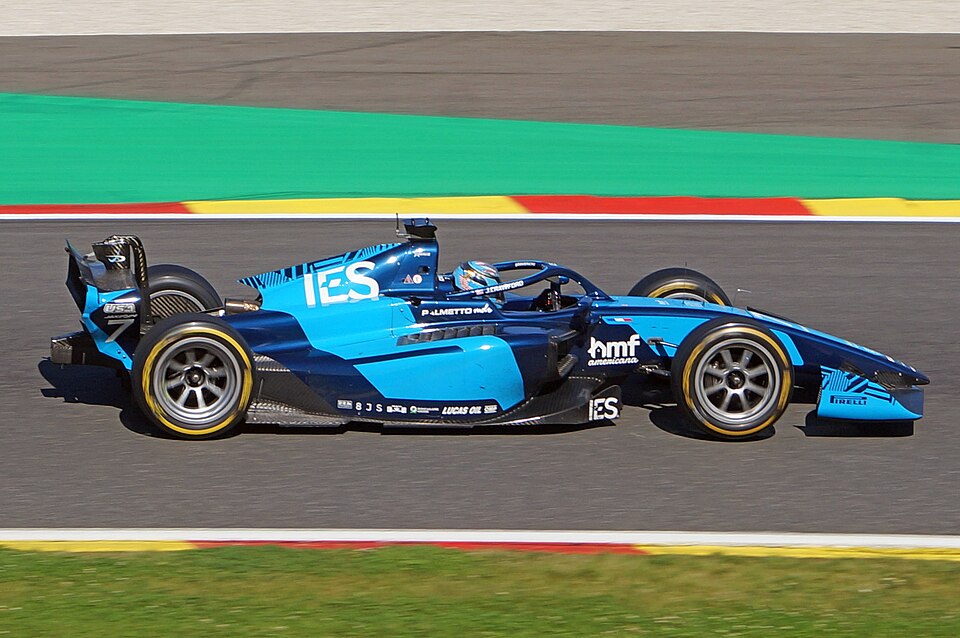
Aston-Martin just announced Jak Crawford as their reserve driver for 2026. Most people see a routine development signing. I see a team building insurance against a problem they can’t talk about publicly.
The problem has a name; Lance Stroll.
The Power Imbalance Nobody Mentions
Lawrence Stroll owns the team. His son drives for it. That’s the public story.
Here’s the private calculation: Lawrence Stroll is a billionaire. Aramco is worth hundreds of billions. Honda is one of the largest auto manufacturers in the world.
Stroll owns part of the Aston-Martin car company. That company is struggling to make money. His F1 team just spent massive resources to bring in Adrian Newey and secure Honda engines for 2026.
When your partners are writing checks that dwarf your net worth, ownership becomes complicated.
Honda Has Done This Before
In the 1980s, Honda wanted Nelson Piquet treated as Williams’ number one driver. When Nigel Mansell started beating Piquet, Honda got angry.
They wanted Williams to fire Mansell and hire Satoru Nakajima. Williams refused.
So Honda took their engines and Nelson Piquet to Lotus. Then they moved to McLaren to partner with Ayrton Senna, even though Williams still had a year left on their contract.
Honda will play hardball with drivers.
Now Honda president Koji Watanabe has confirmed to The Japan Times that Honda will have a say in Aston Martin’s driver lineups from 2026.
That’s not a casual statement. That’s a warning shot.
The American Market Math
Here’s where Crawford becomes more than a backup plan.
Honda is a major player in the U.S. auto market. Both in sales and manufacturing presence. It’s a much larger market than Canada.
F1 has exploded in America over the past few years. An engaging American driver could help Honda reach exponentially more customers than a Canadian one. Crawford himself acknowledged that “being an American gives me an advantage in terms of publicity.”
The commercial difference? Potentially ten times as much.
Lance Stroll hasn’t had to develop marketing appeal. His position was always secure through ownership. Crawford will have to earn every opportunity, which means he’ll naturally cultivate the engagement that sponsors crave.
If Aston Martin becomes competitive in 2026, if Newey delivers a competitive car, suddenly Aramco and Honda will want to maximize their investment. They’ll want the best two drivers they can obtain.
Crawford doesn’t have to be the best driver on the grid. He just needs a higher talent ceiling than Stroll.
What The Data Shows
Aston-Martin let Felipe Drugovich to Formula E. Drugovich won the F2 championship and is considered a talented driver. Crawford is currently second in the standings and hasn’t won the title yet.
Why choose Crawford over a champion?
Because at the top of F2, everyone is fast. The real question is who can transition to F1 and adapt to those cars. Crawford has logged over 2,000km in F1 machinery already, working extensively in Aston-Martin’s simulator.
Teams see data we don’t. Oliver Bearman and Andrea Kimi Antonelli struggled in F2 last year but have performed well in their F1 rookie seasons. The teams knew something the results didn’t show.
When Aston-Martin evaluates Crawford two years before he’d step into the car, they’re betting on what simulator work and testing data reveal about his adaptation process. Not just his F2 standings.
It’s a combination of adaptability and commercial appeal. Both matter in 2026.
The American Pathway Clarifies
It’s been 43 years since an American driver won in F1. Mario Andretti’s last victory came in 1978.
The pathway has always been clear but difficult. American drivers need to go to Europe and climb the F4/F3/F2 ladder. The more U.S. drivers do that successfully, the more will follow.
Teams aren’t dismissing American drivers anymore. When you win and demonstrate competitiveness, people notice.
Crawford is proving the pathway works. But he’s also revealing something else: F1 teams now make massive commitments based on data and strategic positioning, not just race results.
The traditional “prove yourself then get the call” model is evolving. Some drivers get recognized early, signed, and developed by one team. Others have to prove themselves first.
There’s no standard formula. But there is a clearer route.
2026 Changes Everything
The regulations reset in 2026. Aerodynamics change. Engines change. Team hierarchies could shift overnight.
Aston-Martin is positioning for multiple scenarios. Alonso is contracted through 2026, but he won’t race forever. Stroll theoretically has his seat as long as he wants it, but Honda’s influence and Newey’s technical authority could change that calculation.
Crawford represents optionality. He’s the known quantity who’s familiar with the team, ready if circumstances shift.
If the car is competitive and Honda decides the American market opportunity is too valuable to pass up, Aston Martin has their answer already under contract.
That’s not just talent development. That’s strategic chess.
And it tells us everything about where F1’s power dynamics are heading.