I’ve watched Formula 1 long enough to know when something fundamental shifts beneath the surface.
George Russell outqualified Hamilton 39-29 across their three seasons together at Mercedes. He won three races to Hamilton’s two. He outscored him in two of those three seasons.
In 2024 alone, Russell beat Hamilton 19-5 in qualifying.
Let that data sit for a moment. Russell didn’t just edge out one of the greatest drivers in F1 history, he dominated him.
When Data Becomes Reality
Teams collect mountains of telemetry. They know what every driver can do before the lights go out.
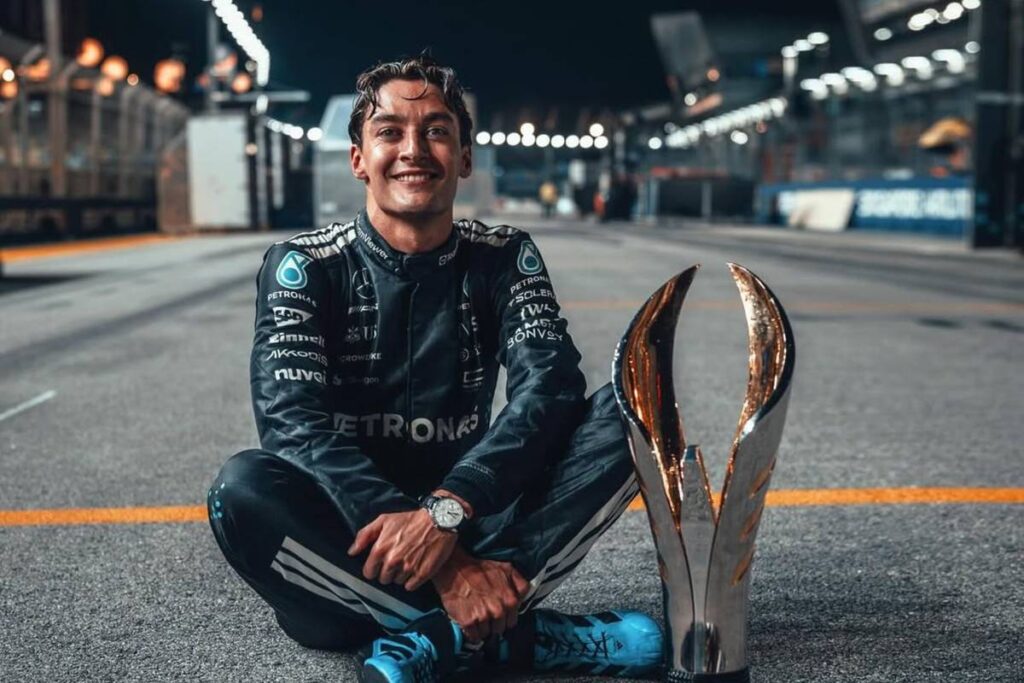
But when Russell crossed the finish line in Singapore while still without a contract beyond that season, something changed. The data translated into actual results at precisely the moment it mattered most.
That’s not luck. That’s a driver demonstrating leadership and talent when the pressure peaks.
Russell’s Singapore victory showed Mercedes exactly what they needed to see: he could minimize the loss of Lewis Hamilton.
The Better Value Equation
Russell currently earns around $15 million annually. Reports suggest his extension could reach $30 million per year with options through 2028.
Compare that to what Hamilton commanded during his final Mercedes years. Russell delivers superior qualifying performance and comparable race results for significantly less money.
Mercedes isn’t just replacing a legend, they’re getting better value.
Sure, Russell doesn’t bring the drama and global recognition Hamilton did. But he’s proven himself the faster driver during their time together and now with Lewis at Ferrari.
The math is simple: lower cost, better results, longer runway.
The Generational Shift Nobody Saw Coming
Here’s what fascinates me about Russell’s approach to his contract situation.
Most drivers in his position would leverage a Singapore win for maximum dollars. Russell wants something different: stability.
He values harmony and being wanted. He’s looking for a place where he fits, not where there’s excessive conflict.
This represents a fundamental change in how modern F1 drivers think about career strategy.
The smart ones realize that culture, morale, and stability enable greater results. Better results increase market value more effectively than chasing short-term money ever could. Russell understands that if he stays with Mercedes and they improve their car, his results will improve too.
What This Means For F1’s Future
Look at Michael Schumacher’s final Mercedes stint. Teams kept him despite declining performance because of brand value.
Russell represents the opposite calculation. He’s at or near his peak, ready to deliver for many more years in a competitive car.
Mercedes is trading spectacle for efficiency during their transition period. In F1’s increasingly commercial environment, especially with American audiences growing, that seems counterintuitive.
But even megastars fade. The greats all do eventually.
Russell’s consistency throughout 2025 demonstrates something sponsors and teams increasingly value: reliability without the chaos. Two victories and seven podiums while maximizing the W16’s potential shows he’s not just fast on Sundays.
He’s fast every weekend.
The question isn’t whether Russell can lead a top team. His four-year body of work answers that definitively.
The real question is whether F1’s economics can sustain this new model where performance efficiency matters more than star power. Where culture and stability produce better results than drama and headlines.
I think we’re about to find out.