Most F1 drivers dream of going out on top. Fernando Alonso has turned that logic upside down.
The two-time champion recently revealed his retirement plans hinge on Aston Martin’s 2026 performance. But here’s the twist: success makes him more likely to quit, not stay.
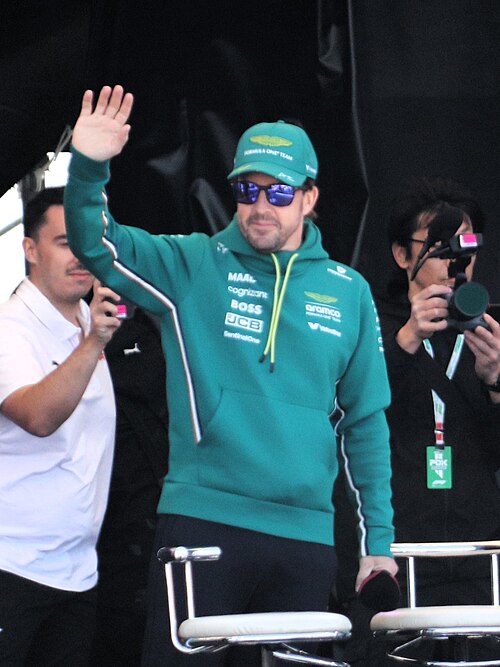
“If the car goes well, 2026 will probably be my last year,” Alonso told AS.com. Success gives him the perfect exit story. Failure keeps him hunting.
I see this as strategic positioning disguised as retirement talk. Alonso wants to end his career on a high, and having a competitive car will enable him to do exactly that.
The Newey Factor Changes Everything
What makes 2026 different from Alonso’s previous championship shots with Ferrari and McLaren? One name: Adrian Newey.
For the first time in his career, Alonso gets to work with Formula 1’s most successful designer. Newey has been “scribbling ideas” in his new Aston Martin office, and the development pace is already unprecedented.
Newey-designed cars have won 12 constructors’ championships and 15 drivers’ titles. That track record transforms Aston Martin from hopeful contender to legitimate threat.
But I don’t think Alonso will stick around to see the full development curve play out. This feels like positioning and signaling that 2026 will be his farewell tour.
Corporate Pressure Creates Unexpected Consequences
Here’s where the story gets interesting. If 2026 becomes Alonso’s final season, that Aston Martin seat suddenly becomes the most attractive opening on the grid.
Honda and Aramco are major backers expecting results. Lawrence Stroll has invested heavily in upgrading Silverstone facilities. The financial backing and technical foundation are championship-caliber.
But there’s a family complication. Lance Stroll currently occupies the second seat, and his father owns the team.
I think the sun may be setting on the son. Corporate pressure from Honda and Aramco will demand maximum competitiveness. Lance simply isn’t up to that task.
The Business Reality Behind Family Loyalty
Lawrence Stroll isn’t just building a racing team. He’s creating a premium asset.
At some point, he’ll want to sell all or part of Aston Martin. To maximize valuation, the team needs to be genuinely competitive. Having only one strong driver limits both championship potential and market value.
This business logic could force an incredibly difficult personal decision. Family loyalty versus financial returns.
The math is simple: two elite drivers generate more prize money, attract better sponsors, and command higher sale prices than one elite driver carrying a weaker teammate.
The Ultimate Driver Market Earthquake
If both Alonso and Lance exit by 2027, who fills those seats?
My prediction: Max Verstappen as lead driver, Felipe Drugovich as his partner.
This might sound impossible, but the pieces align perfectly. Verstappen knows multiple top seats will be available in 2027, including Aston Martin’s. Saudi Arabia’s Public Investment Fund reportedly wants to offer him £75 million annually.
Verstappen gets his reunion with Newey, Honda power, and the chance to drive Aston Martin’s hypercars in WEC. Drugovich is already embedded within the team structure and can slot in easily.
Ferrari’s Bearman and Mercedes’ Antonelli are locked into their respective programs. Drugovich represents the path of least resistance.
Why This Prediction Matters
Alonso’s retirement decision isn’t just about one driver’s career arc. It’s the first domino in F1’s biggest driver market reshuffling in decades.
The 2026 regulation changes create the perfect storm. New technical rules level the playing field. Corporate backers demand results. Generational talent transitions accelerate.
I believe we’re watching the early stages of a transformation that will reshape F1’s competitive order for the next decade. Alonso’s paradoxical retirement logic is just the beginning.