When both MotoGP and Formula 1 left Argentina in the early 2000s, they walked away from the same problem: a country that couldn’t afford to keep them.
The fans were there. The passion was real. But passion doesn’t pay hosting fees when your economy runs on commodity prices and your government can’t stop spending money it doesn’t have.
Now MotoGP is coming back in 2027. And if you’re paying attention, this isn’t just about bikes returning to Buenos Aires. It’s about whether Argentina has finally fixed what broke two decades ago.
What Broke in the First Place
Argentina’s motorsport exodus wasn’t about one bad year or one corrupt official. It was structural.
The country depends on agriculture, mining, and fishing. When commodity prices tank, so does government revenue. Argentina never became a major oil or gas producer. It built a well-educated workforce and an emerging tech economy, but then smothered it with excessive regulation and political instability that made investors run the other way.
You can’t host a MotoGP round or an F1 race when international sponsors won’t commit capital to your country. The hosting fees alone require financial commitments most governments can’t make when they’re drowning in sovereign debt and bloating their public sector.
Argentina once led South America in economic development at the end of the 19th century. Then it fell into a pattern that lasted a century: elect popular leaders who implement terrible economic policies, bloat the public sector, create hostility toward free markets, and occasionally have the military conduct a coup.
Previous reformers tried to fix this but they failed.
Why Milei Might Actually Be Different
Javier Milei is applying libertarian, free-market policies at a pace Argentina hasn’t seen before. He cut the public sector. He’s challenging the model that gave Argentina corrupt leaders who maximized control over a nominally free country.
The results are already showing up in the data.
Argentina posted its first budget surplus in over a decade. Monthly inflation hit 25.5% in December 2023 and poverty spiked to 55% in early 2024. But by mid-2025, monthly inflation slowed to 1.9% and poverty fell to about 31.6%.
Argentina’s economy is projected to grow by 5.5% in 2025 according to BBVA. The country posted a record $18.9 billion trade surplus in 2024.
More importantly for motorsport: Milei’s La Libertad Avanza party secured 41% of the vote in October 2025 midterm elections and doubled its congressional representation. He has political capital now. He can sustain these reforms.
That’s what makes MotoGP’s return possible. Not just economic recovery, but political stability that lets promoters believe the reforms will stick.
The Financial Structure That Makes This Work
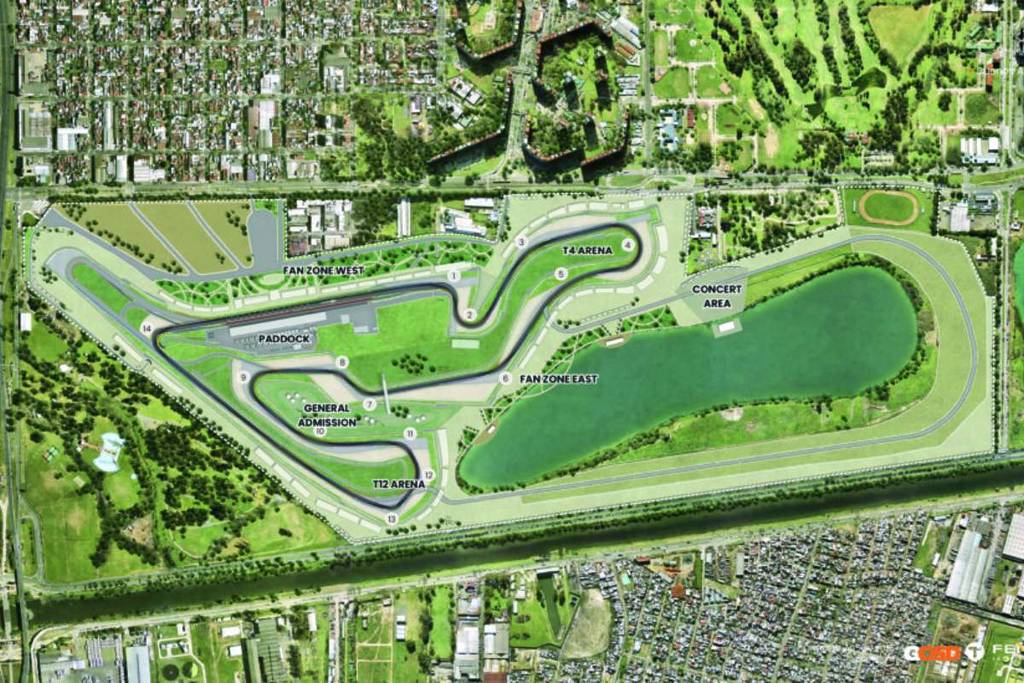
The MotoGP circuit is being built on city-owned parkland in Buenos Aires. There will be a promoter who runs the event and takes a portion of revenue. The local government is almost certainly underwriting a significant portion of track renovations and hosting fees.
That model works for MotoGP. It won’t work for F1.
Qatar pays approximately $55 million in hosting fees for its Grand Prix. Newer Middle East races often command $50 million or more because governments view F1 as a global branding opportunity worth the investment.
Austin pays about $30 million, partly offset by Texas state government support because of the race’s economic impact.
Argentina’s government can’t write those checks alone, even with Milei’s reforms.
Bringing F1 back would require a consortium model similar to what happened in Mexico City. You’d need the city government, the national tourism bureau, and major corporations like YPF Petroleum, banks, and airlines who benefit from international exposure.
The business case to those sponsors isn’t just “exposure.” It’s proving to the world that Argentina has fundamentally changed. That it’s attractive to business and tourists again. That Buenos Aires can deliver the kind of city atmosphere you see in Montreal, Mexico City, or Melbourne.
The evidence that this could work is already emerging. Globant, a global technology company founded in Buenos Aires in 2003, became a global F1 sponsor in 2024 but never sponsored a single driver or team until Franco Colapinto entered the sport. When the right motorsport opportunity presented itself, major Argentine corporations committed resources.
What Success Actually Looks Like for MotoGP
If MotoGP comes back in 2027 and you’re trying to figure out whether F1 could follow, here’s what you watch for:
A well-run event that draws a passionate, sell-out crowd.
Buenos Aires Mayor Jorge Macri already stated that MotoGP’s return is “the first step” in the city’s bid to become an F1 host again. The new 4.3 km track with 14 turns is expected to draw around 150,000 people at the track and millions of viewers across more than 200 territories.
If they can deliver that for a couple of years, Buenos Aires makes a credible case for F1. The backers need to see return on investment, particularly from event attendee revenue.
But there’s another metric that matters more than attendance numbers.
The Franco Colapinto Factor
Franco Colapinto’s F1 debut in 2024 proved Argentina is starving for racing heroes. They’re like the Orange Army from the Netherlands who follow Max Verstappen to every circuit.
FOX Sports Argentina saw viewership reach 600,000 during the Singapore Grand Prix when Colapinto raced. That’s four times their usual audience. Verstappen told Colapinto directly: “European drivers can’t believe the level of support you have. It’s incredible. They’re at every circuit, everywhere.”
Colapinto didn’t bring money to Williams for his seat. He brought tremendous Argentine fan support, and the brands showed up. Globant and Mercado Libre became Williams sponsors.
But here’s the question: does that fanbase sustain itself if Colapinto isn’t on the grid in 2026 or 2027?
I think it does.
Consider Brazil. At one point, multiple Brazilian drivers raced in F1 with Brazilian sponsors like Petrobras. The fans still sold out Interlagos and remained passionate even when driver representation declined. Franco’s presence is the cherry on top, he amplifies an already emerging fanbase that craves racing.
MotoGP isn’t nearly as large as F1, and their previous Argentine events at Termas de Río Hondo were successful despite being 700 miles from Buenos Aires. An event in the capital, at the political, economic, and demographic center of the country would be a different proposition entirely.
The Geopolitical Opening Argentina Needs
Here’s where timing gets interesting.
MotoGP returns in 2027. If F1 is waiting to see those results before making a move, you’re looking at 2029 or 2030 at the earliest for a Grand Prix. That seems like Argentina might miss its window as F1’s calendar fills up with new races.
But instability in the Middle East could change that calculation fast.
F1 cancelled both Bahrain and Saudi Arabian Grands Prix in 2025 due to ongoing US-Iran conflict. There’s no guarantee Qatar or Abu Dhabi events remain stable long-term either.
Argentina could position itself as a geopolitical hedge. An increasingly stable democracy in the Americas that can deliver a sellout crowd of 150,000 on race day when Middle Eastern venues become uncertain.
Liberty Media doesn’t just need one-off replacement races though. They need long-term calendar stability. The question is whether Argentina pursues being a backup plan or a permanent fixture.
I think they’re being smart about it. They want to see how the initial MotoGP rounds perform financially. If those succeed and demand for an F1 race materializes, Buenos Aires has a legitimate case.
How Seven Americas Races Could Work
The calendar positioning matters more than people realize.
Having seven races in the Americas at different times of year could bookend the European season effectively. I could see a season where F1 hits COTA and Mexico City in early fall, then returns for Brazil and Argentina to end the season.
Liberty Media wants to pair races as much as possible for logistical efficiency. A spring or fall race alongside Brazil wouldn’t cannibalize either event. Both could draw enough fans to sell out.
The concern about cannibalizing Brazil’s attendance doesn’t hold up when you look at the fanbases. Argentine and Brazilian motorsport cultures are distinct. Buenos Aires would pull from its own passionate audience plus European visitors drawn to the city’s European character.
Buenos Aires officials are already being direct about their intentions. They’ve stated that “several contracts on the current Formula 1 calendar are coming to an end. If a window opens, we want to be ready.” City officials confirmed the Buenos Aires circuit “is currently being redeveloped with plans to host MotoGP from 2027” but “the project has been designed with a bigger goal in mind” as they want the track to “also meet Formula 1 standards.”
Discussions with Liberty Media are already taking place about extending the layout.
The Realistic Timeline
MotoGP in 2027 serves as the litmus test. If that event delivers sellout crowds, smooth logistics, and strong sponsor engagement for two consecutive years, F1 becomes realistic by 2029 or 2030.
That timeline assumes Milei’s reforms continue producing results. It assumes the consortium funding model comes together. It assumes no major political or economic reversals.
Those are significant assumptions for a country with Argentina’s history.
But the fundamentals are different now in ways they haven’t been for decades. Argentina posted a record trade surplus. Inflation is under control. The government has political capital to sustain reforms. Major corporations are willing to commit resources to motorsport when the opportunity aligns with national transformation.
MotoGP’s return isn’t just about bikes coming back to Buenos Aires.
It’s a test of whether Argentina has finally fixed what broke. Whether the country can sustain the financial commitments, logistical execution, and political stability that premier motorsport demands.
If MotoGP succeeds, F1’s Argentine door doesn’t just crack open. It swings wide.
Bonus:
Want to see what racing on this new circuit would look like? Watch for yourself.