When Formula 1 announced that Barcelona and Spa would rotate races through 2032, most coverage focused on the romance of keeping these historic circuits alive. I saw something different.
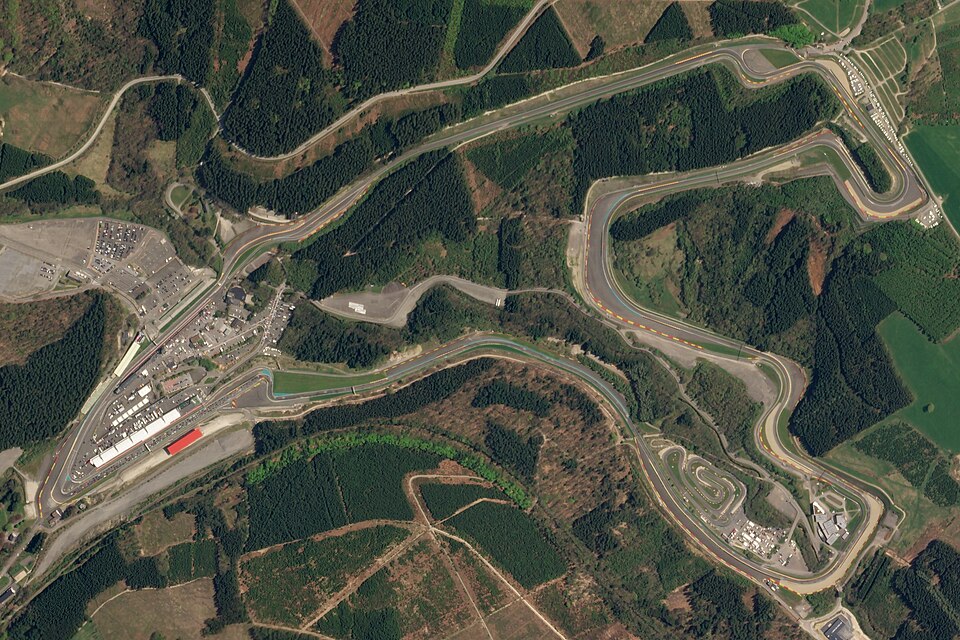
This is F1 admitting that racing heritage no longer guarantees you a spot on the calendar. The rotation model reveals how the sport now operates and what it means for fans watching F1 transform from a European tradition into a global entertainment franchise.
The 24-Race Limit Creates a Competitive Marketplace
F1’s decision to cap the calendar at roughly 24 races has turned circuit access into a zero-sum game. Every new venue means someone loses their date.
Barcelona had to invest heavily just to secure three races over six years. The circuit underwent major renovations in 2024 including upgraded hospitality spaces and solar panel installations throughout the facility.
Stefano Domenicali made the new rules explicit: “It’s not enough to have a pedigree anymore. You also have to demonstrate that you are keeping up.”
Translation: Your racing history means nothing if you can’t pay the escalating fees and match the infrastructure investments of government-backed circuits.
The numbers tell the story. Barcelona pays approximately €26 million annually to host F1. Meanwhile, Madrid is reportedly paying €48 million per year, nearly twice as much, to secure the Spanish Grand Prix title through 2035.
Saudi Arabia and Azerbaijan each pay $55 million per year. Qatar matches that under a 10-year deal. These Middle Eastern nations view F1 as critical to their economic diversification, with Saudi Arabia alone funneling more than $6 billion into its sports industry since 2021.
How do traditional European circuits compete with that?
Madrid’s Gambit Ignores Valencia’s Cautionary Tale
F1 is betting big on Madrid despite what happened in Valencia.
The Valencia Street Circuit collapsed after just five years despite having everything F1 claims to value. It was in a popular tourist city. Multiple Spanish drivers were on the grid. The circuit sat in a waterfront location with America’s Cup port infrastructure.
The project left a devastating £255 million in debt, with £87 million paid to Bernie Ecclestone for hosting fees alone. The circuit now sits abandoned, stripped of everything valuable, overgrown with weeds.
Madrid isn’t a racing city. Spain’s motorsport culture concentrates in the southern coastal regions where tourists actually go. Barcelona works because it’s a coastal destination with built-in tourist appeal.
Madrid is isolated in Spain’s hot, arid interior.
The city is using F1 as a tourism development tool, trying to manufacture what Barcelona has naturally. They’re betting they can overcome geography and culture with corporate money and business support.
Liberty Media was drawn to the IFEMA site’s easy access to public transportation and a major airport. Barcelona’s circuit sits 26 miles from the city airport with heavy traffic. That infrastructure advantage matters more to F1 than racing tradition or passionate fans.
European Fans Are Being Taken for Granted
As an American fan, I’m watching F1 treat Europe differently now.
The sport assumes European races will always be well-attended by passionate fans. They can rotate Barcelona and Spa, drop Zandvoort after 2026, and ignore France and Germany entirely because those fans aren’t going anywhere.
Meanwhile, F1 chases new markets where governments write massive checks.
Zandvoort provides a clear warning. Despite being extremely popular with fans, the Dutch Grand Prix will leave the calendar after 2026 due to financial challenges and lack of government funding. Full grandstands and passionate atmosphere weren’t enough.
Neither France nor Germany can sustain a Grand Prix under the current model. Both countries have long motorsport heritage. Both have passionate fan bases. Neither can compete with Middle Eastern kingdoms that freely spend to buy calendar spots.
The metrics have changed. Fan experience matters only when Domenicali needs to justify a decision. The real game is about government money and infrastructure investment.
The Novelty Is Already Fading
Miami isn’t generating the buzz it did the first two years. The Middle Eastern races feature fantastic facilities but lack atmosphere. The crowds are more subdued. Even China struggles to fill Shanghai International Circuit with paying fans.
These expensive new facilities deliver spectacle but miss the passionate fan engagement that makes European races special.
When circuits like Barcelona and Spa realize they’re competing on the wrong metrics, what happens? How do you invest in fan experience when the real competition is about which government will pay more?
F1 hosting contracts typically run 7-10 years with escalating fees. If a circuit signs a 10-year contract starting at $17 million annually, that fee rises to $40 million by year ten. Promoters can spend £600 million over a decade just on hosting fees and maintenance costs.
No circuit survives that without government backing.
Geopolitical Risk Isn’t Priced In
F1 is locking in long-term rotational deals while betting on volatile markets.
The situation in Iran could affect Gulf State races. Mexico’s security situation changes rapidly. Brazil faces potential political and civil turmoil. Countries like Germany and Poland are increasing military spending due to the War in Ukraine.
F1 controls none of these variables.
The sport has rotated out stable European circuits to chase government money in potentially volatile regions. If those regions become too risky, what’s the fallback plan?
The Barcelona-Spa rotation suddenly looks less like a business strategy and more like F1 keeping a safety net. Three races over six years might not be enough if the global expansion bet goes sideways.
Several European tracks could host races if called upon. If retrenchment becomes necessary, F1 could adjust its calendar toward more European races and fewer flyaway events.
That flexibility matters in a dynamic environment where macroeconomic conditions, global security, and governmental support can shift quickly.
What This Means for American Fans
The parallels between F1’s European calendar compression and its aggressive U.S. expansion are striking.
America gets three stable races (Austin, Miami, and Las Vegas) while historic European circuits fight for survival. Miami and Vegas already had tourist infrastructure. They’re using F1 to boost their city brands, following the same playbook Madrid is attempting.
The difference is that American cities can sustain the financial model. They have large catchment basins, built-in tourist appeal, and corporate money to support escalating hosting fees.
For now, times are great and the future looks bright. Sponsors are engaged. Money flows into the sport. The calendar supports 24 races with escalating fees.
That can change.
The rotation model F1 is implementing reveals a fundamental shift in how the sport values circuits. Racing heritage competes directly with infrastructure investment and government backing. Passionate fans matter less than corporate hospitality and solar panel installations.
Barcelona generates an economic impact of more than €300 million per edition and draws over 300,000 spectators. That passionate fan engagement helped secure its rotational spot, but only after massive infrastructure investments.
The best way forward for F1 is maintaining flexibility. The sport needs options when conditions change, and they will change.
The question is whether three races over six years provides enough of a safety net when the global expansion strategy hits its first real crisis.