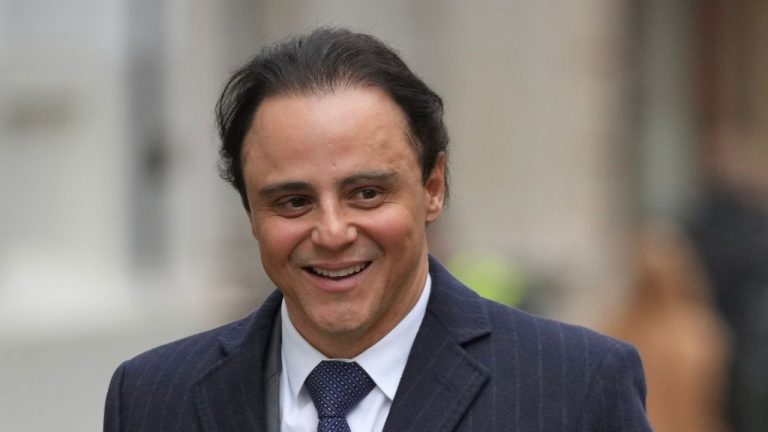
Felipe Massa’s lawsuit just got the green light to proceed to trial.
The court ruled he can pursue his conspiracy claims against Bernie Ecclestone, the FIA, and Formula One Management over the 2008 Crashgate scandal. He’s seeking $84 million in damages for a championship he believes was stolen from him.
The championship itself can’t be changed. The court made that clear.
But here’s what this case really exposes: how F1 was governed when personal relationships and business interests trumped sporting integrity.
The Silence That Speaks Volumes
In March 2023, Bernie Ecclestone admitted something remarkable. He told F1 Insider that he and Max Mosley knew about the deliberate crash during the 2008 season. They chose to do nothing.
“We wanted to protect the sport and save it from a huge scandal,” Ecclestone said.
Think about that for a second.
The people running F1 knew a race had been fixed. They had the information. They had the authority to act. And they decided the sport’s reputation mattered more than the truth.
The scandal only came out in 2009 because Nelson Piquet Jr. got fired and decided to testify. The truth depended on someone being angry enough to talk, not on the governing body doing its job.
The $100 Million Double Standard
Here’s where it gets interesting.
One year earlier, in 2007, McLaren received a $100 million fine for Spygate. They were stripped of all their Constructors’ Championship points for possessing Ferrari technical documents. There was no evidence the information was actually used on their cars.
The fine was massive. The punishment was immediate. The message was clear.
But when F1 leadership allegedly knew about deliberate race-fixing, they stayed quiet.
Personal agendas played a role in Spygate. Max Mosley and Ron Dennis couldn’t stand each other. The large fine was partly out of spite. Add in Ferrari being the victim, and you had all the elements for high drama and swift action.
Crashgate was different. Bernie Ecclestone was keen on getting F1 publicly listed. Controversy and scrutiny wouldn’t have helped that effort. Plus, there was the friendship between Flavio Briatore and Ecclestone. Mosley knew he had to tread more lightly.
Business interests won. Sporting integrity lost.
The Lifetime Ban That Lasted Weeks
In September 2009, the FIA handed Briatore a lifetime ban from F1. By January 2010, a French court overturned it entirely.
The court ruled the FIA didn’t have the legal authority to impose such penalties. They awarded Briatore €15,000 in compensation and ordered the FIA to pay or face a €10,000 daily fine.
The verdict noted that Mosley “was well known to be in conflict with Briatore” and had violated “the principle of separation of the power of the bodies.”
The FIA’s case was weak. The ban was overturned. And it showed that the FIA did not do an adequate job of policing itself.
Briatore returned to F1 as an Alpine advisor in 2024. Pat Symonds, who also orchestrated the fix, became F1’s Chief Technical Officer in 2017. Fernando Alonso, who benefited from the crash, is still racing.
The people who conspired to fix the results are still involved in the sport. Massa’s career ended years ago.
What This Case Actually Accomplishes
Massa won’t get his championship back. The court already ruled on that.
But this lawsuit serves a different purpose.
It gets the truth out in the open. Who knew what and when? It shows that manipulation has a cost associated with it. It brings the inner workings of F1 and the FIA into public view.
The scrutiny itself becomes the deterrent.
When ING discovered what happened, they removed their sponsorship from the Renault team. Other sponsors for events and the series had questions too. If results are fixed and there’s no response, how does that affect the integrity of the sport?
The pinnacle of global motorsport needs to be governed in a fair and judicious manner. If that doesn’t happen, companies and investors will leave. The result could be devastating to the sport.
This lawsuit gives both the FIA and FOM an opportunity to examine how they would handle an incident like this in the future. Having “gentleman’s agreements” or other private arrangements erodes trust in the sport. That lowering of trust runs the risk of scaring away sponsors, manufacturers, and others interested in being involved in F1.
The Real Question
The accountability for the crash lies with Symonds and Briatore. The accountability for policing the sport belongs with the FIA.
But here’s what I keep coming back to: this was one of the last hurrahs of the way the old guard did things. The culture of the old boys club trying to keep a lid on things. Despite all the publicity, money, and excitement; F1 was still run by racers and entrepreneurs who sometimes handled things in a more unofficial way.
Massa is fighting for integrity and honesty. The lawsuit won’t overturn the results of the 2008 season, but it can serve as a deterrent for future manipulation and secrecy.
If he wins, Massa will receive a sizeable judgment. But he doesn’t want or need to make this about the money. What he wants is the full story of the Crashgate scandal to be known.
While this will embarrass some people involved in F1, it will also provide impetus to run the sport better in the future.
And from an American sports perspective, that matters. The scale is bigger because of the popularity of Formula One and all the global players involved. When the governing body chooses silence over investigation, when business interests override sporting fairness, when the people who orchestrated a fix remain in the sport while the victim’s career ends, you have to ask what the sport actually values.
The Wounds Worth Reopening
This case will reopen old wounds. It will cause unwanted negative attention for how F1 was governed in the past.
But some wounds need to be reopened.
The irony is sharp. While Massa has been out of F1 for years, both Pat Symonds, Flavio Briatore, and Fernando Alonso are still in the sport. That fact alone tells you something about how F1 handled this scandal.
The trial will determine whether Massa can prove the alleged conspiracy and substantiate his claims for financial damages. But the real verdict will be about whether F1 learned anything from this era.
Can the sport be trusted to police itself? Can it prioritize integrity over business interests? Can it handle the truth when the truth is uncomfortable?
Those are the questions this lawsuit forces F1 to answer.
And those answers matter more than any championship result.