Most F1 fans watching races in Abu Dhabi or Bahrain think about lap times and podium finishes. I think about what happens when missiles start flying.
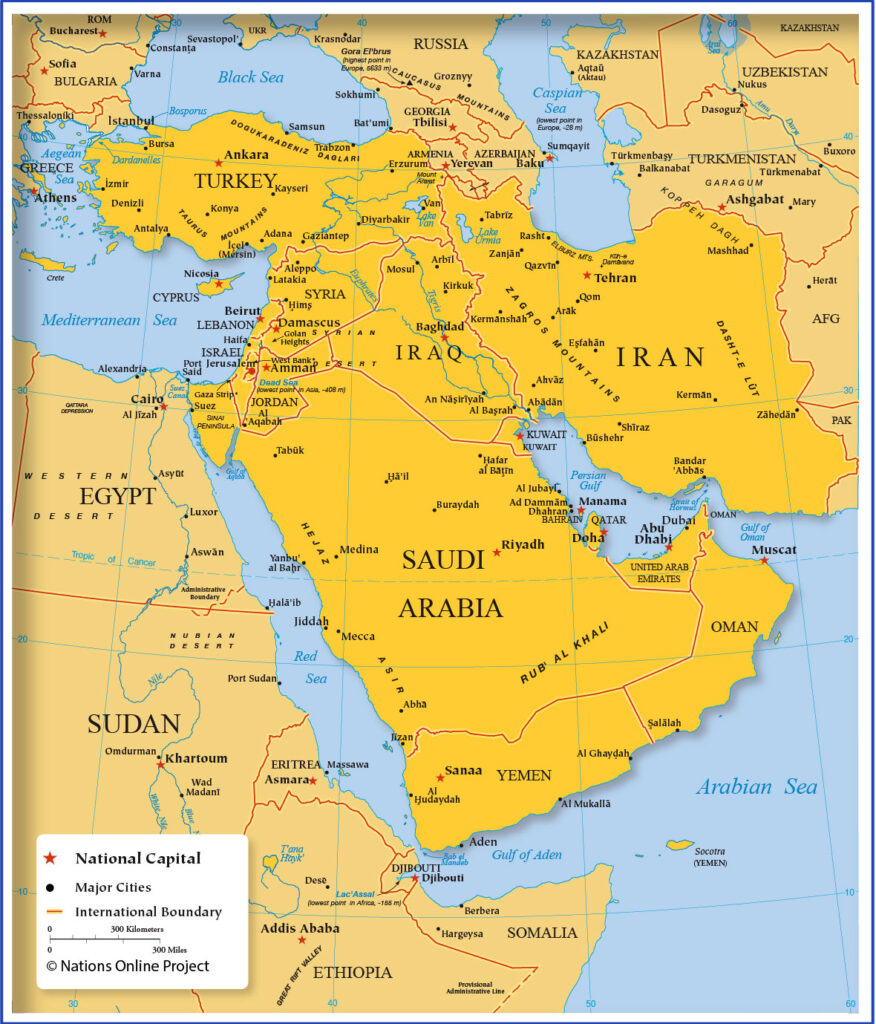
The ongoing war with Iran isn’t just a distant geopolitical problem. It’s a direct threat to Formula 1’s financial foundation and racing calendar. And most people have no idea how deep the vulnerability runs.
I’m not talking about abstract risk here. I’m talking about concrete exposure that could reshape the sport as we know it.
The Money Behind the Mirage
Here’s what casual fans miss: Middle Eastern money doesn’t just pay for races. It owns the sport.
Bahrain’s Mumtalakat and Abu Dhabi’s CYVN Holdings took full ownership of McLaren Racing in September 2025, valuing the team at over $4 billion. That’s a sevenfold increase from the $750 million valuation just five years earlier.
Saudi Arabia’s Public Investment Fund quietly acquired approximately 8% of Aston Martin’s F1 team. Qatar Investment Authority grabbed a significant minority stake in Audi’s F1 operation.
This isn’t sponsorship. This is structural dependency.
ARAMCO sponsors multiple teams. DP World plasters its logo across paddocks. Emirates partners with Formula One Management itself. Ferrari World sits in Abu Dhabi as a monument to how deeply intertwined these relationships have become.
The teams got richer. The sport got more valuable. Everyone celebrated the growth.
But growth built on geopolitical quicksand has a price.
The Chokepoint Nobody Talks About
Bahrain sits just across the Arabian Gulf from Iran. It’s not a metaphorical proximity problem; it’s a literal one.
Iranian forces have already struck Bahrain during this conflict. The country is allocating resources for rebuilding while simultaneously trying to maintain its F1 investments.
Mumtalakat doesn’t just own McLaren. It accounts for 18% of Bahrain’s GDP and supports over 12,000 local jobs. When a country that small faces active military strikes, every financial commitment gets reconsidered.
The real nightmare scenario involves the Strait of Hormuz.
About 20.9 million barrels of oil per day passed through that strait in the first half of 2025, roughly one-fifth of global oil consumption. China alone accounts for 37.7% of total flows through the strait.
As of March 2026, tanker traffic dropped around 90% compared with the previous week. Iran’s Islamic Revolutionary Guard Corps declared the strait “closed” and warned that any vessel attempting passage would be set “ablaze.”
This isn’t just an F1 problem. This is a global economic crisis with F1 caught in the crossfire.
South Korea announced it could run out of LNG in nine days. China, India, Japan, and South Korea cumulatively accounted for 69% of all Hormuz crude oil flows in 2024.
When Asian economies face energy shocks of this magnitude, F1 sponsorships become expendable luxuries.
The Insurance Reality
Before the 2026 strikes on Iran, ship insurance for the Strait of Hormuz increased from 0.125% to between 0.2% and 0.4% of ship insurance value per transit. For very large oil tankers, that’s a quarter of a million dollars extra per passage.
That was before things escalated.
F1 moves equipment by ship. Teams transport massive amounts of freight across continents. When insurance carriers decide a region is too risky, they either refuse coverage entirely or price it so high that passage becomes cost-prohibitive.
The new sponsors in F1, especially tech and financial companies, don’t have the same risk tolerance as tobacco and alcohol sponsors did. These companies answer to boards and shareholders who care deeply about reputational risk.
They don’t want their logos associated with racing in war zones.
The Calendar Calculus
F1 has precedent for canceling races in the region.
In 2011, F1 canceled the Bahrain Grand Prix due to civil unrest during anti-government protests that resulted in at least 182 deaths. Crown Prince Salman bin Hamad bin Isa Al Khalifa stated the country’s entire attention needed to focus on building national dialogue.
When the race returned in 2012 despite ongoing protests, The Independent called it “one of the most controversial in the history of the sport.” A protester was killed by police the Friday before the race.
F1 proceeded anyway.
Then came 2022 in Jeddah. Houthi rebels attacked an oil depot just 12 miles from the circuit while Friday practice was running. Teams held emergency meetings debating whether to leave.
They stayed. They raced.
That established a precedent: F1 pushes forward despite visible security threats.
But there’s a limit to how far “the show must go on” mentality can stretch.
The Immediate Future
I expect both the Bahrain and Saudi Arabia events to be canceled due to the ongoing war. The physical safety risks combined with the optics of racing in an active conflict zone make these races untenable.
Qatar and Abu Dhabi might survive if the war ends by late season and neither country suffers significant damage.
Here’s the logistical reality: those races won’t be replaced.
The calendar already runs until early December. Teams won’t sacrifice the summer break. There’s no room to plug in replacement events when you’re already running 24 races and logistics are stretched to breaking point.
As of March 2026, Saudi Arabia’s airspace is partially closed in areas bordering Iraq and the Persian Gulf. Bahrain’s airspace has been totally closed.
Major shipping and logistics companies including Maersk, MSC Group, CMA CGM, Hapag-Lloyd, COSCO, and Emirates SkyCargo have restricted or halted bookings through the region. Exceptions exist only for essential goods like food and medicine.
F1 freight doesn’t qualify as essential.
The Mirage Exposed
Expanding into the Middle East has been a mirage in many respects.
The teams got money. The sport got great new venues. But the price may be too high now.
None of these countries has anything resembling a motorsports culture outside of desert racing and rallying. The countries are relatively small and don’t have large native fanbases. The events draw tourists, but the excitement at these races usually seems muted.
Add to that the generally repressive nature of Middle Eastern governance, terrible human rights practices, and simmering ethnic and religious tensions.
You have a volatile cocktail.
F1 traded authentic motorsport culture and organic fanbases for hosting fees and investment capital. The underlying instability is now exposing that trade-off.
The American Alternative
Compare this to F1’s expansion in the United States.
Formula 1 is the pinnacle of motorsport. Its existing fanbase resides in established markets with relatively high socioeconomic stability. Those are conditions where a sport like F1 can thrive.
Three races in the US may be sustainable along with one in Mexico and another in Canada. The relative peace and stability in North America combined with its motorsports culture makes it attractive.
Europe still has legacy and passion to offer. Australia and Japan provide stable, enthusiastic markets as well.
In the end, any loss of Middle Eastern races won’t be felt for long from a sporting perspective. It will hurt commercially in the short-term but not in the medium to long-term.
The Path Forward
The realistic path is to let the current deals run their course and not renew them.
That gives teams, Formula One Management, the FIA, and potential hosts time to figure out what the proper balance should be. Sponsors always come and go. As long as the racing is compelling and there’s a large fanbase, new ones will replace old ones.
Plus, as we’re seeing now, events may compel immediate changes when physical security is at stake.
Liberty Media hopes the conflict will end soon and business can return to normal. That could happen. But if the war is prolonged and destructive, that may not be possible.
Witness how long the Syrian Civil War has dragged on. Look at the Ukraine War. Both have been destructive and have lasted much longer than anyone anticipated.
If the Gulf States don’t improve their human rights records, they may become pariahs to major companies. The example of South Africa in the mid-eighties comes to mind. There’s precedent for international sports boycotts based on human rights concerns fundamentally reshaping which countries can host major events.
What F1 Leadership Needs to Understand
Chasing dollars might be profitable in the short-term. It may even be necessary to enable F1 to evolve.
Long-term though, it’s best to go where the fans, excitement, and energy reside.
Maybe F1 should look to create more grassroots opportunities for various forms of motorsport in the Middle East. But don’t look at it as a cash cow you can milk indefinitely.
I’ve argued for a smaller and more geographically compact calendar. This would necessitate more European races in lieu of fewer ones in the Middle East.
I think in the long run, this is a better and more sustainable route to take.
Formula 1 sits at a crossroads. The sport can continue betting on geopolitically volatile markets for short-term financial gain, or it can reorient toward stable markets with authentic motorsport cultures.
The Iran conflict isn’t forcing this choice. It’s just making it impossible to ignore.
As an American fan watching this unfold, I see opportunity in the crisis. F1’s growth in the United States represents exactly the kind of stable, culturally aligned expansion the sport should prioritize.
The question is whether Liberty Media will recognize that before the next missile flies.