The January 2026 release of 3.5 million pages of Epstein files exposed something Formula 1 fans need to understand: the sport’s inner circle had deeper ties to Jeffrey Epstein than almost any other major sport.
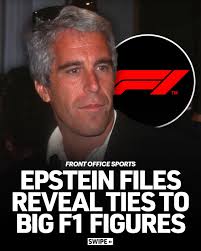
Front Office Sports reported that “perhaps no sport had a closer connection to Jeffrey Epstein than Formula One,” with the latest Department of Justice documents showing the sex trafficker was “enmeshed in the highest levels” of motorsport.
Bernie Ecclestone. Lawrence Stroll. Flavio Briatore. Jean Todt. DP World CEO Sultan Ahmed bin Sulayem, whose name appeared over 5,000 times in the files.
These aren’t peripheral figures. These are the people who shaped modern Formula 1.
I’m not here to speculate about guilt or innocence. Being named in the files doesn’t constitute an accusation of wrongdoing. But what I am interested in is what happens next. How does F1 respond? What changes? And what does this mean for the sport’s future?
The Transparency Problem F1 Can No Longer Ignore
The most effective response to scandal follows a simple pattern: transparency and openness become the rule.
For anything to be seen as legitimate in the long term, thorough investigations and assessments need to take place. Attempting to sweep things under the rug and protect entrenched interests gets labeled as exactly what it is: a whitewash.
F1 has historically operated with a very different culture around privacy, especially when it comes to team ownership structures and sponsor relationships. Side deals, gentleman’s agreements, and handshakes defined how business got done for decades.
That era is ending.
F1 needs people knowledgeable with the sport but also ones with enough independence to call out conflicts of interest or other questionable matters. The challenge is mostly from a commercial perspective since money drives everything else. The sheer size of team, event, and series sponsorship is massive.
But here’s what I’ve learned watching this sport: teams seem less concerned about the reputation of a given sponsor than the amount of money they bring to the team.
When Due Diligence Fails: The Rich Energy Warning
The 2019 Haas-Rich Energy debacle serves as a cautionary tale.
Financial documents showed Rich Energy had only £581 ($770) in the bank in 2017, yet became title sponsor of an F1 team with an estimated annual budget of $123 million. Journalists discovered Rich Energy was “an enigma, one with an allusive product, little money” and a cast of shady characters.
The partnership collapsed mid-season when Rich Energy CEO William Storey unilaterally terminated the agreement via Twitter, leaving Haas deprived of millions of dollars.
That was embarrassing. But it was also relatively low-stakes compared to something like the Epstein files.
When you’re talking about associations with serious criminal allegations versus just a fake energy drink company, the calculus changes completely.
The Complex Web of Personal Relationships
I see the Epstein situation more about the complex web of personal relationships and how those impact the commercial side of Formula 1.
Jeffrey Epstein had contact with a lot of high-profile people in the sport. How much of an impact he had remains unknown. Some of the contacts and agreements made via Epstein could have been completely above board and not controversial.
The question is: were there any deals that were the result of coercion or blackmail?
Epstein had connections via finance, media, and entertainment. His network likely had some influence on the sport while he was free and operating.
If it turns out that some sponsorship deals or ownership arrangements in F1 were influenced by that kind of leverage, how does the sport even begin to untangle that?
Voiding contracts is difficult unless there are clauses that one of the parties can activate. Teams will want to get paid for deals they signed.
Going forward though, there will probably be a greater emphasis on morality clauses or other similar devices. Formula 1 is now a professionally-run international sporting series. It has to operate in a clear and ethical manner.
The Real Accountability Mechanism: Publicly Traded Sponsors
The real accountability mechanism isn’t the FIA or even Liberty Media.
It’s the publicly traded sponsors who can’t afford the stock price hit.
Major companies do not want to be associated with nefarious activities, especially if it involves sexual blackmail and alleged abuses. They want to know that the sports they are involved in and the entities that they support will not cause them reputational harm.
Most of these are publicly traded companies. Stock prices and valuations can be adversely impacted by criminal activities.
The emerging leaders in sponsorship are fintech companies and technology firms, mostly U.S.-based ones. Visa, MasterCard, CashApp, Google, HP, IBM, Oracle.
These companies rely upon millions of customers to buy their products. They can’t afford to be associated with criminal activity.
The sponsors will likely demand that the sport investigate what impact Jeffrey Epstein had. They’re already looking at it from a political perspective too.
When British International Investment and Canada’s second-largest pension fund paused investments with DP World until “necessary actions” are taken, that sent a clear signal about where power really lies.
From Racers and Entrepreneurs to Professional Managers
This isn’t a cultural clash between American and European approaches to accountability.
It’s an evolution of the sport.
Formula 1 has moved on from racers and entrepreneurs to a sport run by professional managers. Formula One Management needs the sport to remain financially sustainable, otherwise they won’t have a sport to broadcast and its associated commercial appeal to sponsors.
Side deals, gentleman’s agreements, and handshakes can’t be the rule anymore.
Open and honest governance, especially when scandal hits the sport, is essential to Formula 1’s long-term survival.
Other sports leagues already know this. Most underwent a similar evolution decades ago.
FIFA’s corruption crisis offers the most relevant precedent. After U.S. Department of Justice investigations in 2015 revealed a web of corruption spanning decades, FIFA underwent sweeping governance reforms including new ethics committees and transparency requirements.
The 2023 European Super League court ruling fundamentally reshaped sports governance, establishing that governing bodies’ rules must “pursue a legitimate objective” and must include clear, published criteria applied consistently.
The trend seems to be towards engineers leading the teams with the racers and commercial people focused on their respective areas. Toto Wolff is becoming more of an outlier as team principals like Andrea Stella, Jonathan Wheatley, and Ayao Komatsu rise in prominence.
But even engineer-led teams face that fundamental tension between needing money and maintaining ethical standards. Technical leaders know that in order to fund development, facilities, and operations, they need funding. Handling the political and commercial aspects of running a Formula 1 team is more difficult for those who come from a more engineering-oriented background.
Where Credible Oversight Actually Comes From
Who actually has the authority and independence to conduct investigations in F1?
The FIA has its own conflicts of interest. Liberty Media has financial stakes. Teams certainly aren’t going to investigate themselves.
This will likely come from governments in the UK and US.
Formula One Management is based in the US and listed on the US Stock exchange. Most of the teams are based in the UK. As for individuals, it could come down to their nationality or where their corporate entities that did business with Jeffrey Epstein are based.
This will take years to unravel since there are ongoing investigations regarding Epstein and his activities.
Liberty Media’s acquisition of Formula 1 in January 2017 for $4.6 billion ended Bernie Ecclestone’s 40-year reign and brought American corporate governance standards to the sport. The publicly traded structure (NASDAQ: FWONA) means institutional investors including Vanguard and BlackRock, who collectively own 89.37% of FWONA shares, demand transparency.
Liberty achieved record F1 revenue of $3.65 billion in 2024, an 11% increase driven by enhanced commercial partnerships. This growth attracted major U.S.-based tech sponsors who demand rigorous governance standards before associating their brands with the sport.
What the Evolved Governance Structure Looks Like
There will be an emphasis on investigating the ties between the various financial and commercial people who make the racing possible.
Formula One Management, the individual teams, the tracks, and other stakeholders have to be wary of the agreements they sign and with whom.
What I see as most likely is a close examination of the relationship between Jeffrey Epstein and the people named in the investigation. How did those people influence the sport? Were the agreements free from any corruption, coercion, or blackmail?
Formula 1 would be wise to initiate investigations and start the process of assessing what sort of impact Jeffrey Epstein had.
They should also look into the people involved since there are many prominent people like Jean Todt, Flavio Briatore, Bernie Ecclestone, and others named in the files.
Ultimately governments will prosecute the civil and criminal crimes. But Formula 1 and the FIA need to do their part as well.
Five years from now, I expect to see:
- Enhanced morality clauses in all major sponsorship and ownership agreements
- Independent oversight bodies with real enforcement power, similar to the UK’s Football Governance Act enacted in July 2025
- Mandatory background checks and financial transparency requirements for team ownership
- Public disclosure requirements for sponsorship deals above certain thresholds
- Regular ethics audits conducted by external firms
The UK’s Football Governance Act provides a template, creating the Independent Football Regulator with statutory enforcement powers over financial stability, transparency and fan engagement. It represents the most significant shake up in English football regulation in generations.
F1 needs something similar.
What American Fans Should Watch For
As someone bridging the American and global F1 communities, I see this moment differently than traditional European F1 power structures might.
American corporate culture demands accountability in ways that the old gentleman’s agreement system never did. The sponsors driving F1’s growth in the US market won’t tolerate opacity.
Watch for how quickly F1 responds to government investigations. Watch for whether they get ahead of the story or wait to be forced into action.
Watch for which sponsors make public statements about their expectations for transparency.
And watch for whether the FIA implements real structural reforms or just issues statements about taking things seriously.
The Epstein files release represents a fork in the road for Formula 1. One path leads to genuine governance reform, independent oversight, and transparent operations. The other leads to defensive posturing, minimal compliance, and hoping the story fades.
I believe F1 will take the first path. Not because of altruism, but because the financial incentives now align with ethical governance. The publicly traded sponsors, the institutional investors, and the government regulators won’t accept anything less.
The sport I love is evolving. Sometimes that evolution happens because of crisis. The Epstein files might be exactly the crisis Formula 1 needs to finally modernize its governance structures and operate with the transparency a global sport deserves.
That’s not just good for the sport’s reputation. It’s essential for its survival.