Ferrari’s 2025 season tells you everything you need to know about what’s broken in Maranello.
The SF-25 sits winless. Charles Leclerc publicly admits they’re the fourth-best team. Lewis Hamilton has sent three separate reports to management demanding structural changes.
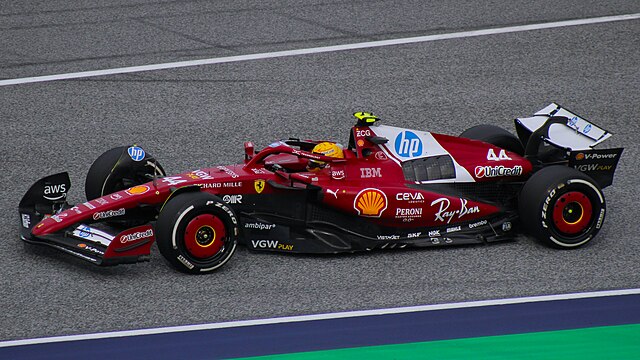
This isn’t a performance problem. It’s an organizational disease.
I’ve watched Ferrari stumble through season after season despite having one of the biggest budgets in Formula 1. They have all the tools but lack the organizational know-how to effectively employ them. The result is inconsistency and variation that would sink any American sports franchise.
The Blame Culture That Kills Performance
Ferrari’s engine department and chassis development teams operate in separate silos with poor communication.
When results don’t come, each department blames the other for being deficient. This blame culture prevents the race team from performing at the level their resources should enable.
Compare that to the British-based teams. Red Bull and Mercedes collaborate better and use a more systemic approach to diagnosing and correcting problems. There’s less formality and rigidity in how things are done. Departments work closer together.
The difference is cultural, not technical.
The American Sports Parallel Nobody Talks About
Ferrari’s dysfunction reminds me of great American football teams whose results declined over thirty years because they had autocratic owners too arrogant to change or delegate.
The Dallas Cowboys, Oakland Raiders, and Washington Redskins all won multiple championships. Then they stuck with formulas that worked in the past but became ill-suited for current reality.
Ferrari follows the same pattern. Vasseur is their fifth team principal since 2008.
That leadership carousel shows a lack of patience coupled with a persistent blame culture. Rather than taking a hard look at the fundamentals of how the team is structured, the knee-jerk reaction is to fire people and insert new ones.
This doesn’t cure fundamental issues. Any improvements become accidental byproducts rather than results of well-executed plans.
Ferrari’s Proven Playbook They Keep Abandoning
Here’s what frustrates me most. Ferrari knows exactly how to fix this because they’ve done it before.
Harvey Postlethwaite, John Barnard, Ross Brawn, Jean Todt, Gustav Brunner, Willem Toet, Osamu Goto. All outsiders who came in and improved the team.
Ferrari thrives when they bring in top talent from other teams, especially the British ones.
John Barnard’s Guildford Technical Office in the late eighties produced the revolutionary 640-series. The team was isolated from Italian politics, media, and the legacy culture of Maranello. They could work uninterrupted and craft a championship-contending car in relative peace.
That model worked. Ferrari won championships consistently during periods when British technical leadership shaped the organization.
So why do they keep abandoning that formula and reverting to insular Italian management?
Pride.
When National Identity Becomes Organizational Poison
Ferrari is an Italian team that the entire nation identifies with. That creates weight of expectation that puts enormous pressure on the team.
That pressure causes leadership to look for quick fixes rather than doing the difficult and time-consuming task of creating the right environment for success.
Look at Red Bull Racing. They bought the dysfunctional Jaguar team for one dollar in 2004. Jaguar had eight team principals in five years. It was an employment bureau, not a racing team.
Red Bull gave Christian Horner stable leadership and support from team backers. That approach took several years to yield success. But it resulted in four consecutive championships from 2010 to 2013.
National pride doesn’t win championships. Strong and cohesive teams do.
That’s the advantage British teams have over non-British teams. They can make pragmatic decisions without carrying the weight of national identity.
The Radical Solution Ferrari Needs
If I were John Elkann, I’d make one structural change that would yield immediate results.
Move chassis design and fabrication to the UK.
I know how radical that sounds. But Barnard did this successfully with the GTO. The team would be isolated from Italian politics, media, and Maranello’s calcified culture. They could tap into the vast network of Formula 1 talent in the UK along with the supplier networks that support it.
Yes, this creates geographic separation between chassis and engine departments. That’s a risk. But other teams have done this successfully with one location handling chassis and another handling power units.
The bigger risk is doing nothing.
Ferrari has most of the pieces in place already to be successful. The key to improvement is realizing there’s a problem and that a solution exists. It requires leadership willing to protect the team as they make necessary changes.
But that requires confronting the inertia of Ferrari. The organization would resist without a strong desire by team personnel to adapt to new and better ways.
The Uncomfortable Question
Looking at everything I’ve described, the blame culture, the leadership churn, the national pressure, I have to ask an uncomfortable question.
Does Ferrari’s leadership actually want to win badly enough to make these painful changes?
Or are they more comfortable being the romantic underdog that occasionally gets it right?
Given their history, Ferrari seems inclined to remain pure and struggle rather than adapt and win. They’ve brought in outsiders and thrived in the past. But the default setting for the team is struggle and underperformance.
In many ways, they’re the Chicago Cubs of global motorsport.
Everybody loves them. But more often than not, they disappoint their loyal fans.
The difference is the Cubs eventually broke their curse. They made the painful organizational changes necessary to win a World Series after 108 years.
Ferrari has the blueprint. They have the resources. They even have the historical precedent of what works.
The only question left is whether they have the courage to choose winning over remaining pure.