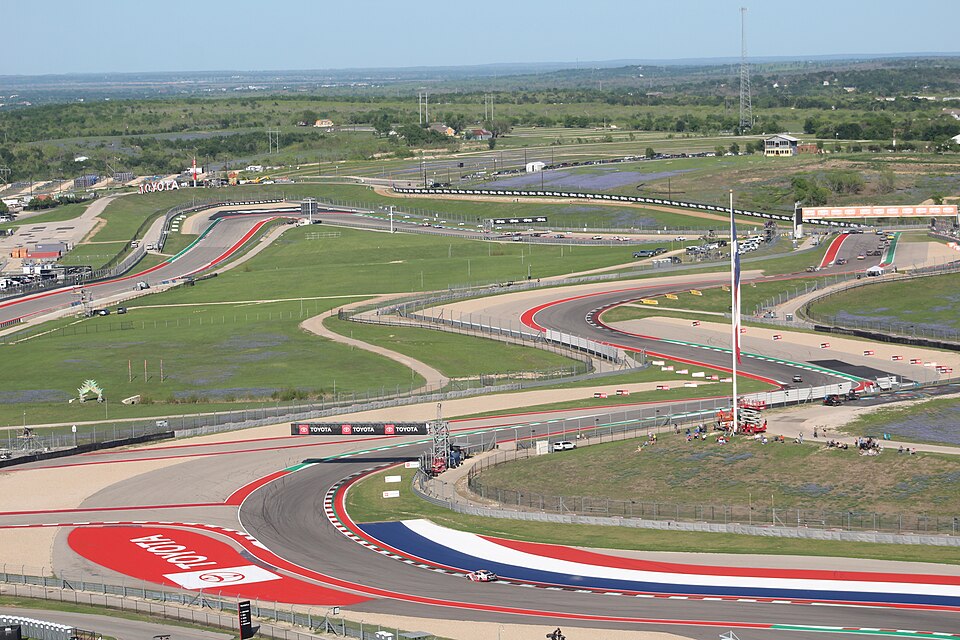
Formula 1 just extended its partnership with Circuit of the Americas through 2034. Eight more years in Austin, Texas.
The headlines will focus on the contract length. I’m more interested in what this deal reveals about how F1 venues survive in America.
Because COTA figured out something Miami and Las Vegas are still learning.
The Destination Model Actually Works
Most race venues used to operate on a simple formula: pay the sanctioning fee, host the race, hope for the best.
COTA took a different approach. They built a destination event.
The numbers prove it. The 2023 race alone generated over $1 billion in direct and indirect spending. That’s $38 million in tax revenue for Texas from a single weekend.
Over the past decade, COTA has created an estimated $7 billion economic impact. Texas invested $300 million in state support. That’s a 23-to-1 return on investment.
This makes the event sustainable. Not just profitable for one year, but viable for the long term.
Austin was already a destination city for live music, food, and sports. F1 didn’t have to create the entertainment ecosystem. It plugged into one that already existed.
Authenticity Over Spectacle
Miami has South Beach. Vegas has the Strip. Both cities know how to put on a show.
Austin isn’t competing with that kind of flash.
What COTA offers instead is authenticity. Texas culture blended with Mexican influences. BBQ smoke and country music. Cowboy hats and longhorns.
It’s not manufactured for tourists. It’s real.
That authenticity took time to build. COTA has evolved organically since 2012, establishing deep roots with both fans and teams. The venue didn’t try to become everything immediately.
The organizers were thinking long-term from the start.
American Racing DNA
Here’s what most people miss about COTA’s appeal: it borrows from American racing traditions that European teams actually appreciate.
IndyCar, NASCAR, and NHRA all share a cultural openness that F1 traditionally lacks. Fans can watch mechanics work on cars. Drivers engage directly with spectators. There’s less secrecy, more informality.
COTA brings that American racing hospitality to F1. It’s a different vibe than what teams experience at traditional European venues.
The paddock feels more accessible. The atmosphere more friendly.
This matters more than you’d think. When drivers, teams, and fans genuinely enjoy being somewhere, they keep coming back.
The Spiritual Home Question
F1 explicitly raised this question in their announcement: Could COTA become F1’s new spiritual home in America?
Silverstone holds that title globally because of history and atmosphere. The fans themselves make the British Grand Prix essential.
I think COTA can achieve something similar for the American market.
The venue is already preparing for F1’s expansion. They’re enhancing paddock and pit facilities to accommodate Cadillac when the team joins in 2026. That preparation signals America’s growing influence in F1’s ecosystem.
The three-race American strategy creates healthy competition. Austin, Miami, and Vegas aren’t cannibalizing the same audience. They’re each distinct events serving different regional fan bases.
Three races mean more seats. More seats mean more fans can experience F1 in person. The US fanbase has reached 52 million, an 11% year-over-year increase.
Nearly half of new American F1 fans who’ve followed the sport for five years or less are aged 18-24. Over half are female.
COTA’s Grid Gig featuring Drake Milligan taps into this demographic shift. It’s not diluting the sport. It’s connecting F1 to Texas culture in a way that resonates with younger, more diverse audiences.
Music trends come and go. Culture endures.
The Real Risk Nobody Mentions
Here’s the tension COTA faces through 2034: they’re assuming full grandstands occupied by fairly wealthy fans.
Spectators want value for money. That means good racing, not just good entertainment.
This is the perennial sport versus entertainment balance. F1 has to deliver wheel-to-wheel action, not just paddock parties and celebrity appearances.
COTA has consistently drawn record attendance. Over 440,000 in 2022. Around 432,000 in 2023. An expected 450,000 this year.
Those numbers put Austin ahead of Miami and Vegas for total weekend turnout.
But attendance only stays strong if the racing delivers. If F1 can balance that equation, COTA will thrive.
If the sport becomes too focused on spectacle over substance, even authentic venues will struggle.
What This Means for F1’s American Future
COTA’s extension through 2034 represents more than a contract renewal. It validates a model for how F1 venues can succeed in America.
Build on existing cultural strengths. Think long-term, not just next season. Create an atmosphere where people want to be, not just where they have to be.
The venue will overtake Watkins Glen as the longest-serving F1 track in American history. That’s not just symbolic. It’s proof that sustainable growth beats manufactured hype.
Austin won F1’s American race by being itself. No Vegas spectacle required.
Just Texas hospitality, American racing openness, and a commitment to giving fans value beyond the checkered flag.
That’s the blueprint. And it’s working.