When I hear people calling for F1 to return to South Korea, my immediate reaction is simple: it’s way too premature.
The three Korean Grands Prix from 2010 to 2013 weren’t just unsuccessful. They were a masterclass in what happens when you try to buy your way into motorsport culture without actually having one.
Let me explain why rushing back would be repeating the same mistake.
Empty Stands Tell The Real Story
The Korea International Circuit was built 400 kilometers from Seoul in Yeongam. The promoters threw money at F1 to show up, but the stands were largely empty.
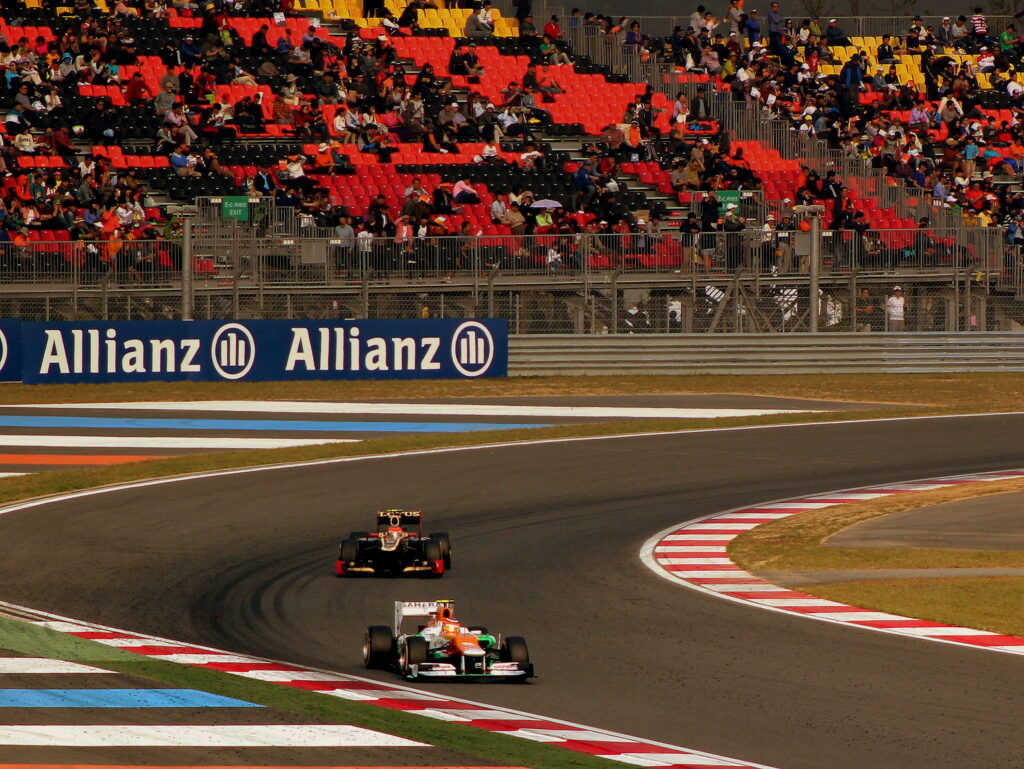
The track was uninspiring. The organizers didn’t run the event on par with other hosts. The FIA approved the circuit just 11 days before the first race, with construction crews still working when teams arrived.
This was a financial band-aid on a much deeper problem. Even after renegotiating their deal to save money, organizers still anticipated losing $26 million in 2012.
Money couldn’t fix what was actually missing: enthusiastic fans and an associated culture of motorsports.
Manufacturing Power Doesn’t Equal Racing Culture
Here’s what people get wrong about South Korea.
Yes, they’re a manufacturing powerhouse. Yes, they’re emerging as a major player in the automotive sector. Hyundai and Kia are everywhere. But grassroots racing in Korea is almost non-existent. The fan base is relatively small.
Compare that to Japan or Germany. Both countries have deep associations with motorsports across multiple disciplines. They’ve been developing that culture for generations.
South Korea has only emerged as a global automotive manufacturer over the past thirty years. That’s not enough time to build the foundation F1 needs.
What F1 Actually Wants
F1 isn’t just looking for venues with government backing and new facilities.
They want hosts that can provide a distinctive experience. They want events with genuine appeal that draw fans organically. They want to increase the perceived value of a Grand Prix.
For established venues, that means motorsport history and heritage. For new events, it means showcasing a country’s emergence onto the global stage in a way that resonates.
Korea tried the emergence angle in 2010. It didn’t work because the cultural foundation wasn’t there.
The American Contrast
Look at what’s happening with F1 in America right now.
We have a wide and deep motorsport culture. NASCAR, IndyCar, drag racing, dirt track racing. It’s accessible, fans can relate to it.
The US economy is more mature and wealthier than South Korea’s. Americans have more opportunities to spend on leisure activities like F1.
Las Vegas generated an estimated $1.2 billion in economic benefit through tourism. That’s what a viable F1 market looks like.
South Korea’s tech-savvy youth culture is appealing on paper. But that culture changes and evolves quickly. Hot trends become dated overnight.
Youth culture has a short attention span. Getting people to watch more than race highlights would be a challenge.
What Korea Would Actually Need
If Korean officials want F1 to take them seriously, here’s the roadmap.
Build top-notch facilities near major metropolitan areas. Host other series like WEC, F3, and GT3 first. Develop a solid grassroots racing series to generate interest among the population.
Get major Korean companies to sponsor F1 teams, races, or the series itself. Ensure fans can watch F1 both on-air and via streaming.
How long would that take?
Decades.
It would build a solid foundation for a lasting and sustainable motorsport culture. Korea would have to play catch-up, but they could expand their influence in the global motorsport arena.
They’d be wise to do so given their increasing prominence as a manufacturer. But that’s a long-term investment, not a quick fix.
The Real Risk
When I see headlines calling for F1 to return to Korea now, I see wishful thinking.
There are larger markets F1 could explore first. Markets with actual motorsport culture or racing heritage. Markets with enthusiastic fan bases who love racing and would actually attend a Grand Prix.
If F1 announced tomorrow they’re returning to South Korea in 2027, my biggest concern wouldn’t just be for the race itself.
It would be for F1’s credibility when it comes to choosing venues.
It would signal that FOM is looking at short-term financial gain rather than the long-term health of the sport. That’s a dangerous precedent when you’re trying to build something sustainable.
The Korean Grand Prix circuit still sits largely dormant, a physical reminder of what happens when you rush into a market that isn’t ready.
F1 should learn from that lesson, not repeat it.