Most partnerships in motorsport follow a script. A team needs a driver. A driver needs a seat. Contracts get signed, press releases go out, everyone moves on. But when Wayne Taylor Racing reached across the aisle to sign Colton Herta for select IMSA races in 2024, they weren’t following the usual playbook. They were writing a new one.
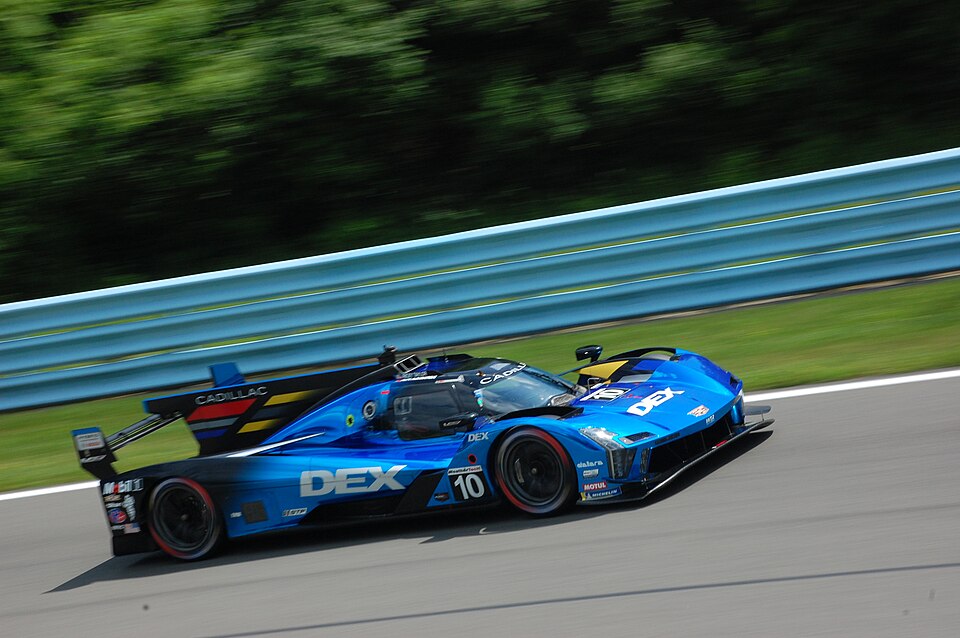
This isn’t just another driver picking up extra seat time. It’s a case study in how American motorsport is quietly rewiring itself, with manufacturers acting as the connective tissue between series that used to view each other as competitors for the same fans, the same sponsors, the same oxygen.
The Manufacturer as Matchmaker
Here’s what makes this different: Herta already has Cadillac backing. Wayne Taylor Racing runs Cadillacs in IMSA. The commercial tie-ins aren’t something that needs to be negotiated. They’re already in place. That changes everything.
In the old model, a driver built their career series by series, team by team, sponsor by sponsor. You proved yourself in one category, then climbed to the next. But Herta’s situation flips that. Because he’s part of the Cadillac system, he has opportunities to race wherever Cadillac competes. The manufacturer becomes the career accelerator, not just the funding source.
Think about what that means for Wayne Taylor Racing. They’re not taking a gamble on an unknown quantity. They’re getting a proven race winner who also happens to have F1 aspirations. That ambition matters. Herta isn’t looking at IMSA as a fallback. He’s using it as preparation, as a way to stay sharp while keeping his Formula 1 dream alive. That kind of hunger makes him valuable in ways that go beyond lap times.
The Fan Conversion Bet
But there’s a bigger play here, one that goes beyond Herta’s career trajectory. Wayne Taylor Racing is betting on conversion rates.
IndyCar and IMSA have different fan bases. IndyCar’s audience is wider but, in some ways, shallower. Fans follow drivers more than they follow the series itself. IMSA’s audience is smaller but deeper. These are people who will sit through a 12-hour race at Sebring, who understand the nuances of multi-class racing, who can tell you the difference between LMP2 and GTP regulations.
When Herta shows up at an IMSA race, he brings some of that IndyCar audience with him. Not all of them. Maybe not even most of them. But some percentage will tune in to watch him race. And if the racing is compelling enough, if the cars look good and the competition is tight, some of those fans stick around after Herta moves on.
We’ve seen this work before. Jeff Gordon’s popularity in NASCAR outlasted his dominant period. The sport grew because Gordon brought in fans who stayed for the racing, not just for him. Wayne Taylor Racing is running the same experiment, just across series boundaries instead of within a single championship.
Learning from WEC’s Playbook
IMSA isn’t making this up as they go. They’re watching what worked for the World Endurance Championship. WEC boomed in popularity not just because of the racing, but because they wrote regulations that brought in manufacturers. Ferrari, Aston Martin, Toyota. The cars looked spectacular. The racing was competitive. Fans followed the manufacturers as much as the drivers.
IMSA already has manufacturers. Cadillac, Porsche, Acura. The pieces are in place. What they need is the missing ingredient: crossover stars who can bridge the gap between casual fans and hardcore endurance racing enthusiasts. Herta fits that profile. He’s a driver on his way up, someone with the potential to become a multi-discipline star in the mold of Mario Andretti or Dan Gurney.
That comparison isn’t accidental. For decades, American motorsport moved toward specialization. You raced IndyCar or NASCAR or sports cars, but rarely all three. The business model didn’t support it. Schedules conflicted. Sponsors wanted exclusivity. Teams operated in silos.
But now some teams and sponsors exist in multiple series. That creates opportunities for drivers within those systems to participate across categories. Herta’s in the Cadillac system, so he can race where Cadillac races. The challenge is conflicting dates, but having exposure in multiple series mitigates that risk. If he can’t make every race, he’s still building his brand across different audiences.
The Value Equation
So what’s Herta actually worth to Wayne Taylor Racing? That’s the question that matters, and it’s harder to answer than you might think.
The IMSA drive gives Herta more time behind the wheel racing. It keeps him sharp. It builds his reputation with fans. It creates more value for his backers by performing in multiple series. But how do you measure that? Is it lap times? Fan engagement numbers? Sponsor activation? Some combination of all three?
The truth is, we don’t know what specific metrics Wayne Taylor Racing is using. What we do know is that Herta’s value isn’t tied exclusively to his Cadillac connection. If a rival team wanted to sign him, both he and Cadillac would have clauses that enable that. It would include compensation, but if a team believes a driver is worth it, they’ll pay.
That’s the key insight. True talent transcends manufacturer loyalty. The driver becomes the asset, not just the manufacturer relationship. Herta’s partnership with Wayne Taylor Racing proves his value independent of who’s backing him. The Cadillac connection just makes the deal easier to structure.
The Ecosystem Question
But here’s the risk: What happens if Cadillac shifts priorities or exits a series? Does the whole ecosystem collapse?
Not necessarily. History suggests otherwise. Michael Schumacher left Mercedes to drive for Ford, Renault, and Ferrari-powered teams before ending his career back with Mercedes. If the talent is there, a driver will get support even if their support structure changes. The manufacturer relationship accelerates careers, but it doesn’t define them.
That’s what makes this Herta-Wayne Taylor Racing partnership so interesting. It’s both a product of the manufacturer system and a test of whether that system can create value beyond simple brand alignment. If Herta performs well in IMSA, if he brings fans with him, if he helps elevate the series’ profile, then the model works. Other manufacturers will follow. Other drivers will get similar opportunities.
And if it doesn’t work? Then we’ll learn that cross-series partnerships need something more than just matching logos on the car. They need drivers who can actually deliver, teams willing to take risks, and fans willing to follow talent across series boundaries.
For now, the bet is on. Herta gets more seat time and more exposure. Wayne Taylor Racing gets a proven winner with F1 ambitions. IMSA gets a potential crossover star who might bring new fans to endurance racing. And Cadillac gets to showcase their driver across multiple platforms.
Everyone wins. Unless they don’t. That’s what makes it worth watching.