Audi became the first team to run a 2026 Formula 1 car when they took the R26 to Barcelona on January 9-10. The headlines focused on the marketing spectacle. I wanted to look deeper.
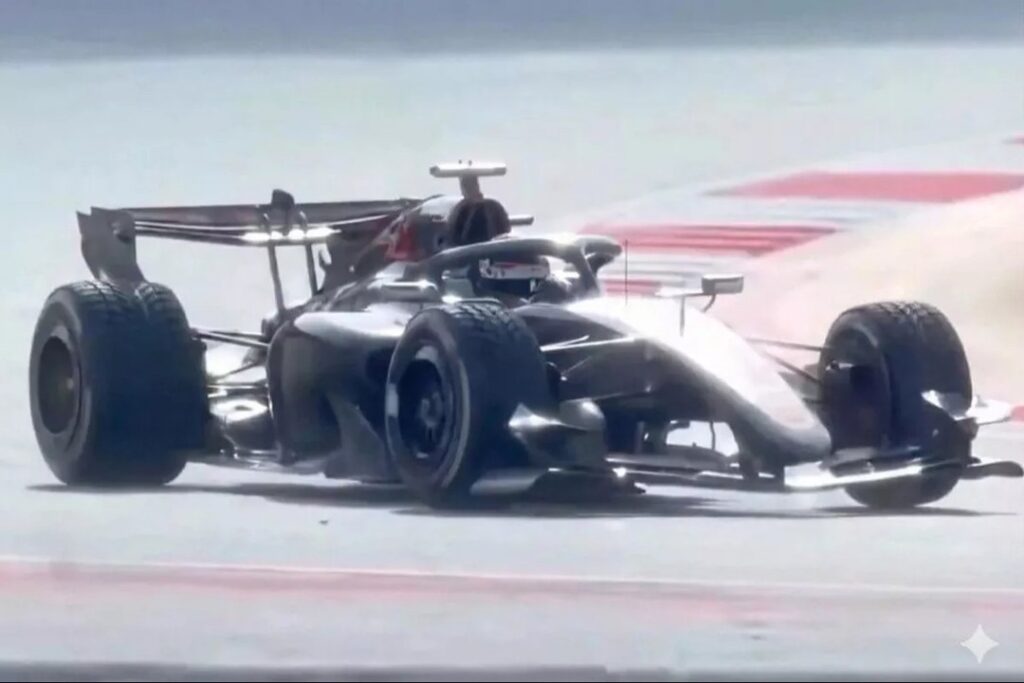
When I first heard about this filming day, my instinct was to dismiss it as promotional theater. And yes, Audi wants coverage going into the season. But after looking at the specifics of what they accomplished, I realized there’s more happening here than just getting the name out there.
The 200 Kilometer Reality Check
Filming days exist under tight FIA regulations. Teams get 200 kilometers of running on demonstration tires that won’t give race-relevant data. The weather conditions won’t match what they’ll see during the season. The lap times mean nothing.
So what’s the point?
Integration testing.
Audi needed to confirm their engine could run integrated with the chassis without major issues. This was about ensuring nothing breaks, nothing overheats, and the car completes the distance. Think of it as a systems check for a fine-tuned piece of machinery where everything has to work correctly.
The engine’s layout, center of gravity, cooling requirements, and power delivery all need to work in conjunction with the chassis. Problems that show up here look like overheating, broken lines from vibration, transmission issues, or excessive oil burn. Three weeks earlier, Audi completed their first full-car fire-up at Hinwil. Barcelona was the next validation step.
From all accounts, the run was clean. That tells us their focus right now is reliability first, performance later.
Why Barcelona Actually Matters
Audi could have run this test at a private facility with more control over conditions. They chose Circuit de Barcelona-Catalunya for a specific reason.
Sauber has decades of historical data from Barcelona. Even though the absolute lap times from the filming day don’t matter, they eliminated the track as a variable. If they’d gone to Jerez or Paul Ricard, they would have added the track itself as an unknown factor.
This approach lets them gauge how close or far off they are from their performance targets using a known baseline. Smart teams don’t add variables when they’re trying to isolate what matters.
The timing also works in their favor. Teams can test at Barcelona during the official pre-season sessions from January 26-30, meaning Audi can directly compare their filming day baseline to official testing at the same venue just weeks later.
The Endurance Racing DNA Question
Audi is building their first F1 engine without the benefit of previous Formula 1 experience. Until now, they focused on endurance racing, which has fundamentally different priorities.
In endurance racing, outright power output isn’t the goal, reliability is. That experience helps when determining where to focus on engine design and layout, but extracting performance will be necessary as Audi gains experience.
Here’s where it gets interesting for 2026. The new regulations feature 50 percent electrification, fully sustainable fuels, and active aerodynamics. Audi’s background emphasizing fuel economy and efficiency should help them make the best use of their fuel capacity during a Grand Prix.
They’re bringing a different set of experiences and knowledge to F1 from endurance racing, but they’ll face a learning curve as they adapt. This becomes more evident once the season starts. Right now, testing is about ensuring basic installation, reliability, and integration.
The Works Team Advantage and Disadvantage
Because Audi and Sauber are now one entity, effective vehicle integration should be easier than if Sauber was purchasing an engine as a customer. The designers of both the car and the engine can work together to create the best package.
But this creates a paradox for year one.
Cadillac is also entering F1 in 2026, but as a customer team using Ferrari engines. Ferrari has been in F1 since 1950 and traditionally builds strong engines. Even though this is a new power unit for new regulations, Ferrari can apply decades of accumulated knowledge.
Cadillac has the disadvantage of being a new constructor but benefits from a proven engine partner. Audi has more variables to manage initially. That changes in 2029 when Cadillac brings their own engine, but for now, Audi faces the full complexity of being both a new constructor and a new power unit manufacturer simultaneously.
Calibrating American Fan Expectations
I’ve watched manufacturers enter F1 with huge fanfare and struggle badly. Honda’s return was painful. Their initial 2015 season met with reliability problems before eventually powering Red Bull to success years later.
Audi’s first season will be a learning year, probably filled with frustration. I expect them to use most of 2026 as a glorified test, then make adjustments for 2027. You shouldn’t expect too much from a new engine supplier during their first season.
Their aim will be finishing ahead of Cadillac and being competitive at some tracks. If they can get out of Q1 from time to time, that’s an accomplishment. Audi is ambitious and has invested significantly in their F1 program, but they also know this is a multi-year effort that will involve a lot of failures along the way.
Success markers for me: If Audi is getting into Q2 occasionally and finishing races near the points, that’s a good sign. If they’re reliable, even better. The team has to be methodical to progress. Throughout the season, they’ll likely bring multiple updates since engine development isn’t frozen and the R26 that ran in Barcelona is just an initial spec.
What I’m Watching For
The Barcelona filming day is the opening chapter of Audi’s F1 story. The narrative I’m watching for throughout 2026 is simple.
Audi won’t look to grab attention with glory runs or flash. They’re an engineering-focused company. Their goal is becoming a competitive team that can eventually score points, take wins, and ultimately compete for championships.
If they’re able to gradually build upon their successes over the next few seasons, it will demonstrate they’re committed to F1 and being a successful team. That’s the difference between understanding what it takes to succeed in F1 versus being another manufacturer that underestimated the challenge.
The filming day showed they can complete 200 kilometers without the car breaking. That’s step one. The real test comes when they face 24 race weekends with five other engine manufacturers who have decades of cumulative F1 knowledge.
I’m not expecting miracles in 2026. I’m looking for signs they understand the game they’ve entered.