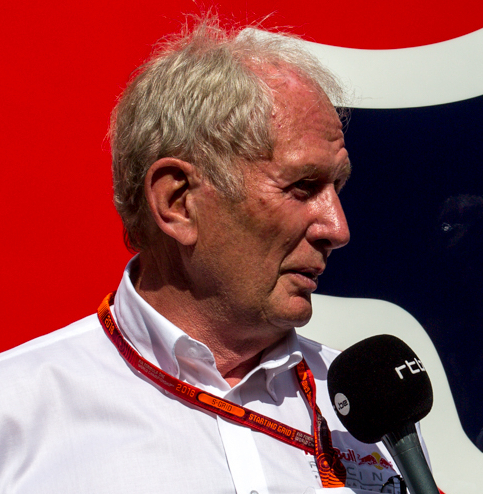
Helmut Marko’s departure from Red Bull at the end of 2025 looks like the end of an era. But that’s only half the story.
Christian Horner was sacked in July 2025 after 20 years as team principal. Now Marko is gone too. Red Bull just cleared out both figures who defined the team’s identity for over a decade.
This isn’t a retirement. It’s a purge.
The Timing Reveals Everything
Marko framed his exit as voluntary, citing Max Verstappen’s near-miss at a fifth consecutive title as the “right time” to leave. Red Bull even paid him his full 2026 salary, approximately EUR 10 million, as severance.
But look at what happened in the 18 months before his departure.
Red Bull lost five senior figures: Adrian Newey left for Aston Martin. Rob Marshall joined McLaren. Jonathan Wheatley took the Sauber (Audi) Team Principal role. Horner was dismissed mid-season. And now Marko.
That’s not natural attrition. That’s an organization hemorrhaging talent because something fundamental broke.
The corporate overlords in Austria and Thailand, led by CEO Oliver Mintzlaff, looked at 2024’s performance decline and decided the personality-driven leadership model wasn’t sustainable. Following founder Dietrich Mateschitz’s death in late 2022, the parent company instituted what sources describe as “a level of accountability Marko was unfamiliar with.”
Translation: The old guard could no longer operate unchecked.
The Real Cost of Drama
Marko’s first major comments after leaving included explosive accusations. He claimed Horner was “lying about everything and anything” and that this deception was instrumental in convincing Thai co-owner Chalerm Yoovidhya to approve Horner’s dismissal.
Think about what that reveals about the internal environment.
Adrian Newey, who helped Red Bull win 13 championships over 19 years, explained his departure by saying he “wouldn’t be true to myself if I stayed.” He described feeling undervalued despite being “much more influential than perhaps given credit for.”
When your legendary designer leaves because of politics rather than engineering, you have a culture problem.
Rob Marshall wanted to emerge from Newey’s shadow. His move to McLaren proved masterful, both Marshall and McLaren thrived immediately. Jonathan Wheatley had risen as high as he could within Red Bull’s entrenched power structure. At Sauber, he could finally lead and influence it’s evolution into Audi F1.
These weren’t people looking for more money. They were talented leaders hitting a ceiling because the power structure was frozen around Marko and Horner.
Enter Laurent Mekies: The Technical Mind
Laurent Mekies replaced Horner on July 9, 2025. It marked the first leadership change at Red Bull Racing since 2005.
Mekies came from Ferrari, where he served as Racing Director during a highly scrutinized period. He witnessed firsthand how a culture of blame compelled Ferrari to be conservative on race strategy. His stated focus at Red Bull: creating “a collaborative ethos and not a blame-centered one.”
The impact was immediate.
After Mekies took over mid-season, Red Bull’s performance transformed. Verstappen went from ruling himself out of title contention to mounting a comeback that fell just two points short. The team continued aggressive development, contrary to Horner’s desire to halt it, and colleagues described “a more harmonious atmosphere.”
Here’s the striking detail: During Mekies’ brief tenure leading the junior Racing Bulls team in 2024, that car was more drivable than Red Bull Racing’s senior car.
That suggests Red Bull’s problems went deeper than personality clashes. There were actual technical and operational issues being masked by Verstappen’s talent.
The Culture Shift Nobody Saw Coming
For years, there was talk that engineers weren’t taking driver feedback seriously. This led Red Bull down a technical dead-end where only Verstappen could extract performance from the car.
Even skilled, race-winning drivers like Sergio Perez struggled. No matter who sat in the second seat, that driver couldn’t match Verstappen’s pace.
The 2022-2023 dominance masked these underlying problems. Success hid the cultural rot.
Mekies understands that having a keen intellect is crucial for setting conditions that enable success. You can make bold moves in F1 to improve performance. But what’s crucial beforehand is a culture where there’s a desire to understand root causes, listen to others, and work together to improve.
The Driver Academy Reckoning
Marko built the driver academy that produced Sebastian Vettel and Max Verstappen. That’s an incredible track record.
But look at the flip side.
Alex Albon thrives at Williams. Pierre Gasly performs consistently at Alpine. Carlos Sainz won races at Ferrari. All three left Red Bull under pressure and are now proving their worth elsewhere.
Marko’s “eye for talent” came with a brutal churn rate that burned through drivers who are now succeeding at other teams.
Red Bull ran a volume model: sign everyone, churn through them quickly, keep only the superstars. McLaren and Mercedes run a boutique model with fewer drivers but deeper investment in each one.
The numbers tell the story. Red Bull has drivers signed and placed in many different series, signing and dropping drivers in lower formulae regularly. McLaren and Mercedes have fewer drivers but give them more time and attention.
When McLaren brings up a junior like Lando Norris, or Mercedes promotes George Russell, those drivers are better prepared. There’s still pressure, but it’s not as intense. The drivers get more grace to develop and hone their skills.
The result? Longer careers and solid results over time rather than short careers marked by disappointment.
What This Means for Isack Hadjar
Hadjar joins as Max’s teammate in 2026 under this new Mekies-led structure. Without Marko’s presence, his rookie season looks different.
Unless Hadjar performs poorly going into the summer break, he’ll see through his first season with the team. Red Bull will look at his trajectory and determine if he remains in 2027.
The goal: have alternatives already embedded within the team who can take over when Verstappen leaves.
That’s what Mercedes did with George Russell. They got him ready to lead when Hamilton left. As a result, both Russell and Mercedes handled Lewis Hamilton’s departure without any drop-off in performance.
Red Bull never built that succession model because they were so Verstappen-centric.
The Industry Trend You’re Missing
Red Bull’s shift to Mekies represents a broader F1 trend that most fans aren’t tracking.
McLaren is led by former Ferrari engineer Andrea Stella. Haas replaced Guenther Steiner with trackside engineering director Ayao Komatsu. Racing Bulls is now run by ex-Renault race engineer Alan Permane.
The era of the all-encompassing, business-like team principal is passing. F1 is moving toward technical experts in leadership roles.
Marko’s approach was formed by his experience in 1970s F1, when driver mortality was high and the sport was genuinely dangerous. His ruthlessness made sense in that context.
But modern F1 demands something different. McLaren and Mercedes have shown there’s a more effective and humane way to develop talent and manage teams.
The 2026 Stakes
Red Bull faces one of the most demanding challenges in Formula 1: debuting their own power unit in partnership with Ford for the 2026 season.
This transforms them from customer team to manufacturer. It’s a massive technical undertaking occurring simultaneously with the leadership overhaul.
2026 will be difficult. Everyone will be dealing with countless new and unknown variables during the initial races.
Having the distractions of an attention-seeking team principal would sap the team of energy and focus needed to remain competitive.
That’s why these changes were necessary for the short and medium term. Red Bull needed to clear the deck before attempting one of the biggest transformations in their history.
Can Red Bull Pull This Off?
Here’s the fundamental question: Can Red Bull shed the personality-driven era and move toward technical leadership, systematic driver development, and long-term planning without losing the aggressive, risk-taking DNA that made them champions?
The answer depends on whether they can continue to attract and retain technical talent.
Red Bull has done this for years. It’s what enabled them to rise from the disaster of the Jaguar F1 team to become a dominant force in the sport.
Being a UK-based team located within Motorsport Valley gives them access to the tools and people they need to succeed. As long as Red Bull corporate continues to support the team, there’s every reason to believe they’ll remain a top team.
But the transition won’t be smooth.
Removing Marko and Horner eliminates the drama and political infighting that drove away key technical talent. But it also removes the decisive, instinct-driven leadership that won races.
Mekies brings technical expertise and a collaborative culture. Whether that’s enough to maintain Red Bull’s competitive edge while building their own engine and navigating new regulations—that’s the story of 2026.
What to Watch
Pay attention to three things:
First: How Hadjar is managed in his rookie season. If Red Bull gives him the full season regardless of early struggles, it signals a genuine culture shift.
Second: Whether Red Bull can retain and attract top technical talent now that the political drama is gone. If engineers start returning or joining from other teams, the restructuring worked.
Third: The 2026 power unit performance. This is the ultimate test of whether Red Bull’s new technical-focused leadership can deliver when it matters most.
Red Bull just executed the most significant leadership transformation in their history. They removed the personalities that defined them and bet everything on technical excellence and collaborative culture.
In five years, we’ll know if this was Red Bull successfully evolving into a sustainable, modern F1 operation or the beginning of their decline from the top.
The 2026 season will tell us which path they’re on.