Lando Norris won the 2025 Formula 1 World Championship by just two points over Max Verstappen in Abu Dhabi, securing his first title with 423 points. The margin was razor-thin, but the implications are massive.
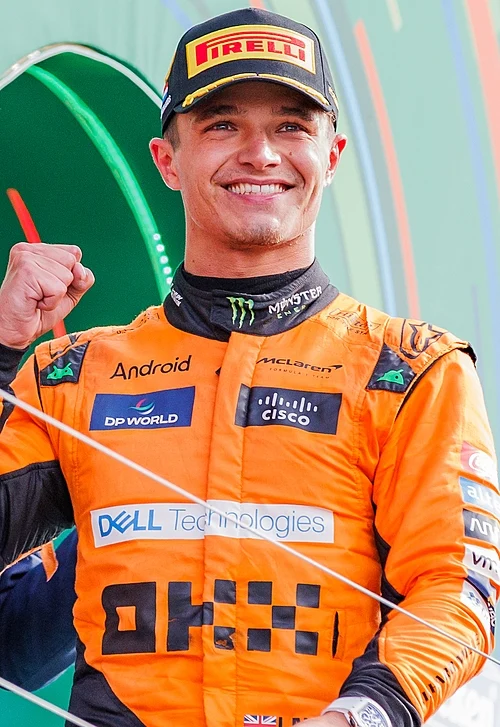
This wasn’t just another championship. It marked a fundamental shift in how F1 titles get won.
Verstappen won eight races compared to Norris’s seven. In previous eras, that would have sealed the deal. But Norris’s 18 podiums—the most in a single season by a McLaren driver—proved that consistent point accumulation matters more than peak performance over a 24-race calendar.
We’re watching the death of the “dominant champion” model.
The Consistency Era Has Arrived
I’ve been watching F1 long enough to recognize when the sport fundamentally changes. The 2025 season demonstrated something critical: a longer season places a premium on all-around competitiveness over track-specific brilliance.
Teams used to focus on high-speed performance for Hockenheim or Monza. Others targeted slow-speed tracks like Monaco or Hungary. That approach doesn’t work anymore.
With over twenty races to account for, you need a car with a wide operating window. Ferrari’s temperature sensitivity issues this year proved the point perfectly; Lewis Hamilton won the Chinese sprint race, then struggled in the grand prix. Mercedes had similar problems in the past but managed wins in both cool conditions (Montreal) and scorching heat (Singapore) in 2025.
The new winning formula: Build a car that scores points everywhere, not one that dominates occasionally.
McLaren’s Blueprint for the New Balance
McLaren’s resurgence offers a roadmap for how teams need to operate going forward. They won 14 out of 24 races with the MCL39, clinching the constructors’ title with six rounds to spare—their first back-to-back championships since claiming four consecutive titles between 1988 and 1991.
What separated McLaren from teams like Alpine or Aston Martin trying to climb the same ladder?
They made difficult choices. Hiring Rob Marshall to oversee car design. Replacing a struggling Daniel Ricciardo with unproven Oscar Piastri. Improving race strategy and operations to match Red Bull’s level.
But here’s what really mattered: patience and stability.
There are no silver bullets in F1. McLaren worked for years to assemble the right people and processes. The leadership remained patient through the rebuild, making marginal improvements consistently. That’s how you get from midfield to championship-level performance.
Success wasn’t guaranteed. They simply put themselves in position to win.
What This Means for 2026
Red Bull went all-in on 2025 because they know next year will be difficult at first. McLaren shifted focus toward 2026 fairly early since they had the strongest car going into the summer break. Ferrari is looking at another design change with their suspension geometry, and speculation suggests their power unit won’t be as competitive as Mercedes.
My prediction: Mercedes will be the strongest team during the early part of 2026.
They knew 2025 was a building year after Lewis Hamilton left and rookie Kimi Antonelli replaced him. Rather than chase performance during the last year of current regulations, they planned for 2026. They took a similar approach in 2013 and became dominant for years starting the following season.
F1’s paddock whispers are already pitching Mercedes as the team to beat for 2026. They’ve put significant effort into making their 2026 car competitive straight out of the box, even sacrificing some 2025 development potential.
The 2026 power units feature a 50-50 split between electric power and internal combustion with nearly a 300 percent increase in electrical power. The integration between car and power unit will be critical, which means factory teams will likely have an edge over customer teams.
The American Fan Dilemma
Here’s where things get complicated for F1’s growth in the U.S.
American fans like open competition, not managed results. We want hard racing where drivers don’t hold back and race flat out. If 2026 doesn’t feature competitive racing because one team and one driver dominate, expect interest to wane a bit.
There will still be excitement over Cadillac joining the grid. But if Mercedes dominates again like they did from 2014-2020, some fans will tune out.
The wildcard for me is Honda. How well will their partnership with Aston Martin work? How much of a positive technical contribution will Aramco make with fuels and lubricants?
We’re in an incredibly competitive era with respect to drivers. The field is deeper and more talented than it’s been in decades. Verstappen is a generational talent on par with Jim Clark or Ayrton Senna. But behind him are many others who are still relatively young with great driving skills and the ability to handle pressure.
Half the grid has won races during their careers. Even rookies like Kimi Antonelli and Isack Hadjar are coming into F1 and performing well immediately.
The margins between drivers are small, which amplifies differences in the cars and team strategy from the pit wall. It requires everybody on a team to work in harmony and execute well. Otherwise, other teams and drivers will prevail.
That’s the new reality of Formula 1. Norris’s championship proved it.