Romain Grosjean could have walked away after 27 seconds trapped in flames nearly killed him. Most would have.
Instead, he chose to return to Mugello and finish his story on his terms.
I’ve watched F1 long enough to know that careers rarely end the way drivers imagine. Injuries happen. Contracts disappear. Politics intervene.
But Grosjean refused to let adversity dictate the time and place of his career’s end.
The Pattern Was Already There
This wasn’t Grosjean’s first comeback. His career reads like a masterclass in resilience.
F1 debut in 2009. Dropped back to GP2. Won the championship in 2011. Returned to Formula 1 in 2012.
Early in his second F1 stint, he was chaotic. Crash-prone. The kind of driver who made you wince when he appeared on screen.
Then something shifted. He matured into a measured, respected competitor who earned his peers’ admiration through growth, not just speed.
That evolution taught him something crucial: second chances aren’t given. They’re earned through the willingness to change.
Twenty Seven Seconds of Fire
The 2020 Bahrain crash measured 67 Gs of force. The equivalent of hitting a wall at 119 mph.
For nearly half a minute, Grosjean sat trapped in a burning cockpit while the world watched in horror. When he emerged with only burns on his hands, it felt like witnessing a miracle.
Most drivers would have called it a sign. Time to retire. Time to be grateful for survival and move on.
Grosjean saw it differently. The crash hadn’t finished his story. It had interrupted it.
The Guard of Honor
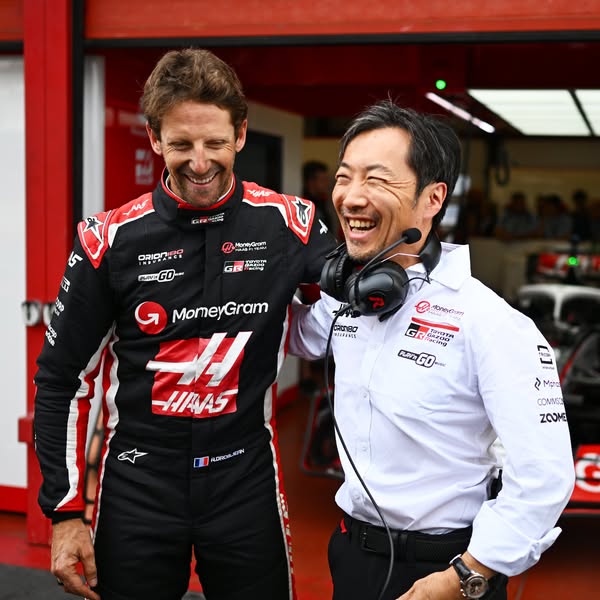
At Mugello, something beautiful happened. All the mechanics formed a guard of honor as Grosjean returned to the garage.
He admitted he shed tears behind his visor.
This moment revealed something profound about European racing culture that we’re still learning in American sports. They saw Grosjean as a human being, not just a number on a car or a design on a helmet.
The joy between him and his former team was genuine. They had all lived through nearly losing someone they cared about. Now they were celebrating having him back, even briefly.
It was collective healing in action.
What This Teaches American F1 Fans
Many American fans are discovering F1 for the first time through Netflix and social media. They’re seeing highlight reels and championship battles.
Grosjean’s story offers something deeper. It’s about patience coupled with determination. About redemption earned through growth.
These are universal stories that transcend racing.
In American sports culture, we often talk about athletes as commodities. Stats and contracts and trade values.
European racing culture understands something different. Many of these drivers raced against each other from childhood. Team personnel watched them mature from kids with dreams into world-class athletes.
The relationships run deeper than professional. They’re human.
Choosing Your Chapter
Grosjean’s return to Mugello wasn’t about proving he could still drive at F1 level. It was about closure. About finishing what he started.
He wore the special helmet his children had designed for his planned farewell in Abu Dhabi 2020. The goodbye that never happened because of the crash.
This time, he got his moment. His choice of ending.
That’s the real lesson here. We don’t always control what happens to us. But we can choose how we respond.
Grosjean chose growth over bitterness. Return over retreat. His terms over circumstance.
Whether you’re a longtime F1 fan or discovering the sport through stories like this, that’s a lesson worth carrying beyond the racetrack.
Sometimes the most powerful thing you can do is decide how your story ends.