When Ferrari president John Elkann publicly criticized Lewis Hamilton and Charles Leclerc after the Sao Paulo Grand Prix disaster, he revealed more about Ferrari’s dysfunction than any double DNF ever could.
The facts are brutal. Ferrari dropped from second to fourth in the constructors’ championship after both cars failed to finish. Mercedes leapfrogged them with 398 points, leaving Ferrari 36 points behind with only three races remaining. This represents a catastrophic collapse for a team that had genuine championship aspirations earlier in the season.
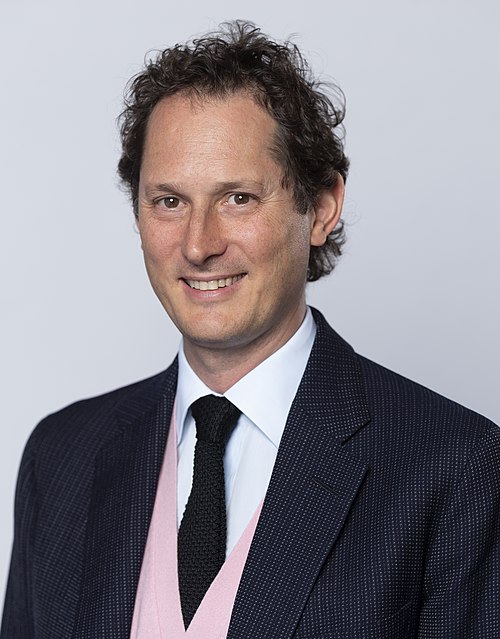
But here’s what makes Elkann’s response so damning: he praised the mechanics and engineers while stating the drivers were “not up to par.” This happened despite Leclerc’s retirement resulting from a multi-car incident beyond his control, and Hamilton suffering damage from separate collisions that race stewards deemed worthy of penalties for other drivers.
This is deflection, pure and simple.
The Missing Element Wasn’t a Championship-Winning Driver
Elkann put himself in this position by signing a vocal driver who’s past his prime and not addressing the culture and structure of the F1 team. He thought that the only missing element was a championship-winning driver.
It turns out Ferrari aren’t able to maximize either driver’s talent this year.
The car just isn’t there. They’re lucky if they can get on the podium. Hamilton has called this season “a nightmare” and hasn’t posted a single top-three finish in 21 appearances for Ferrari. Even more telling, there seems to be a disconnect between Hamilton and his side of the garage—whether that’s lack of trust, cultural differences, or just plain stubbornness on both sides to adapt.
His lack of performance relative to Leclerc is telling because Hamilton is not performing like the team expected him to.
Meanwhile, Leclerc has put in heroic performances for years and had his best season to date last year. The drivers aren’t the issue since the car the team produces is not competitive. This points to the departments who are responsible for the car design and build not delivering.
Geography, Culture, and the British Team Advantage
The more fundamental issue is how the various departments work together back in Maranello and the insular nature of the team. They are isolated geographically and culturally from the heart of F1, which is Motorsport Valley in Northamptonshire and Oxfordshire in England.
There is a difference in mentality between continental Europe and England.
In England, there is more dynamism and a less formal culture than in Italy. There is also greater collaboration between different elements of the British F1 teams as a rule. They seem to work together better and with less friction than Ferrari. Also, a less formal culture allows ideas and concepts to be considered and applied more quickly amongst the British teams.
While Ferrari have been innovators, they seem to lack the consistency that the British teams possess.
Nothing specific but historically, the team has placed emphasis on the mechanical and power aspects of the car. They have not been as strong aerodynamically as the British teams. Their chassis and aero weaknesses manifest themselves from time to time, therefore they have to rely on interpretation of the rules and other trickery to find time.
What Elkann’s Criticism Actually Accomplishes
When Elkann blames the drivers instead of addressing these fundamental engineering gaps, what message does that send to the people actually building the car?
It somewhat absolves them of any blame for problems within Ferrari.
The whole team has to be examined and optimized in order for the results to follow. Signing Hamilton or some other notable person might bring insights and perspectives but it ignores the long-standing challenges within the team.
It’s easier to hire and fire drivers than take a long, hard look at the team and how it operates.
But here’s the problem: it hampers Ferrari’s ability to fix anything because now a notoriously political team has been given the signal that pointing fingers is okay. Despite Hamilton’s tepid performances, he is an amazing driver who knows how a winning team operates. Charles Leclerc has put in heroic performances for years. The drivers aren’t the issue.
The Jean Todt Blueprint Ferrari Refuses to Follow
When Jean Todt was hired by Ferrari, it took him time to assess where the team was and what needed to be fixed. He then began the long process of hiring the right people and getting the team structured correctly before hiring Michael Schumacher.
Even then, it took years for all the work to yield results.
Todt brought in outsiders like Brawn, Stepney, Goto, Barnard, Byrne, and others who were successful elsewhere. They knew what worked and how to make necessary changes. They were also realistic in how long and difficult it would be before the results would come.
Luca di Montezemolo gave Todt time too and provided political cover. Having that from the FIAT side of the company was crucial. Di Montezemolo quietly protected Todt and the team while getting them the resources they needed.
Elkann is doing the opposite—publicly criticizing drivers mid-season.
What does that lack of political cover do to Ferrari’s ability to actually fix anything? My guess is Fred Vasseur feels isolated and stymied now because he was making good progress. The signing of Hamilton and their suspension layout didn’t work out at all.
McLaren’s Humility vs. Ferrari’s Arrogance
McLaren had the humility and introspection to take a hard look at how they were doing things. The approach that yielded results in the past simply did not work. The leaders who were successful in the past were losing touch with what works now.
The team had to admit that things had to change and that this would take years to pull off.
But McLaren made the commitment and pursued their plan to become more competitive. The results speak for themselves. The team is back with a vengeance.
Ferrari keeps cycling through quick fixes and blame. I think the culture is too entrenched because the pain is not sharp enough right now. They had a great 2024 but totally lost the plot this year and now we see the knives coming out.
When Will the Pain Become Acute Enough?
The pain will become acute when they don’t compete for the championship in 2026.
At that point, Hamilton is likely to retire and focus on being a brand ambassador. Leclerc has to be getting tired of not being in a position to fight for a championship. He might be looking elsewhere in order to be at a more competitive team.
Losing Leclerc would be a damning indictment of Ferrari’s ability to compete at the front.
That’s what it will take in my estimation.
They would be able to get drivers in the short term because Ferrari would pay well and fans would adore them. But besides Ollie Bearman, they don’t have anybody who could step into that seat. Would Carlos Sainz return to that environment? I don’t think so.
The bigger question is the culture and structure of the team, which seems to be dysfunctional. Then again, this is the rule for Ferrari and not the exception.
Drama Over Results
Ferrari is the only team who has competed since Formula 1 began. It is a part of the sport and the race team is the most popular one worldwide. There is pride on the line for both Ferrari and Formula 1. They need each other.
I think though that Ferrari will likely serve as more of a source for drama than results.
Elkann’s public criticism of Hamilton and Leclerc after incidents beyond their control shows Ferrari’s leadership would rather point fingers than address the systemic issues that have plagued them for years. The geographical isolation from Motorsport Valley, the formal and rigid culture, the poor collaboration between departments, the emphasis on mechanical solutions over aerodynamic excellence—these are the real problems.
Until Ferrari’s leadership feels enough pain to do what Jean Todt did—take time to assess, bring in outside talent, restructure the organization, and commit to a multi-year plan—they’ll continue to have all the pieces for success without the ability to put them together.
And drivers like Hamilton and Leclerc will continue to take the blame for problems they didn’t create and can’t fix.