Formula 1 just announced something that tells you everything about where the sport is actually headed.
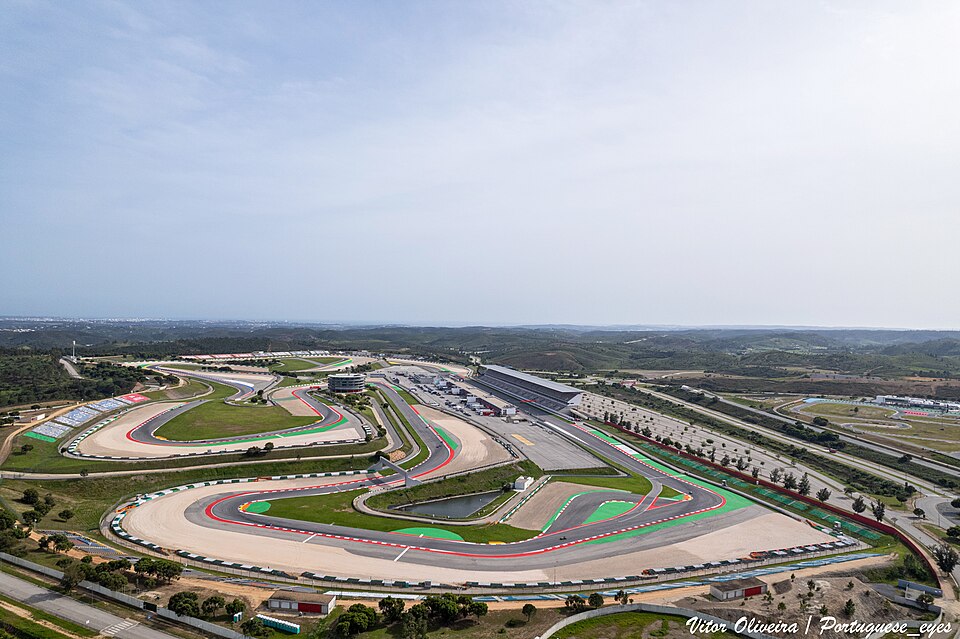
Portugal’s Algarve International Circuit will host races in 2027 and 2028, replacing Zandvoort on the calendar. This isn’t just another venue swap. It’s a signal that F1 is pumping the brakes on its expansion strategy.
And as an American fan watching this unfold, I think it’s the right call.
Why Portugal Matters More Than the Headlines Suggest
When I first heard about Portugal’s return, my reaction was immediate relief. The Algarve circuit has something most modern tracks lack—soul.
The track has genuine terrain variation, proper width for overtaking, and the kind of flowing layout that lets F1 cars show what they’re actually capable of. Compare that to the narrow street circuits popping up everywhere, where one small mistake sends a driver into a wall and out of the race.
At Portimão, drivers have runoff. They can take chances. The track rewards skill instead of punishing the smallest error with a DNF.
F1 CEO Stefano Domenicali said it himself: “The circuit delivers on-track excitement from the first corner to the chequered flag, and its energy lifts fans out of their seats.”
The fast-flowing, undulating nature of Portimão draws comparisons to Spa-Francorchamps and the original Nürburgring Nordschleife. Those are legendary circuits. That’s the company Portugal keeps.
The Two-Year Deal Tells the Real Story
Here’s what matters: this is only a two-year agreement.
F1 isn’t making long-term commitments right now, they’re hedging their bets. Domenicali recently told analysts that “we have some news to share very, very soon with regard to the possibility in the mid-term to have some rotational European Grand Prix.”
Translation: F1 is building flexibility into the calendar.
The sport has learned some hard lessons. They had to cancel Bahrain in the past due to civil unrest. They left South Africa after 1985 for political reasons. And 2020 demonstrated how quickly everything can change when a pandemic hits.
Portugal isn’t just a race venue. It’s an insurance policy.
What Middle Eastern Expansion Gets Wrong
I’ll be direct: the Middle East has reached saturation point.
There are currently fiveF1 races in Middle Eastern countries; Azerbaijan, Bahrain, Saudi Arabia, Qatar, and the United Arab Emirates. The 2025 calendar shows the same five races. And while these venues pay massive hosting fees, they lack something money can’t manufacture.
Authentic fan energy.
When you watch a race at a European circuit, the hillsides are packed with people waving flags and holding signs for their favorite drivers. In Italy, fans unveil huge Ferrari banners over the grandstands before the race starts. There’s electricity in the air that comes from genuine motorsports heritage.
You don’t see that same organic enthusiasm in the Middle East. The crowds are smaller. The atmosphere is different.
And there’s a bigger problem: these events depend on commodity prices and political stability. Both are difficult to maintain long-term. If oil prices decline significantly, hosting luxury sporting events becomes harder to justify. If civil unrest breaks out, races become impossible.
Chasing massive hosting fees is a short-term play. F1 seems to be recognizing this.
The Human Cost of Calendar Expansion
Here’s something most fans don’t consider: the F1 calendar has grown roughly 50 percent since the late 1980s. That means more travel which translates to more time away from families for team personnel.
Max Verstappen has been vocal about this: “From my side, I’ve said it before—this is not sustainable. If people in the sport start shortening their careers because it’s too much, I think that’s a shame.”
His father Jos agrees, saying the ever-expanding calendar is “sapping the fun out of the job for drivers.”
Keeping more races in Europe reduces this burden. Teams can drive equipment between venues instead of moving it across oceans. Personnel can return home between races more easily. The logistics become manageable despite a 24-race calendar.
Portugal fits perfectly into this strategy. It’s accessible. Teams tested there regularly even before the pandemic races. The infrastructure works.
What Success Looks Like for Portugal
Portugal proved itself during the 2020 and 2021 seasons when F1 needed reliable venues during the pandemic. Everything went smoothly. The racing was excellent. And studies estimate a combined economic impact of around €100 million per Grand Prix for Portugal.
That’s real, measurable value, not just hosting fees funded by oil revenue.
The Portuguese government is backing this deal because they’ve seen the returns. Formula 1 currently reaches 827 million fans worldwide, with an average audience of around 70 million viewers per race weekend. For Portugal and the Algarve region, that’s massive international exposure.
But here’s what needs to happen for Portugal to become permanent:
The rotation model needs to prove financially viable. Domenicali has stated that “24 is the balanced number that we feel is right” for the calendar. That means some European tracks will share slots. If Portugal can demonstrate strong attendance, engaged fans, and economic sustainability during its two-year trial, it positions itself for a longer-term rotation deal.
The circuit also needs to maintain the atmosphere that made it special in 2020 and 2021. Portugal doesn’t have the decades-long F1 history of Monza or Silverstone, but it has proximity to Spain (home to Fernando Alonso and Carlos Sainz) which will draw fans from across Europe.
What This Means for F1’s Future
Portugal’s return signals something important: F1 is not accelerating its move away from European circuits.
The various stakeholders realize that chasing larger hosting fees can become a mirage. If the sport wants to be sustainable over the medium to long term, they need events that can be supported indefinitely.
Keeping races in Europe balances expansion with heritage. It acknowledges where F1 came from while still reaching new audiences. And it provides the flexibility to respond when geopolitical situations make certain venues untenable.
As an American fan with three races already on our calendar; Miami, Austin, and Las Vegas, I think this is the right approach. The U.S. can probably support three races in the near to mid-term. But F1 is a global sport. It needs to maintain its European foundation while expanding thoughtfully.
Portugal isn’t just another race. It’s a statement about priorities. It’s F1 choosing sustainable growth over maximum short-term revenue. It’s the sport recognizing that authentic fan engagement matters more than the biggest check.
And if the two-year trial works, it could be the model for how F1 manages its calendar for the next decade.
That’s worth paying attention to.