ESPN’s 2025 Formula 1 viewership numbers tell a story that goes beyond simple growth metrics. When I first saw the data, what struck me wasn’t just that F1 was gaining viewers, it was how those numbers compared to NASCAR and IndyCar.
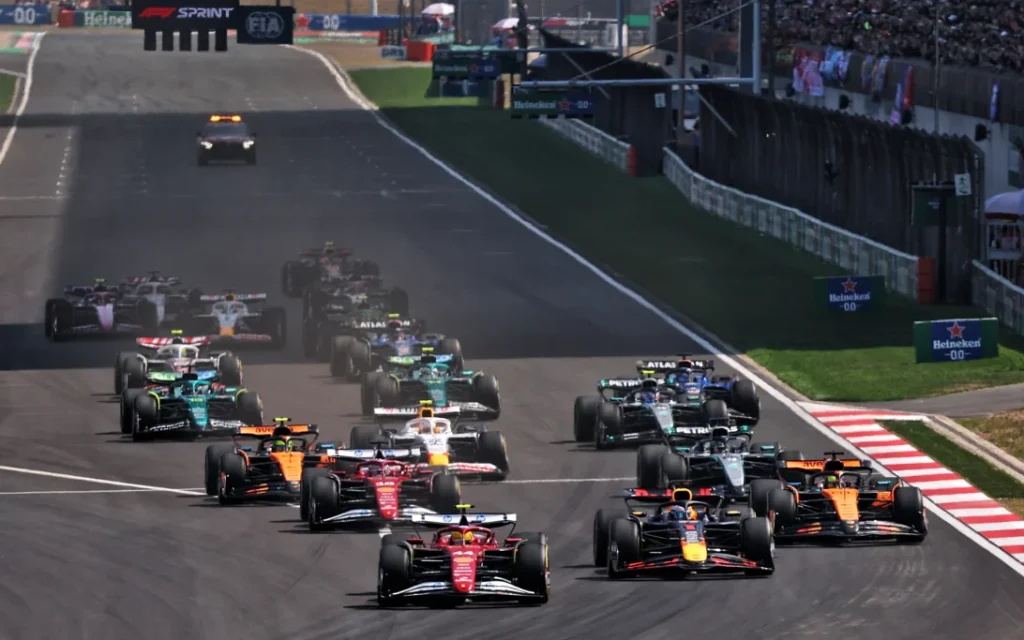
F1 is essentially swapping positions with NASCAR in American motorsport culture.
The Daytona 500 and Indy 500 used to dwarf F1’s American audience. Now F1 has momentum while NASCAR struggles to retain viewers and IndyCar remains stuck in a smaller niche. This isn’t a temporary spike. It’s a fundamental shift in how Americans consume racing content.
NASCAR’s Self-Inflicted Wounds
NASCAR took its dominant position and began experimenting with entertainment over authenticity; the playoffs, stage racing, the constant format changes.
These gimmicks turned off older fans while failing to capture younger ones.
But the bigger problem was saturation. When you expand from 28-30 races to 36-plus events, any single race becomes less important. NASCAR diluted its own product. Each race lost its weight, its significance, its must-watch appeal.
Meanwhile, IndyCar is still recovering from its devastating civil war between CART and the IRL; a wound that still has not fully healed.
The Format That Actually Works
F1 has 24 races now. Yes, that’s probably too many; ask anyone involved in the sport about the travel burden. But the format itself keeps each race feeling like an event.
Multiple practice sessions. Knockout qualifying. The grand prix. That’s 600-1000 kilometers of on-track action spread across three days, with each session running 60-90 minutes.
It fits into a compact viewing window.
Bernie Ecclestone figured this out in the 1980s when he made F1 more TV-friendly. Liberty Media took what worked and refined it further. An F1 race weekend functions like a football game or baseball series, except broken into digestible chunks that fit American viewing habits.
You can watch practice on Friday morning with your coffee. Catch qualifying Saturday afternoon. Then settle in for the main event Sunday. Or you can just show up Sunday and still get the full experience.
Beyond the Netflix Gateway
Drive to Survive opened the door. The show’s fifth season attracted over 90 million viewing hours, making it the most-watched sports series on Netflix in early 2023.
But the show alone doesn’t explain sustained growth.
What Liberty Media actually did was humanize the sport. They relaxed F1’s notoriously strict licensing rules that once stopped drivers from posting paddock photos on their own social media. This wasn’t about celebrity glamor, it was about showing drivers as multidimensional people.
Charles Leclerc shares his music. Valtteri Bottas posts about his new life in Australia. Daniel Ricciardo showed off his distinctly Australian and American cultural tastes. Esteban Ocon shares activities with his girlfriend.
These drivers aren’t just helmets and numbers. They’re people with distinct personalities and interests that casual fans can connect with.
The data backs this up. By 2023, social media and family recommendations had overtaken Drive to Survive as discovery pathways. The Netflix effect sparked something, but the authenticity kept people engaged.
Strategy as the Conversion Moment
When someone finishes binging Drive to Survive and tunes into their first actual race, what keeps them hooked?
It’s understanding the strategic layer.
F1 presents multiple levels of competition happening simultaneously. Driver versus driver. Driver versus track. Strategy versus execution. The combative nature of open-wheeled racing coupled with the risks required to drive these cars at their peak creates compelling tension.
But the gateway moment, when new fans go from confused to captivated, comes when they grasp the strategy. When does a driver push versus defend? Is the team prioritizing track position or tire advantage? Are they factoring in weather changes? Who makes the right calls at the right time?
This requires patience and understanding, not just visceral excitement. Most American sports fans are used to more straightforward competition. F1 asks them to think several moves ahead, like chess at 200 mph.
ESPN’s broadcast, using the same knowledgeable commentators as international feeds, helps decode this complexity. The educational foundation turns confusion into engagement.
The Generational Divide
Liberty Media’s strategy drove down the average age of F1 TV viewers from 44 to 32; a 12-year demographic shift that explains why younger audiences connect with F1’s global narrative differently than NASCAR’s American heritage story.
F1 drivers are generally younger than NASCAR drivers and have shorter careers. This creates urgency. They need to maximize their fanbase while they’re in the sport, which makes them more social media savvy and more willing to engage directly with fans.
The result? A younger, more diverse audience. Research shows that 46% of Drive to Survive viewers are 34 and younger, compared to just 16% of traditional F1 viewers who discovered the sport through other means.
NASCAR has traditionally been fan-focused, but F1’s global footprint gives it more fans to draw from. When you combine worldwide reach with authentic driver engagement, you create a different kind of connection; one that resonates with how younger Americans consume sports content.
The Intentionality Behind the Growth
This isn’t random success. It’s deliberate strategy executed over years.
Liberty Media understood they were in the entertainment industry, not just the sports business. The US market had been underserved by F1 for decades, but it’s too large to ignore. The challenge was having a consistent venue to host a U.S. Grand Prix.
COTA fixed that. Circuit of the Americas gave F1 a world-class track to set roots into American soil. American sponsors became more visible, partially due to Zach Brown’s efforts before he joined McLaren. Each piece built on the previous one.
F1 has room to grow both broader and deeper in the U.S. market. NASCAR is squandering its position with gimmicks. IndyCar is still rebuilding. The opportunity exists for F1 to expand its American presence significantly.
The Risk of Losing Authenticity
But there’s a warning sign flashing.
The biggest risk to F1’s American momentum is over-reliance on entertainment that takes away from the sport itself. NASCAR is afflicted with this, constantly chasing drama through artificial format changes instead of letting the racing speak for itself.
Sprint races feel contrived. They take away from the actual grand prix rather than adding to it. The race format works. Knockout qualifying has been a smashing success. But when F1 starts prioritizing celebrity and glamor over hard racing with the highest performance cars on the planet, it risks alienating the very fans it worked so hard to attract.
Racing is what engages fans. The drivers being interesting people in their own right, not just famous, is what keeps them engaged.
The data already shows warning signs. Drive to Survive’s sixth season experienced a 30% viewership decrease, partly because viewers can distinguish between authentic storytelling and manufactured drama.
F1’s American awakening is real and sustainable, but only if Liberty Media remembers what actually converted those Netflix viewers into committed fans. It wasn’t the glitz. It was the authenticity, the strategy, the competition, and the respect for what makes F1 compelling at its core.
Keep that and ESPN’s record numbers are just the beginning.