Bernie Ecclestone says he’s confused about Germany’s absence from F1’s calendar. He shouldn’t be.
He created this exact situation.
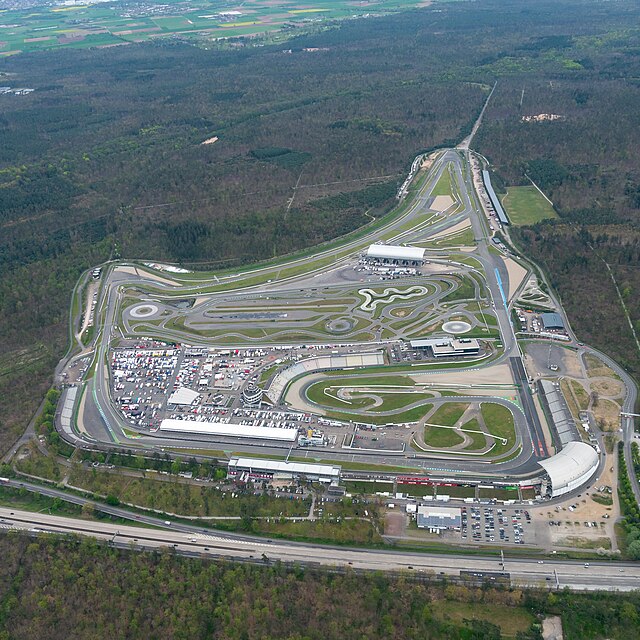
There’s truth in Bernie’s claim that financial issues killed the German Grand Prix. But pointing to money problems while ignoring who built that financial model is rich coming from F1’s former supremo.
He wanted to expand Formula 1 into new markets and earn more money for the teams. He succeeded spectacularly. Traditional venues paid the price.
The Escalation Nobody Saw Coming
In the late 90s, F1 started courting state-backed venues willing to pay premium hosting fees. The strategy seemed smart at first.
Marginal hosts like Portugal dropped off. That felt predictable.
Then France disappeared. Then San Marino at Imola.
We went from losing fringe races to watching historic European venues get priced out entirely. The German Grand Prix hosted races almost every year since 1926. It hasn’t appeared on the calendar since 2019.
The financial gap became insurmountable. Saudi Arabia and Azerbaijan each pay $55 million annually to host F1 races. Silverstone pays about $26 million.
That’s nearly a 100% premium. Heritage circuits simply can’t compete.
Infrastructure Became The Trap
The money tells only part of the story. New venues arrived with state-of-the-art facilities designed for contemporary media and hospitality demands.
They had space. Room for teams to work, sponsors to entertain, broadcasters to operate.
Additional broadcast partners brought F1 to new media markets. More sponsors signed up for exposure at these modern tracks. The whole ecosystem fed itself.
Meanwhile, Hockenheim and Nürburgring were decades old. Built for racing, not for the entertainment complex F1 had become.
They couldn’t retrofit fast enough. The physical infrastructure itself became the barrier to entry.
Soul Versus Sterile Concrete
As an American fan watching this unfold, I see something essential being lost.
Many new venues lack soul and passion. They don’t have motorsports heritage. A grand prix becomes a vanity project by a leader wanting to promote his country.
Many of these hosts operate in repressive countries or nations run by family dynasties. The crowds are subdued. The atmosphere feels manufactured.
My litmus test is simple. Where is there demand for motorsport? Where are the fans who will show up in the hundreds of thousands on race day? Can the drivers feel the passion of the crowd because they love racing?
The character of events ties F1’s past with its present. Heritage, fans, memories created over decades make F1 compelling to experience.
The essence of grand prix racing lives on undulating road courses surrounded by nature. Not in sterile concrete projects that lack soul.
The 2026 Calendar Changes Everything And Nothing
F1 announced the 2026 season will start in Australia instead of the Middle East. Several traditional venues will host sprint races for the first time.
Sounds promising but I think it’s just rearranging deck chairs.
Many teams are owned or sponsored by Middle Eastern countries. The series will maintain a disproportionate number of events there despite lacking motorsports heritage and featuring more subdued atmospheres.
F1 should be in Germany and France. Instead, the trend points toward events in the New World and Asia.
Financial ties to Middle Eastern ownership lock in those venues regardless of fan passion. Circuit promoter fees account for 33.6% of F1’s annual revenue. That’s too much money to walk away from.
A Pragmatic Path Forward
If I were advising F1 leadership, I’d create a tiered event system.
Keep one Middle East race. Bahrain has a great track layout and has produced some memorable events during it’s history. For other venues in the region, schedule a winter exhibition series using the previous year’s cars with reserve and test drivers.
This gives drivers a chance to showcase skills, extends the life of F1 cars, and creates an off-season where fans can watch racing in a more relaxed atmosphere.
For Germany and France, have F1 teams test there in-season. Run sprint races for young drivers at these tracks. Fans get to see the cars, drivers, and teams compete without the venue needing to match those massive state-backed hosting fees.
It acknowledges financial reality while maintaining presence in heritage markets.
When The Money Runs Out
Right now, we won’t see changes. But if the global economy gets disrupted, a lower-cost Formula 1 may become necessary.
If oil prices drop considerably, there won’t be as many funds to spend on sponsoring teams and events. If the Chinese economy experiences slower growth, that affects economies worldwide.
Economic disruption could force F1 back to a more sustainable model.
Traditional venues should upgrade facilities where possible and continue hosting lower-tier events. Most already do this. The objective is being ready for when things change.
History suggests they will. Nothing lasts forever.
Bernie’s confusion about Germany’s absence rings hollow. He built the financial model that made traditional venues obsolete. Now he mourns what his own strategy destroyed.
The question isn’t whether Germany can return with proper funding. It’s whether F1 will remember what made it special before the money runs out.