When Alpine announced their withdrawal from the World Endurance Championship, I wasn’t surprised. Not even a little.
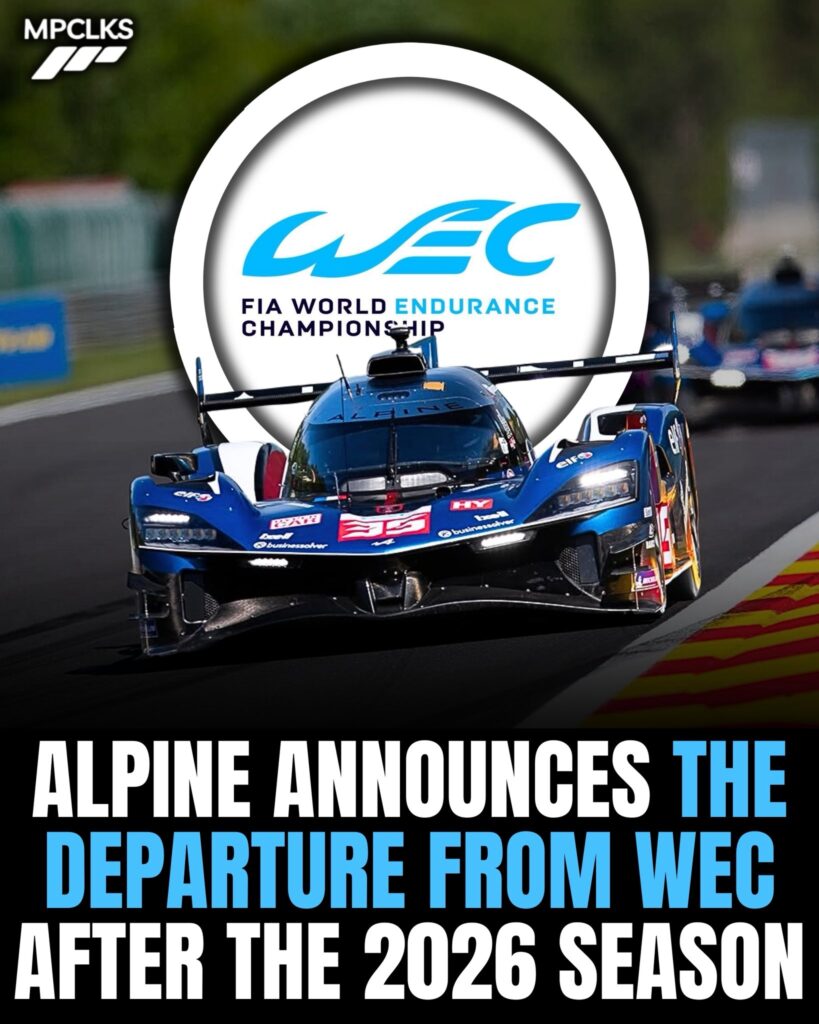
The Renault Group is scaling back across the board. They’ve already pulled out of F1 as an engine manufacturer. They’re preparing to sell their remaining Nissan stake. Alpine’s WEC exit is just another piece of a larger puzzle.
What catches my attention is what this reveals about how motorsport actually works as a business. Because here’s what most fans miss: racing programs are investment portfolios, not passion projects.
The Real ROI of Racing Programs
You might think teams race to win. That’s part of it, but not the whole story.
Alpine’s Hypercar program ran on an estimated €20-30 million annual budget for two cars. They won just three races in their time competing. The numbers didn’t add up.
When I look at what manufacturers actually get from racing, it breaks down into two categories: the tangible and the intangible.
The tangible stuff? Brand exposure, marketing reach, potential technology transfer to road cars.
The intangible part? That’s where it gets interesting.
Think about Honda in the eighties. They rotated engineers through their F1 program with Williams, Lotus, and McLaren. The materials and production techniques didn’t always transfer to mass production. But the mindset did.
Quick thinking. Fast action. Tight turnaround times. Close collaboration between design and manufacturing.
These organizational practices become embedded in company culture. They make you more responsive. They shorten development cycles. In global manufacturing, that’s critical.
When the Math Stops Working
Alpine initially hedged their bets with both F1 and WEC programs. Wide exposure across two major series seemed smart.
Then reality hit.
They weren’t competitive in F1. Things weren’t improving. They exited as an engine manufacturer. In WEC, they were more competitive but still not challenging for championships.
The calculation changed because the European automotive industry changed.
New car sales are slow. The EV transition is proving harder than anyone projected. Renault reported a net loss of €10.93 billion for 2025, with projected operating margins dropping from 6.3% to 5.5%.
Asian manufacturers are eating everyone’s lunch. European companies are operating with thinner margins than before.
When margins shrink, corporate boards scrutinize every line item. Racing programs get the microscope treatment.
The EV Factor Nobody Talks About
Here’s something that doesn’t get enough attention: the EV push creates unique problems for European manufacturers.
Consumer demand for EVs is lower than projected. Battery replacement costs are high. Cold weather performance is questionable. Vehicle depreciation is rapid.
But there’s a bigger issue.
Most materials for EV production come from outside Europe. The refining and manufacturing processes for batteries, motors, and components happen primarily in East Asia. Chinese EV exports grew 1,600% from 2019 to mid-2024.
For gasoline and diesel engines, European manufacturers control more of the supply chain. For EVs, they don’t.
Renault’s presence outside Europe is more limited than VW or Mercedes. That makes them especially vulnerable.
You might think WEC’s hybrid technology and sustainable fuels would make endurance racing more relevant during the EV transition. But if the market is rejecting EVs, and your board is looking at where to allocate scarce resources, a racing program doesn’t make the cut.
The Portfolio Approach to Motorsport
When Renault’s board sits down to review their WEC budget, they’re asking specific questions:
How much brand exposure are we getting? Is Alpine growing in public consciousness? Are race results bringing useful knowledge to other parts of the company? Would WRC or touring cars make more sense?
Different manufacturers have different answers.
High-end brands want F1 and WEC because that’s where the glamor and audience live. Niche brands seek out rallying, rallycross, or desert racing to prove performance credentials to their specific fanbase. Mass market brands look at stock cars, touring cars, and supercars with broader appeal.
Manufacturers have portfolios of brands that appeal to different markets. They participate in series that appeal to those markets. The funding depends on projected sales, value, and margin they can reasonably expect.
Alpine sits in an awkward middle ground. They’re positioned as Renault’s performance brand, somewhere between mass market and high-end. Few people know what Alpine is or was historically. Most F1 fans know Renault well from decades of involvement. The rebrand from Renault to Alpine always seemed muddled to me.
My guess? The Alpine F1 team will have new ownership soon. Renault will retain a small stake for some control. But the Alpine brand experiment is being de-emphasized.
The Bigger Pattern
Alpine joins Lamborghini and Porsche as the third major manufacturer to withdraw from WEC Hypercar in recent years.
This isn’t unprecedented. Honda left F1 in 1992 despite dominating. Successful teams and companies exit when it suits them.
What’s different now is the speed and decisiveness of these exits.
The global automotive market is consolidated and highly competitive. Traditional markets like Europe and North America are saturated and not growing. Emerging markets have growing populations but less wealth.
When companies create the right products for the right markets at the right margins, life is good. Get it wrong, and companies lose billions, close plants, and furlough workers.
The pressure is real and immediate.
What This Means for Fans
Here’s what American fans miss when they see headlines about Alpine exiting WEC:
Big car companies bring money, resources, and attention to a series. But when it no longer makes sense, they leave. It’s a business decision.
That’s part of the deal with global motorsport. Companies come and go. Sometimes they come back again.
Will WEC survive? Yes. The series has the 24 Hours of Le Mans as its signature event. That means some form of European prototype racing will continue barring a major conflict in Western Europe.
Even if all manufacturers withdraw, the organizers will create rules allowing privateer teams to field cars with simpler engines and drivetrains. The current leadership learned lessons from the last years of Group C, when costs drove away even the winners.
The series will be fine. The list of competitors will just change from time to time.
What matters for us as fans is understanding the business realities that shape the racing we love to watch. Teams aren’t just racing for glory. They’re making calculated decisions about resource allocation, brand positioning, and return on investment.
Alpine’s WEC exit isn’t a tragedy. It’s a reminder that motorsport participation is a strategic business decision, not just a competitive endeavor.
The dynamic nature of motorsport means teams must adapt to changing regulations, competitive situations, and technological advancements. Alpine adapted. Other teams will too.
That’s how the business works.